Fuchsia
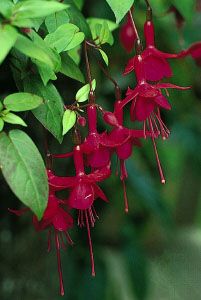
Fuchsia plants are highly valued in gardening and landscaping for their showy, pendulous flowers, which range from red and purple to white. Because of their…
What are the common uses of Fuchsia plants in gardening and landscaping?
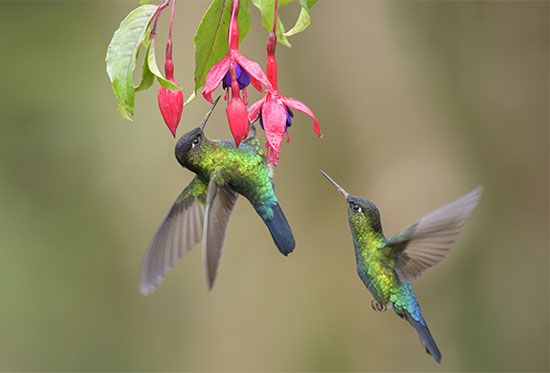
Fuchsia plants are highly valued in gardening and landscaping for their showy, pendulous flowers, which range from red and purple to white. Because of their diverse growth habits, they are utilized in several ways:1
- Hanging Baskets: Trailing forms and dwarf hybrids, such as Fuchsia procumbens, are ideal for hanging baskets due to their prostrate growth.1
- Bedding and Borders: Many species are grown as bedding plants or small shrubs, and garden fuchsias—often derived from F. magellanica—are popular choices for shady borders.1
- Specimen Plants: Some varieties are cultivated as miniature treelike specimens.1
- Indoor and Greenhouse Cultivation: Certain species are well-suited for growth as pot plants in indoor or greenhouse settings.1
- Tree Forms: Larger species like the New Zealand tree fuchsia (F. excorticata) and the Mexican tree fuchsia (F. arborescens) can reach significant heights, serving as larger ornamental features in appropriate climates.1
Where are Fuchsia plants native to, and in what types of environments do they thrive?
Fuchsia plants are native to the tropical and subtropical regions of Central and South America, as well as New Zealand and Tahiti.1
Regarding their environment, these flowering shrubs and trees are highly adaptable to various settings depending on the species. While many are cultivated as garden bedding plants or small shrubs in shady borders, others are well-suited for indoor or greenhouse environments, often grown in pots or hanging baskets. Some species, such as the New Zealand tree fuchsia (F. excorticata) and the Mexican tree fuchsia (F. arborescens), can grow into significant tree-like forms, reaching heights of up to 15 metres and 10 metres, respectively.1
How many species are there in the Fuchsia genus, and what are some popular varieties?
The Fuchsia genus consists of approximately 105 species of flowering shrubs and trees within the evening primrose family.1
Popular varieties and species often cultivated for their ornamental value include:
- Common Hybrids (F. × hybrida): Likely derived from F. fulgens and F. magellanica, these include dwarf and trailing forms that are particularly well-suited for hanging baskets.1
- Garden Fuchsias: Primarily derived from F. magellanica, these are widely utilized in shady garden borders.1
- Prostrate Fuchsia (F. procumbens): A low-growing species ideal for hanging containers.1
- New Zealand Tree Fuchsia (F. excorticata): A large species that can reach heights of up to 15 metres (50 feet) and is noted for its papery bark and waxy, dull-red flowers.1
- Mexican Tree Fuchsia (F. arborescens): A tree-like variety that can grow up to 10 metres tall and features clusters of lilac and purple flowers.1
What is the history behind the naming of the Fuchsia genus?
The Fuchsia genus is named in honor of Leonhard Fuchs, a prominent 16th-century German physician and botanist.31
Fuchs is best remembered for his influential 1542 work, Historia Stirpium, which became a landmark in the history of natural history. His book was highly regarded for its systematic organization, the precision of its plant descriptions, and its high-quality woodcut illustrations, which set a new standard for botanical accuracy. As a scholar deeply interested in the medicinal properties of plants, Fuchs intended his work to serve as a practical guide for plant collection, detailing the habitat, seasonal availability, and therapeutic “powers” of each species.3
The naming of the genus after him serves as a lasting tribute to his contributions to the field of botany. Interestingly, the vibrant reddish-purple color known as “fuchsia” was later named after the flowers of this genus.1
Sources
- Fuchsia — Encyclopædia Britannica
- fuchsia — Merriam-Webster
- Leonhard Fuchs — Encyclopædia Britannica
Published on · 3 min read