Nidularium
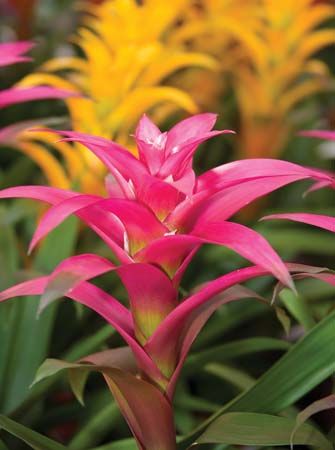
Nidularium is a genus comprising approximately 25 species of plants belonging to the pineapple family (Bromeliaceae). These plants are native to South…
What is Nidularium?
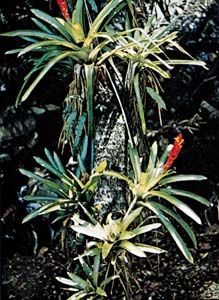
Nidularium is a genus comprising approximately 25 species of plants belonging to the pineapple family (Bromeliaceae). These plants are native to South America and are typically epiphytic, meaning they grow upon the branches of trees.1
Many species are popular as indoor decorative plants, prized for their attractive foliage and vibrant flowers, which can appear in shades of red, purple, or white. The most well-known species is the blushing bromeliad (N. fulgens). It is important to distinguish this from Neoregelia carolinae, which shares the same common name. Both N. fulgens and Nidularium innocenti are characterized by their white flowers, which are framed by striking, bright red bracts.1
What are the main characteristics of the Bromeliaceae family?
The Bromeliaceae family, commonly known as the pineapple family, consists of more than 3,000 species of herbaceous evergreen perennials primarily native to the tropical New World and the West Indies.23
Key characteristics of the family include:
- Growth Habit: Members are typically short-stemmed and can be either terrestrial or epiphytic, meaning they grow attached to other vegetation like trees or cacti.23
- Leaves: They feature simple, spirally arranged leaves. In many rainforest species, these leaves form a central rosette or “tank” that collects water and debris, creating a unique habitat for various aquatic organisms.24
- Flowers: The flowers are three-parted with contrasting sepals and petals. They are often borne on long spikes and are frequently surrounded by brightly coloured bracts.23
- Fruit: Most species produce fleshy fruit, though some develop dry capsules.2
- Special Adaptations: While most bromeliads derive nutrients from environmental debris, at least three species are known to be carnivorous.2
How do epiphytic plants like Nidularium get nutrients?
Epiphytic plants, such as those in the genus Nidularium, do not derive nutrients from the ground or their host plants; instead, they have evolved specialized methods to capture resources from their environment.64
Their primary strategies for obtaining nutrients include:
- Debris Collection: Many epiphytes, particularly “tank” bromeliads, possess leaves arranged in a central rosette that forms a reservoir or “tank”. This structure collects falling organic debris, such as leaves and dust, which decomposes to provide essential nutrients.67
- Foliar Absorption: These plants often feature specialized hairs on their leaf surfaces known as trichomes. These structures are highly effective at absorbing water and dissolved minerals directly from rain and moisture in the air.896
- Aquatic Ecosystems: The water collected in the leaf rosettes of tank bromeliads creates a small, stable habitat for various organisms. The breakdown of organic matter within this “aquarium” by bacteria and other microorganisms releases nutrients that the plant can then absorb.7
While they rely on their hosts solely for physical support, these plants are not parasitic and do not extract sustenance from the trees they inhabit.64
What are the differences between Nidularium and Neoregelia?
While both Nidularium and Neoregelia are members of the Bromeliaceae family and are popular as indoor ornamentals, they exhibit distinct botanical differences:
Genus Characteristics
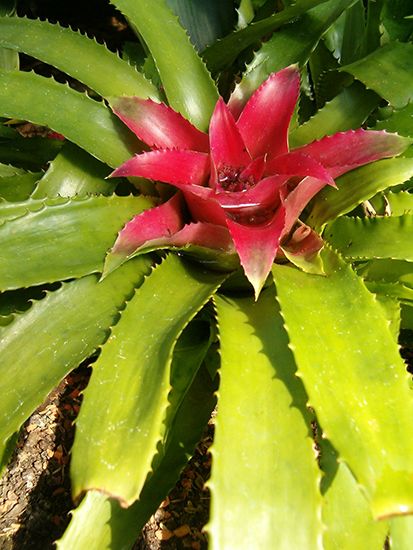
- Neoregelia: This genus comprises about 40 species of epiphytes native to tropical South America. Their leaves are frequently mottled, marbled, or banded and form a rosette. A defining feature is that their small white, blue, or purple flowers are located deep within the center of the cup, and the central leaves often change color during the flowering period.10
- Nidularium: This genus includes approximately 25 species of South American plants that grow on tree branches. They are primarily cultivated for their foliage and colorful flowers, which are typically red, purplish, or white.1
Common Confusion
A notable point of confusion is the common name “blushing bromeliad.” This name is applied to both Nidularium fulgens and Neoregelia carolinae. However, Nidularium species are specifically characterized by white flowers that are surrounded by bright red bracts, whereas Neoregelia flowers are situated deep in the cup.110
Sources
- Nidularium — Encyclopædia Britannica
- Bromeliaceae — Encyclopædia Britannica
- list of plants in the family Bromeliaceae — Encyclopædia Britannica
- Life in a bromeliad pool — Encyclopædia Britannica
- palm - Inflorescences — Encyclopædia Britannica
- epiphyte — Encyclopædia Britannica
- angiosperm - Leaf modifications — Encyclopædia Britannica
- angiosperm - Dermal tissue — Encyclopædia Britannica
- Did you know? — Merriam-Webster
- Neoregelia — Encyclopædia Britannica
Published on · 3 min read