Fungus Gnat
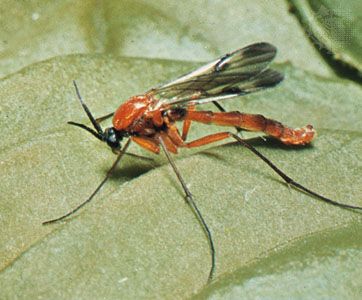
Fungus gnats, which belong to the families Sciaridae and Mycetophilidae, are small, mosquito-like flies that can become a nuisance for indoor gardeners.
How do fungus gnats impact indoor plants and gardening?
Fungus gnats, which belong to the families Sciaridae and Mycetophilidae, are small, mosquito-like flies that can become a nuisance for indoor gardeners.1
Their impact on indoor plants primarily stems from their life cycle: the larvae thrive in moist, organic-rich potting soil. When conditions are sufficiently damp, these populations can grow rapidly, leading to large numbers of adult gnats emerging from the soil of potted plants. While many species feed primarily on fungi, some fungus gnats are known to damage plant roots or tubers in agricultural settings, such as S. tritici affecting wheat or Pnyxia scabiei boring into potatoes. In a home environment, they are most often considered a pest due to the annoyance caused by their presence and their ability to proliferate in the humid environments favored by many houseplants.1
How can you identify fungus gnat larvae in soil?
Identifying fungus gnat larvae in soil can be challenging because they are small and often reside beneath the surface. You can look for the following characteristics to help identify them:
- Appearance: The larvae are typically creamy-white or gray in color.1
- Behavior: In the genus Sciara, larvae may occasionally be seen migrating in large, snakelike lines, which can be up to 1 cm (0.4 inch) deep in the soil when they are searching for food or preparing to pupate.1
- Environment: Because they thrive in moist, organic-rich environments, their presence is often indicated by the emergence of small, mosquito-like adult flies from your potted plant soil.1
While some species are known to damage mushroom beds or plant roots, they are most commonly noticed in indoor settings due to the nuisance of the adult population.1
What are fungus gnats and where are they commonly found?
Fungus gnats are small, mosquito-like flies belonging to the families Sciaridae and Mycetophilidae within the order Diptera. These insects are characterized by their larvae, which primarily feed on fungi and decaying organic matter.12
They are commonly found in environments that provide moisture and organic material, such as:
- Indoor Settings: They frequently develop in the moist, organic-rich soil of potted plants, where they can emerge in large numbers.1
- Agricultural and Natural Habitats: Certain species infest mushroom beds, while others, such as S. tritici, may damage the roots of wheat.1
- Specialized Environments: Some species, like Arachnocampa luminosa, are found in caves in New Zealand, where they use bioluminescent webs to capture prey. Others, such as Pnyxia scabiei, are known to bore into potato tubers.1
While many species are harmless, some can be destructive to crops or a nuisance in home gardens.1
How do fungus gnats differ from other types of gnats or flies?
Fungus gnats, belonging to the families Sciaridae and Mycetophilidae, are distinguished from other Diptera by their specific life cycle and physical traits. While they share the “mosquito-like” appearance common to many primitive flies, they differ from more advanced species like houseflies or blow flies in several ways:
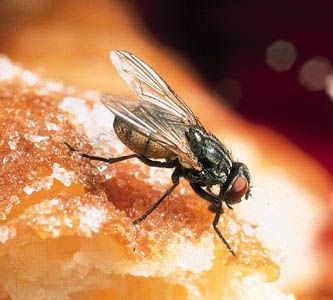
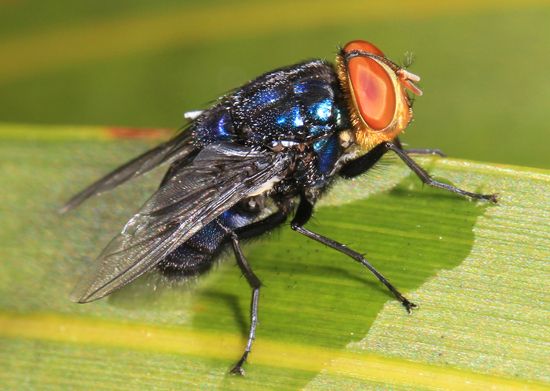
- Structure: Fungus gnats are fragile, delicate insects, whereas advanced flies are typically squat, sturdy, and bristly.1
- Dietary Habits: Unlike many other flies, the larvae of fungus gnats are specialized to feed primarily on fungi and decaying organic matter.23
- Unique Behaviors: Some species exhibit specialized behaviors not seen in common gnats, such as the predatory larvae of Platyura that use oxalic acid to kill prey, or the bioluminescent webs spun by Arachnocampa luminosa to capture insects.2
- Physical Markers: In the Sciaridae family, adults are often identified by dusky wings and eyes that almost touch.2
Sources
- fungus gnat — Encyclopædia Britannica
- fungus gnat — Merriam-Webster
- Diptera - General features — Encyclopædia Britannica
Published on · 3 min read