Gall Wasp
Scientists study gall wasps (family Cynipidae) primarily by observing their unique life cycles and their complex interactions with host plants. Research has…
How have gall wasps been studied by scientists, and what have we learned from them?
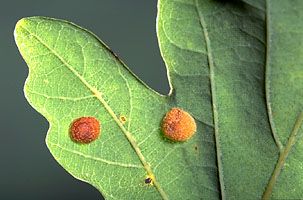
Scientists study gall wasps (family Cynipidae) primarily by observing their unique life cycles and their complex interactions with host plants. Research has revealed that these insects stimulate the growth of galls—tissue swellings—by secreting specific materials into plant tissue after depositing eggs via a long ovipositor.1
Key insights from these studies include:
- Reproductive Strategies: Many species reproduce through parthenogenesis, where female larvae develop from unfertilized eggs, and males are often rare.1
- Ecological Roles: While most are not economically significant, some galls have historically served as sources for tannic acid, inks, and dyes.1
- Coevolutionary Systems: Studies of related fig wasps have highlighted profound coevolution, where specific wasps and fig species are entirely dependent on one another for survival and reproduction.2
- Plant Interaction: Scientists have learned that the gall serves as both a food source and a protective incubator for the developing larva.13
How have humans historically used gall wasp-induced galls for various purposes?
Historically, humans have utilized the galls induced by gall wasps primarily as a rich source of tannic acid. These pathological plant growths, particularly those found on the Aleppo oak (Quercus infectoria) and Chinese nutgall (Rhus chinensis), contain high concentrations of hydrolyzable tannins known as gallotannins.56
These substances have been applied in several key areas:
- Ink Manufacture: Tannins from galls react with iron salts to form dark blue or green solutions, a property that was historically essential for the production of ink.56
- Leather Tanning: Due to their astringent properties, these tannins have been used in the tanning process to preserve and treat leather.51
- Dyeing: Gall-derived tannins have served as agents for dyeing fabrics.56
- Medicine: Historically, the astringent and styptic qualities of gall-derived tannins led to their use in treating conditions such as tonsillitis, pharyngitis, hemorrhoids, and diarrhea, as well as serving as an antidote for certain poisons.5
What is the life cycle of a typical gall wasp?
The life cycle of a typical gall wasp is a specialized process centered on the development of galls within host plants. Because male gall wasps are rare, reproduction typically occurs through parthenogenesis, where female larvae develop from unfertilized eggs.1
The cycle proceeds through these stages:
- Oviposition: The female uses a long ovipositor to deposit an egg directly into the tissue of a specific host plant, such as an oak tree or rose bush.1
- Gall Induction: Upon hatching, the larva secretes materials that stimulate the surrounding plant tissue to grow abnormally fast, forming a protective, nutrient-rich gall.1
- Development: The larva feeds on the internal plant tissue of the gall, which expands in size as the insect grows.1
- Maturation: The insect pupates and transforms into an adult within the safety of the gall before eventually emerging.1
What are gall wasps and how are they different from other wasp species?
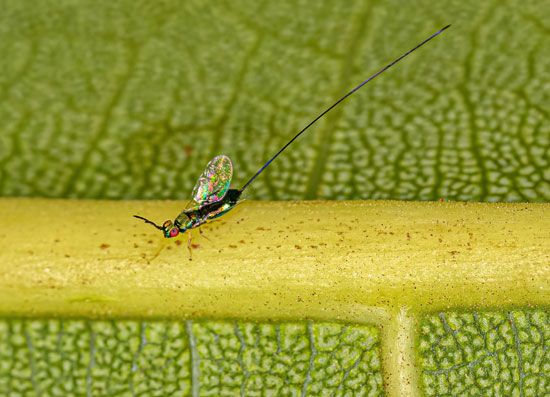
Gall wasps (family Cynipidae) are a group of approximately 1,300 species of small wasps distinguished by their unique ability to stimulate the growth of galls—abnormal tissue swellings—on specific host plants.1
They differ from many other wasp species in several key ways:
- Gall Induction: Unlike predatory or parasitic wasps that hunt other insects, gall wasps are phytophagous; their larvae feed on the plant tissue within the galls they induce.1
- Reproductive Strategy: Male gall wasps are rare, and the group frequently utilizes parthenogenesis, where female larvae develop from unfertilized eggs.1
- Inquilinism: Some species, known as inquilines, have evolved to inhabit galls created by other insects rather than inducing their own.1
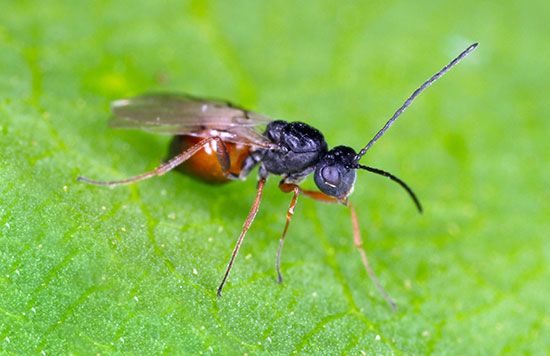
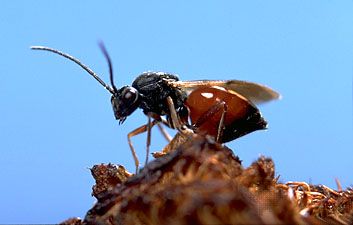
- Physical Characteristics: Adults are typically small, measuring about 6 to 8 mm (0.25 to 0.30 inch) in length, and are characterized by a black color, an oval, shiny abdomen, and a sculptured thorax.1
Sources
Published on · 3 min read