Fly
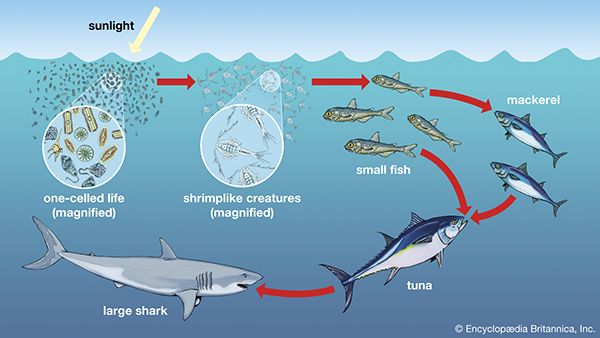
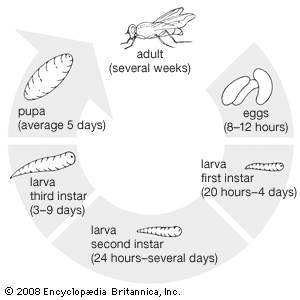
Flies are a vital component of food chains and serve as a significant food source for a variety of animals across different life stages.
What are some natural predators of flies?
Flies are a vital component of food chains and serve as a significant food source for a variety of animals across different life stages.1
Natural Predators of Flies
- Birds: Many species of birds, including swallows, swifts, and martins, are highly effective at capturing adult flies in mid-air.1
- Spiders: As prolific predators of insects, spiders play a major role in controlling fly populations. Many spiders construct webs specifically designed to trap flying insects, while others are active hunters that chase and overpower their prey.23
- Amphibians: Frogs and toads are common predators that consume adult flies.1
- Fish: Aquatic larvae of various flies, such as midges and mosquitoes, serve as a staple food source for fish.1
- Small Mammals: Various small mammals also contribute to the natural regulation of fly populations by feeding on them.1
In addition to these predators, many fly larvae die due to environmental factors like desiccation or drowning, which helps maintain population levels.1
What methods are commonly used for fly control in urban and agricultural settings?
Effective fly control in urban and agricultural settings often relies on a combination of strategies, frequently referred to as integrated pest management, to minimize environmental impact while maintaining efficacy.4
Common Control Methods
- Sanitation and Cultural Practices: In urban areas, managing decomposing organic waste and garbage is essential, as these are primary breeding grounds for houseflies. Agricultural practices include the destruction of crop residues, deep plowing, crop rotation, and scheduled planting to disrupt life cycles.37
- Chemical Control: Residual insecticidal sprays are used to target adult flies, while larvicidal drenches or dusts are applied to waste that cannot be made inaccessible. However, resistance to certain chemicals, such as DDT, has necessitated the development of newer compounds.38
- Biological Controls: This approach utilizes natural enemies like parasites and predators. A notable success is the sterile-insect technique, where large numbers of sterilized male flies are released to mate with wild populations, effectively reducing reproduction.48
- Physical and Mechanical Methods: Techniques include the use of light traps to attract insects, as well as the application of heat, cold, or modified atmospheric gases in storage facilities. Research into sound waves and various forms of radiation also shows potential for nonchemical control.7
How many species of flies exist, and what are some common types?
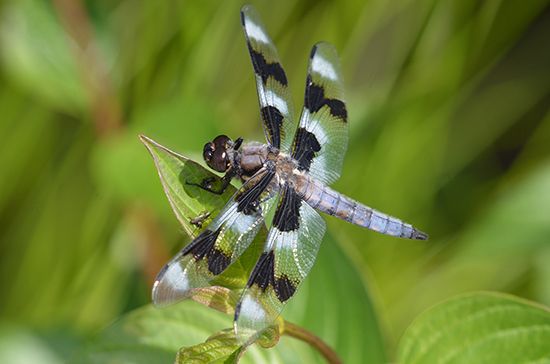
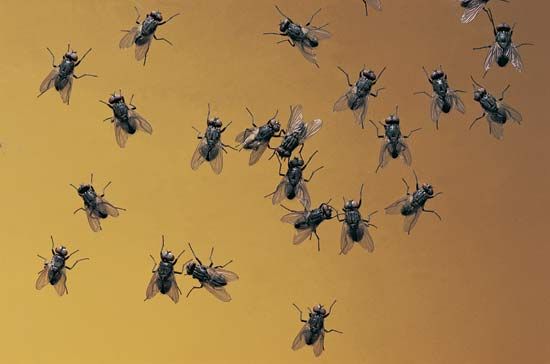
In entomology, the term “fly” refers specifically to members of the order Diptera, which are known as “true flies.” While many other winged insects are commonly called flies—such as dragonflies, caddisflies, and mayflies—they are distinguished from true flies by their wing structures.910
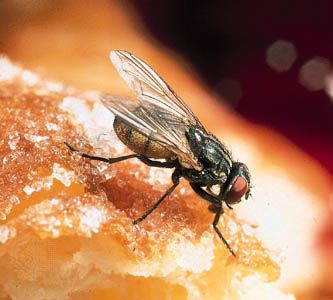
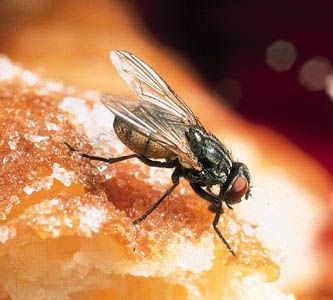
There are more than 160,000 known species of true flies worldwide. These insects are characterized by having only one pair of functional wings, while the second pair is reduced to small, knob-like balancing organs called halteres.1011912
True flies are categorized into three large groups:
- Nematocera: Includes crane flies, midges, gnats, and mosquitoes.103
- Brachycera: Includes horse flies, robber flies, and bee flies.113
- Cyclorrhapha: Includes many common species such as the housefly, blow flies, fruit flies, and tsetse flies.10311
What role do flies play in ecosystems and food chains?
True flies (order Diptera) are essential components of global ecosystems, serving as vital links in food chains and acting as significant pollinators.1415
Ecological Roles
- Decomposition and Nutrient Cycling: As larvae, many flies—commonly known as maggots—are primary decomposers. They break down organic matter, and their waste products provide critical nutrients for plants and fungi.1415
- Food Source: Flies at all life stages (larvae, pupae, and adults) serve as a staple food source for a wide array of animals, including fish, birds, amphibians, spiders, and other insects.1415
- Pollination: While bees are more famous for this role, many flies are important pollinators. Some, such as carrion flies, are specifically adapted to pollinate malodorous flowers that mimic the scent of rotting flesh. Others, like the bee fly and certain mosquitoes, visit flowers to feed on nectar and pollen, facilitating plant reproduction.116
While some species are recognized as pests or disease vectors, the vast majority of fly species perform these fundamental ecological functions that support life across diverse habitats.1415
Sources
- Diptera - Ecology — Encyclopædia Britannica
- pollination - Beetles and flies — Encyclopædia Britannica
- housefly — Encyclopædia Britannica
- Agricultural technology - Biological controls — Encyclopædia Britannica
- spider — Encyclopædia Britannica
- spider - Importance — Encyclopædia Britannica
- insect - Control of insect damage — Encyclopædia Britannica
- Agricultural technology - Mechanical and cultural controls — Encyclopædia Britannica
- fly — Encyclopædia Britannica
- Diptera - Distinguishing taxonomic features — Encyclopædia Britannica
- Diptera — Encyclopædia Britannica
- Diptera - Annotated classification — Encyclopædia Britannica
- List of flies — Encyclopædia Britannica
- Diptera: Top Questions — Encyclopædia Britannica
- major types of pollinators - Beetles and flies — Encyclopædia Britannica
- Diptera - Adults — Encyclopædia Britannica
Published on · 3 min read