Funnel Weaver
A funnel weaver refers to a member of the family Agelenidae, a large group of spiders known for constructing flat, sheet-like webs that narrow into a…
What is funnel weaver?
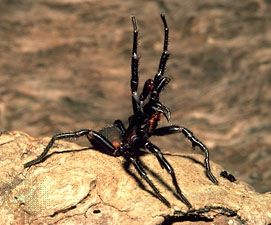
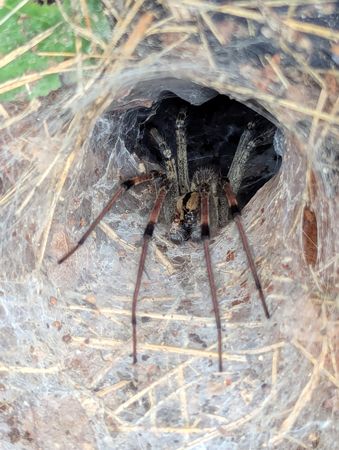
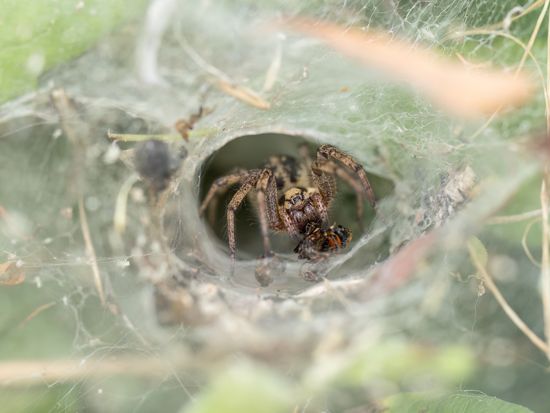
A funnel weaver refers to a member of the family Agelenidae, a large group of spiders known for constructing flat, sheet-like webs that narrow into a funnel-shaped retreat. It is important to clarify that these spiders are entirely distinct from the venomous Australian funnel-web spiders (family Atracidae), which are known for their dangerous bites.12
Funnel weavers are ambush predators that wait inside the tubular end of their webs. They detect prey through vibrations transmitted across the silk, allowing them to quickly capture insects. They are typically found in grass, under rocks, or in the corners of buildings.1
Notable species include:
- The labyrinth spider (Agelena labyrinthica): Found in Europe and parts of Asia, often studied for its spatial perception.1
- The cardinal spider (Tegenaria parietina): Recognized as the largest funnel weaver.1
- The grass spider (Agelenopsis naevia): A common North American species.1
How do funnel weavers differ from the dangerous Australian funnel-web spiders?
Although they share similar names, funnel weavers (family Agelenidae) and Australian funnel-web spiders (family Atracidae) are entirely unrelated groups with significant biological and behavioral differences.23
Key Differences
- Taxonomy and Anatomy: Funnel weavers are araneomorph spiders, meaning their jaws move sideways and together. In contrast, Australian funnel-web spiders are mygalomorphs, characterized by jaws that move forward and down.23
- Venom and Danger: Australian funnel-web spiders are medically significant and potentially lethal to humans due to their potent venom. While some funnel weavers, such as the hobo spider, have been suspected of having medically significant bites, these claims are often contested, and the family is generally not considered a major threat to human health.123
- Habitat and Web Construction: Australian funnel-web spiders are burrowing spiders that typically live in underground tubes, crevices, or rotting logs, often without doors. Funnel weavers are typically found in grass, under rocks, or in the corners of buildings, where they construct flat, sheet-like webs that narrow into a funnel-shaped retreat.213
Understanding these distinctions is vital for safety, as the Australian species requires immediate medical attention if a bite occurs.12
What are some other common types of spiderwebs found in nature?
Spiders are remarkable architects that utilize silk to create diverse structures for hunting and protection. While many species are active hunters, those that weave webs typically employ one of the following primary designs:
Common Web Types
- Orb webs: Perhaps the most recognizable design, these circular, spiral-patterned nets are highly efficient at covering large areas with minimal silk. They act as air filters, trapping weak-flying insects that cannot detect the fine threads.67
- Sheet webs: These webs consist of flat, dense mats of silk. Spiders often construct them in vegetation, sometimes layering them, and may add anchor threads to trip unsuspecting prey.67
- Tangle webs: Also known as cobwebs, these are irregular, three-dimensional structures built with sticky silk. When an insect touches an anchor line, it becomes entangled, and the web’s elasticity often pulls the victim toward the center.67
- Funnel webs: These structures feature a flat, sheet-like surface that narrows into a tubular retreat. The spider waits in the funnel, using the sheet to detect vibrations from passing prey.68
Specialized Hunting Techniques
Beyond these standard webs, some spiders use unique silk-based strategies:
- Net-casting: Ogre-faced spiders hold a small, flat web between their front legs and throw it over passing insects.7
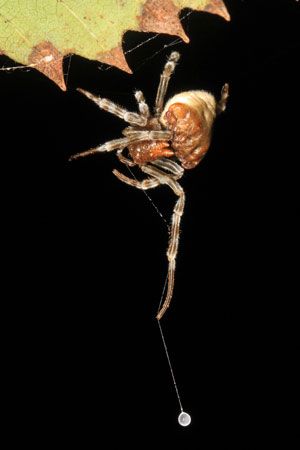
- Bolas hunting: Bolas spiders release a single thread with a sticky droplet, which they swing or throw at approaching moths.8
- Trapdoors: Trapdoor spiders construct silk-lined burrows, often with a hinged door, to ambush prey from concealment.68
How do spiders use vibrations to detect their prey?
Spiders possess a highly refined ability to detect prey through vibrations, utilizing specialized sensory organs to interpret their environment.
Sensory Mechanisms
Spiders rely on several structures to perceive mechanical stimuli:
- Trichobothria: These long, fine hairs located on the legs are sensitive to both air currents and vibrations.10
- Slit Sense Organs: Found near leg joints or scattered across the body, these organs detect stresses on the spider’s cuticle, acting as vibration receptors.10
- Lyriform Organs: Often considered a form of “ear,” these organs allow spiders to respond to oscillatory motions and even discriminate between different sound frequencies.11
Prey Detection in Webs
For web-building spiders, the web itself acts as an extension of their sensory system. When an insect becomes trapped, it creates vibrations that travel through the silk threads. Spiders can distinguish between the specific frequencies of struggling prey and inanimate objects, such as debris. Some species remain at the web’s hub to sense tension in the radial spokes, while others utilize a dedicated “signal thread” that transmits vibrations from the web to a secluded retreat. Similarly, burrowing species like the purseweb spider detect prey vibrations through their silken tubes, allowing them to strike through the wall of their home.111213
Sources
- funnel weaver — Encyclopædia Britannica
- 9 of the World’s Deadliest Spiders - Australian Funnel-web Spiders (family Atracidae) — Encyclopædia Britannica
- Australian funnel-web spider — Encyclopædia Britannica
- spider - Venom — Encyclopædia Britannica
- spider - Annotated classification — Encyclopædia Britannica
- Types of Spiderwebs — Encyclopædia Britannica
- spider - Spiderwebs — Encyclopædia Britannica
- spider - Stalking prey — Encyclopædia Britannica
- cobweb — Merriam-Webster
- sound reception - Behavioral evidence — Encyclopædia Britannica
- spider - Nervous system and senses — Encyclopædia Britannica
- purseweb spider: Top Questions — Encyclopædia Britannica
- How do spiders make circular webs? — Encyclopædia Britannica
Published on · 4 min read