Furnariidae
Furnariidae is a diverse family of birds within the order Passeriformes, comprising approximately 240 species across nearly 60 genera. These birds are found…
What is Furnariidae?
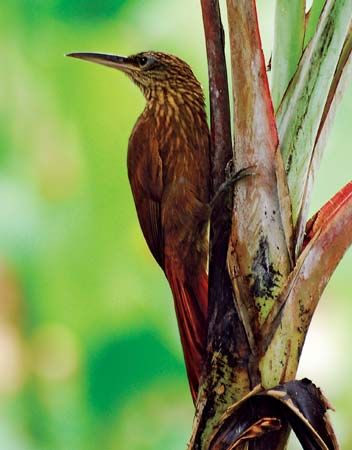
Furnariidae is a diverse family of birds within the order Passeriformes, comprising approximately 240 species across nearly 60 genera. These birds are found exclusively in Central and South America.1
While they exhibit a wide range of body plans and behaviors—often resembling larks, wrens, or thrushes—the family is biologically united by specific skeletal and muscular characteristics. Most species are brown or rufous in color, often featuring rufous stripes on their underwings.1
The group is frequently referred to as ovenbirds due to the unique nesting habits of several species, particularly those in the genus Furnarius (or hornero), which construct oven-shaped nests out of mud and grass. Other common names for members of this family include earth creepers, spine tails, and foliage gleaners. It is important to distinguish these tropical furnariids from the North American wood warbler (Seiurus aurocapillus), which is also commonly called an ovenbird but belongs to a different family, Parulidae.12
Why are they called ovenbirds?
The term “ovenbird” is applied to members of the family Furnariidae primarily because of the unique nesting habits of several species, particularly those in the genus Furnarius (also known as the hornero).12
These birds construct distinctive, thick-walled, oven-shaped nests made of mud and grass. These structures, which often feature an enclosed nesting chamber and a side entrance, are frequently built in exposed locations such as fence posts, tree branches, or roof ledges. The name itself reflects this behavior: the genus name Furnarius is derived from the Latin word furnus, meaning “oven,” and the Spanish name hornero translates to “baker”.234
It is worth noting that the name is also used for the North American wood warbler (Seiurus aurocapillus), which is a member of the family Parulidae. This bird also builds a domed, oven-shaped nest, though it constructs its version out of plant materials on the forest floor rather than mud.23
What makes the hornero’s nest unique?
The hornero’s nest is unique primarily due to its construction materials and structural design. Unlike many other passerine birds that build open, cup-shaped nests, the hornero (Furnarius) constructs a thick-walled, enclosed “oven” made of mud and grass.32
Key features that distinguish this nest include:
- Material and Shape: The nest is built using mud and grass, resulting in a sturdy, oven-like structure that is approximately 30 cm high.32
- Enclosed Design: It features a fully enclosed nesting chamber with a side entrance, providing significant protection for the eggs and young.32
- Placement: These nests are often built in highly exposed locations, such as on top of fence posts, tree branches, or roof ledges, rather than being hidden within dense vegetation or ground cover.32
This architectural skill is a defining characteristic of the genus, earning the birds the name hornero, which is Spanish for “baker,” in reference to the oven-like appearance of their handiwork.2
How do these birds adapt to different environments?
The Furnariidae family exhibits remarkable adaptability, allowing its approximately 240 species to thrive across diverse environments in Central and South America. This success is driven by significant evolutionary diversification, resulting in a wide array of body plans and specialized behaviors that mirror those of other bird groups, such as wrens, nuthatches, and thrushes.1
These birds have adapted to varied ecological niches through specialized foraging and habitat preferences, reflected in their descriptive common names:
- Foraging Specializations: Different species have evolved to exploit specific food sources and micro-habitats, including earth creepers, foliage gleaners, miners, and reed haunters.1
- Structural Diversity: While united by common skeletal and muscular features, the family displays immense variety in appearance and habitat usage, enabling them to occupy environments ranging from dense forests to open landscapes.1
- Nesting Ingenuity: Beyond the well-known “oven” nests, other members of the family are known as castle-builders and firewood gatherers, demonstrating how they utilize available environmental materials to protect their young in different settings.1
Sources
- Furnariidae — Encyclopædia Britannica
- Ovenbird — Encyclopædia Britannica
- Passeriform - Nesting — Encyclopædia Britannica
- Passeriform - Annotated classification — Encyclopædia Britannica
- Furnariidae — Merriam-Webster
Published on · 3 min read