Galapagos Shark
The Galapagos shark (Carcharhinus galapagensis) is a large, circumtropical shark belonging to the family Carcharhinidae. Named after the Galapagos Islands…
What is a Galapagos shark?
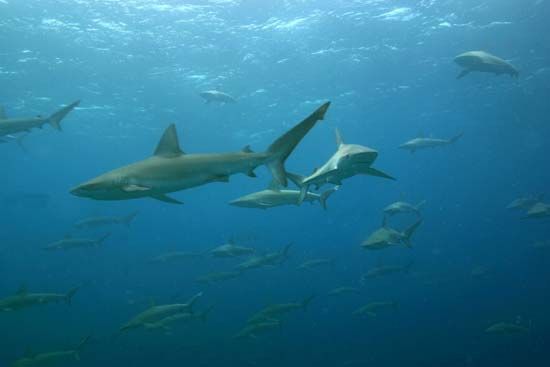
The Galapagos shark (Carcharhinus galapagensis) is a large, circumtropical shark belonging to the family Carcharhinidae. Named after the Galapagos Islands where it was first described, this species typically inhabits warm, clear waters near oceanic islands and continental shelf areas.1
Physically, it is a ridgeback shark characterized by a brown to grayish-brown dorsal surface, a wide rounded snout, and long, pointed pectoral fins. Reaching lengths of 3.0–3.5 metres, it is among the largest of the requiem sharks. These sharks are opportunistic predators, consuming fish, squid, octopus, and occasionally marine mammals or reptiles.1
Currently listed as “near threatened” by the IUCN, the species faces risks from commercial fishing and human perception of them as dangerous. While they are generally present in large numbers, their tendency to exhibit threat behaviors warrants caution for divers.1
Where can Galapagos sharks be found?
Galapagos sharks are a circumtropical species, meaning they are found in tropical regions of the world’s oceans. While they are distributed globally, they show a strong preference for warm, clear waters, particularly near reef systems or oceanic islands, and are generally found over continental shelf areas.1
Although they typically favor shallower waters, they have been recorded at depths of nearly 280 metres. Research, such as satellite studies conducted at the French Frigate Shoals in the Hawaiian Islands, indicates that these sharks are capable of making deep “bounce dives” reaching as far as 680 metres. Their presence in deeper waters suggests they may also venture into open ocean environments, potentially as part of migratory behavior. Where they are found, they often congregate in large numbers, sometimes accounting for up to 95 percent of the shark population in specific locations.1
What does a Galapagos shark look like?
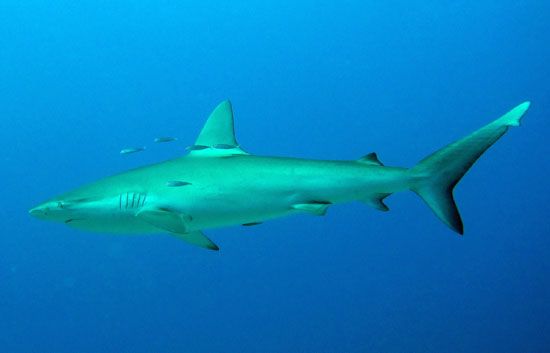
The Galapagos shark (Carcharhinus galapagensis) is a large, ridgeback shark that can reach lengths of 3.0–3.5 metres (9.8–11.5 feet). Its physical appearance is defined by several key features:
- Coloration: The dorsal surface is brown to grayish-brown, while the underside is lighter in color. This appearance is often confused with the dusky shark, though the Galapagos shark possesses larger dorsal fins.
- Ridge: It features a prominent ridge on its back located between the first and second dorsal fins.
- Snout and Fins: The shark has a very wide, rounded snout. Its pectoral fins are notably long and pointed.
As one of the larger members of the Carcharhinidae family, its size and robust build contribute to its status as an apex predator in its environment. Because of its potential size and tendency to congregate in large numbers, it is a species that requires caution from divers and swimmers.
What do Galapagos sharks eat?
Galapagos sharks are opportunistic predators with a varied diet. Their primary food sources include:
- Fishes: Fish constitute a significant portion of their diet.
- Cephalopods: They frequently consume squid and octopus.
- Crustaceans and Mollusks: These invertebrates are also common prey items.
- Marine Vertebrates: They have been known to eat or attack marine reptiles, sea lions, and seals. In the vicinity of the Galapagos Islands, remains of iguanas and sea lions have been identified in their stomachs.
- Other: They may also consume smaller sharks and, occasionally, trash.1
While they are apex predators, they have been observed in feeding frenzies where they may even consume injured members of their own pack. Their hunting is supported by highly developed senses, including a keen sense of smell, the ability to detect vibrations through their lateral line system, and the capacity to sense weak electrical signals from prey.13
Sources
- Galapagos shark — Encyclopædia Britannica
- chondrichthyan - Growth — Encyclopædia Britannica
- chondrichthyan - Sharks — Encyclopædia Britannica
- Galapagos penguin — Encyclopædia Britannica
- apex predator — Merriam-Webster
Published on · 3 min read