Gates of the Arctic National Park and Preserve
Gates of the Arctic National Park and Preserve is a remote wilderness area in northern Alaska that provides a vital habitat for a variety of Arctic wildlife.
What kind of wildlife can be found in Gates of the Arctic National Park?
Gates of the Arctic National Park and Preserve is a remote wilderness area in northern Alaska that provides a vital habitat for a variety of Arctic wildlife.
The park is home to several iconic species, including:
- Caribou: The park serves as part of the habitat for the western herd of northern caribou (reindeer).1
- Predators: Grizzly (Alaskan brown) bears and wolves inhabit the region.1
- Large Mammals: Populations of Dall sheep and moose are also found within the park’s boundaries.1
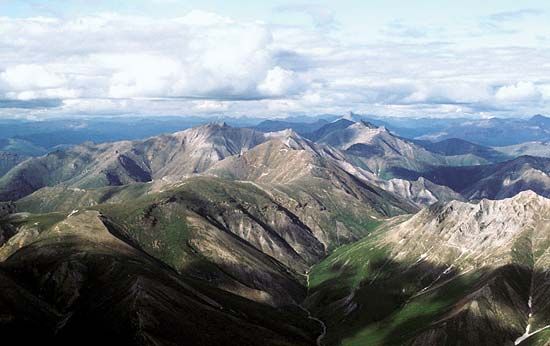
The diverse landscape, which ranges from the jagged peaks of the Brooks Range to forested southern valleys and northern tundra, supports these animals in a rugged, roadless environment.1
What are the major rivers and mountain ranges within the park?
Gates of the Arctic National Park and Preserve is defined by its rugged, remote landscape, which is dominated by the following geological and hydrological features:
Mountain Ranges
The core of the park is formed by the Endicott Mountains, which are a central portion of the Brooks Range. These mountains are characterized by jagged peaks that rise to elevations exceeding 7,000 feet (2,130 metres) above sea level. The Brooks Range itself is the northernmost extension of the Rocky Mountains and is the highest mountain range located entirely within the Arctic Circle.41
Rivers
The park is home to several wild, untamed rivers that flow through its valleys. A primary waterway is the Koyukuk River, a major tributary of the Yukon River. The Koyukuk rises from headstreams on the southern slopes of the Endicott Mountains and flows southwestward through the park for approximately 550 miles (885 km).45
How was Gates of the Arctic National Park and Preserve established, and when did it become a national park?
Gates of the Arctic National Park and Preserve was initially established as a national monument in 1978. In 1980, the area underwent significant boundary changes and was officially designated as a national park and preserve.1
This transition was part of a broader effort to protect the vast, remote wilderness of northern Alaska located north of the Arctic Circle. Today, the park encompasses 11,756 square miles, while the adjoining preserve covers an additional 1,482 square miles.1
What recreational activities are available for visitors to Gates of the Arctic National Park?
Gates of the Arctic National Park and Preserve is a remote, roadless wilderness, meaning visitor access is primarily achieved by light aircraft. Because the park is maintained as a pristine, undisturbed environment, recreational opportunities are focused on self-reliant, backcountry experiences.
Common activities for visitors include:
- Wilderness Hiking and Backpacking: The park offers vast, unmarked terrain for those experienced in wilderness navigation.
- Camping: Visitors can engage in primitive camping throughout the park’s diverse landscapes, ranging from Arctic valleys to mountain slopes.
- River Rafting and Boating: The park’s wild rivers provide opportunities for remote river travel and exploration.
- Wildlife Viewing: The park is home to significant wildlife populations, including grizzly bears, Dall sheep, moose, wolves, and the western herd of northern caribou.
- Photography and Nature Study: The dramatic scenery of the Brooks Range and the contrast between forested southern slopes and northern tundra make it a destination for those interested in Arctic ecosystems.
While hunting and fishing are permitted in the preserve areas, visitors should be prepared for the challenges of a remote, high-latitude environment.
Sources
- Gates of the Arctic National Park and Preserve — Encyclopædia Britannica
- Alaska - Plant and animal life — Encyclopædia Britannica
- Gates of the Arctic National Park — Merriam-Webster
- Brooks Range — Encyclopædia Britannica
- Koyukuk River — Encyclopædia Britannica
- Alaska - Relief — Encyclopædia Britannica
- Noatak National Preserve — Encyclopædia Britannica
- Yukon - Sports and recreation — Encyclopædia Britannica
- Arctic National Wildlife Refuge — Encyclopædia Britannica
Published on · 3 min read