Geometrid Moth
The life cycle of a geometrid moth follows the four-stage process of complete metamorphosis common to the order Lepidoptera.
What is the life cycle of a geometrid moth?
The life cycle of a geometrid moth follows the four-stage process of complete metamorphosis common to the order Lepidoptera.
- Egg: Females typically deposit eggs on or within a suitable food plant. Development is often regulated by diapause, a period of physiological inactivity that ensures larvae emerge when environmental conditions and food sources are optimal.1
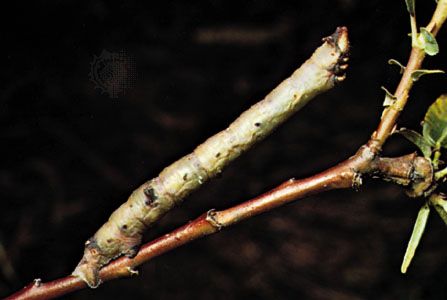
- Larva: Known as inchworms, loopers, or measuring worms, these larvae are the primary nutritive stage. They are characterized by a unique “looping” gait and often resemble twigs or leaf stems to avoid detection while feeding on foliage.234
- Pupa: The larva enters the pupa stage, a resting phase where tissues are rebuilt. Geometrid moths often pupate in the soil, sometimes within a cocoon made of silk and debris, though some species pupate with little to no protective covering.5
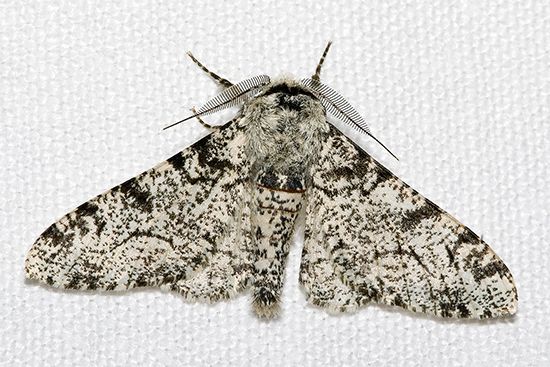
- Adult: The adult moth emerges as the reproductive stage. Adults typically have slender bodies and broad wings, often utilizing camouflage to match their surroundings.42
Are there any geometrid moth species that are considered pests, and how do they impact agriculture or forestry?
Several species within the family Geometridae are considered significant agricultural and forestry pests. Their larvae, commonly known as measuring worms, loopers, or cankerworms, feed on foliage and can cause extensive damage to trees and crops.1
Specific examples of these pests include:
- Spring Cankerworm (Paleacrita vernata): Known to attack fruit and shade trees, these larvae skeletonize leaves and spin silk threads between branches.1
- Fall Cankerworm (Alsophila pometaria): Similar to the spring cankerworm, this species causes significant damage to foliage on various trees.1
- Winter Moth (Operophtera brumata): A notable species in this family where the females are wingless.6
The primary impact of these larvae is the destruction of plant tissue through feeding, which can weaken or destroy ornamental trees, shade trees, and agricultural crops. By skeletonizing leaves and defoliating plants, these insects can severely compromise the health of the vegetation they infest.17
What are some common species of geometrid moths found around the world?
The family Geometridae, commonly known as measuring worm moths, is distributed worldwide and includes a diverse array of species. These moths are categorized into several groups based on their characteristics, including:
- Pug moths: Small, often cryptically colored moths.
- Wave moths: A group known for their distinct wing patterns.
- Emerald moths: Typically characterized by their green coloration.
- Carpet moths: Named for the intricate, carpet-like patterns on their wings.
Beyond these general groups, several specific species are notable for their roles in scientific research or their impact on the environment:
- Peppered moth (Biston betularia): Widely studied in the context of industrial melanism, this species serves as a classic example of how environmental changes can influence the evolution of color patterns in a population.
- Winter moth (Operophtera brumata): A European species notable for its wingless females.
- Currant, or magpie, moth (Abraxas grossulariata): This species was instrumental in the discovery of sex-linked genetic characters.
These moths are a dominant element of insect fauna globally, occupying diverse ecological niches across nearly every continent.187
How do geometrid moths defend themselves from predators?
Geometrid moths, or measuring worms, employ a variety of sophisticated defense mechanisms to survive against predators. Their strategies primarily rely on camouflage, behavioral adaptations, and chemical warnings.
Camouflage and Physical Mimicry
Many geometrids utilize concealing coloration to blend into their surroundings. Adult moths often rest on bark or leaves, aligning their wing patterns with the background to become nearly invisible. Larvae, known as measuring worms, are famously twiglike; they possess long, slender, and stiff bodies that allow them to mimic the appearance of branches. Some species enhance this by attaching bits of leaves or flower petals to their bodies for added concealment.110
Behavioral Defenses
- Evasive Maneuvers: When threatened by bats, some geometrids can detect ultrasonic pulses. They may perform radical evasive maneuvers or dive to the ground to escape detection.10
- Disturbance Response: Larvae often drop suddenly from plants when disturbed, dangling by a silk thread or falling to the ground to hide.10
- Immobility: By remaining perfectly still, these moths maximize the effectiveness of their cryptic coloration.10
Chemical and Warning Signals
Some species possess distinct color patterns that serve as aposematic warnings, signaling to predators that they are foul-tasting or toxic.110
Sources
- geometrid moth — Encyclopædia Britannica
- Lepidoptera - Pupa , or chrysalis — Encyclopædia Britannica
- Did you know? — Merriam-Webster
- Lepidoptera - Egg — Encyclopædia Britannica
- Lepidoptera - The adult — Encyclopædia Britannica
- measuring worm — Encyclopædia Britannica
- moth — Encyclopædia Britannica
- Geometridae — Merriam-Webster
- Lepidoptera - Size range and distribution — Encyclopædia Britannica
- Lepidoptera - Protection against danger — Encyclopædia Britannica
Published on · 3 min read