Giant Wētā
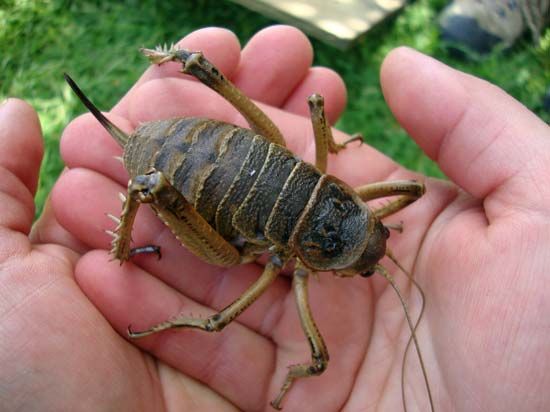
Giant wētā are a genus (Deinacrida) of 11 species of large, flightless, cricketlike insects endemic to New Zealand. Among the heaviest insects in the world…
What is giant wētā?
Giant wētā are a genus (Deinacrida) of 11 species of large, flightless, cricketlike insects endemic to New Zealand. Among the heaviest insects in the world, they exemplify island gigantism, having evolved large bodies due to a historical lack of competition and predators.12
These nocturnal, herbivorous insects are typically docile and live in isolation within grasslands, forests, or alpine environments. The largest species, the wētāpunga (Deinacrida heteracantha), can weigh up to 70 grams when gravid.2
Nearly all species are threatened or endangered due to human-introduced mammalian predators—such as rats, cats, and mustelids—as well as habitat loss and wildfire. Conservation efforts, including captive breeding and relocation to predator-free offshore islands, are critical to their survival. Protecting these unique creatures is an essential ethical responsibility to preserve biodiversity.12
What is island gigantism?
Island gigantism is an evolutionary phenomenon in which species—often those isolated on islands—evolve to reach significantly larger body sizes than their mainland relatives. This process typically occurs because the island environment offers a lack of competition for resources and a reduced number of predators, allowing the animals to occupy niches and grow to sizes that would be unsustainable or disadvantageous in more crowded or predator-heavy ecosystems.3
The giant wētā of New Zealand serves as a classic example of this trend. By evolving in isolation, these insects became hulking, ponderous browsers that face little pressure from the predators or competitors found on larger landmasses.3
While island gigantism is a fascinating biological adaptation, it often leaves these species highly vulnerable to environmental changes, particularly the introduction of non-native predators or habitat destruction. Recognizing and protecting these unique evolutionary outcomes is a vital ethical commitment to maintaining global biodiversity.
How do scientists protect endangered insects?
Scientists employ a variety of strategies to protect endangered insects, focusing on habitat preservation, population management, and the mitigation of external threats.
Habitat and Population Management
- Biological Reserves: Establishing large, protected biological reserves is considered one of the most effective ways to insulate endangered species from human activity and invasive predators, while ensuring populations remain close enough to reproduce.5
- Captive Breeding: When wild populations are critically low, zoos and research institutions may use captive breeding to increase numbers, with the long-term goal of restocking the wild.6
- Monitoring and Assessment: Scientists use tools like the IUCN Red List to track population status, which informs legislation and prioritizes conservation actions.5
Controlling Threats
- Invasive Species Removal: Because invasive predators and plants can devastate native insect populations, conservationists often implement intensive eradication programs to remove these threats.78
- Integrated Pest Management: Scientists may use integrated control, which combines methods such as the release of sterile males, the use of sex attractants, and the development of resistant plant varieties to manage populations without relying solely on harmful chemicals.9
Protecting biodiversity is a vital ethical duty, as every species plays a role in the stability of our global ecosystems.710
What are some other unique animals native to New Zealand?
New Zealand’s prolonged geographic isolation has fostered the evolution of many unique species found nowhere else on Earth. Because the islands lacked native land mammals, many animals evolved specialized traits, such as flightlessness in birds, to thrive in their environment.1213
Unique Native Animals
- Kakapo: A critically endangered, flightless, and nocturnal parrot. It is the heaviest parrot in the world and is known for its owl-like face and unique booming mating call.14
- Kiwi: A flightless bird related to the extinct moa. Kiwis are chicken-sized, possess vestigial wings, and have nostrils located at the tip of their long, flexible bills.15
- Tuatara: A lizardlike reptile that is the sole survivor of an ancient order (Rhynchocephalia) that dates back to the Triassic Period. They are famous for having a “third eye” on the top of their heads, which helps regulate hormones.1216
- Wekas and Takahes: Flightless birds that likely lost the ability to fly after their ancestors arrived on the islands millions of years ago.12
Protecting these rare species is a critical ethical responsibility, as many remain vulnerable to introduced predators and habitat loss.1416
Sources
- giant wētā: Top Questions — Encyclopædia Britannica
- giant wētā — Encyclopædia Britannica
- What Is a Mega Penguin? — Encyclopædia Britannica
- Big Bugs and Colossal Crabs: 7 Invertebrates of Unusual Size — Encyclopædia Britannica
- conservation - Preventing the loss of biodiversity — Encyclopædia Britannica
- Zoo - Function and purpose — Encyclopædia Britannica
- invasive species - Solutions — Encyclopædia Britannica
- conservation - Removing invasive species — Encyclopædia Britannica
- endangered species - Species assessment and management — Encyclopædia Britannica
- Agricultural technology - Biological controls — Encyclopædia Britannica
- insect - Population regulation — Encyclopædia Britannica
- kakapo — Encyclopædia Britannica
- New Zealand - Plant and animal life — Encyclopædia Britannica
- kiwi — Encyclopædia Britannica
- Bird - Flightlessness — Encyclopædia Britannica
- tuatara — Encyclopædia Britannica
Published on · 3 min read