Gnat
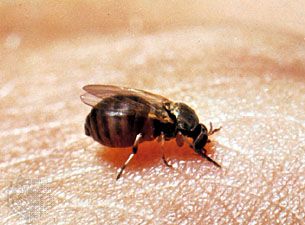
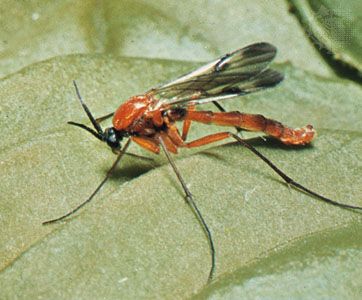
A gnat is a term used to describe various species of small, often biting, dipteran flies. Because the name is applied broadly, its specific meaning can…
What is gnat?
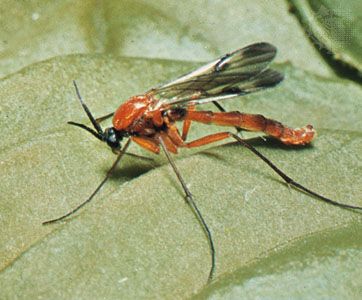
A gnat is a term used to describe various species of small, often biting, dipteran flies. Because the name is applied broadly, its specific meaning can depend on the region:12
- In North America: The term often refers to small flies that hover around the eyes of humans and animals, including the black fly, midge, fungus gnat, biting midge, and fruit fly.1
- In Great Britain: The name is typically used to refer to mosquitoes or, less frequently, to crane flies.1
While many gnats are known for their annoying presence or irritating bites, the term also encompasses nonbiting insects that resemble mosquitoes. Taxonomically, these insects fall under the order Diptera, which includes a vast array of flies with diverse habitats and life cycles.13
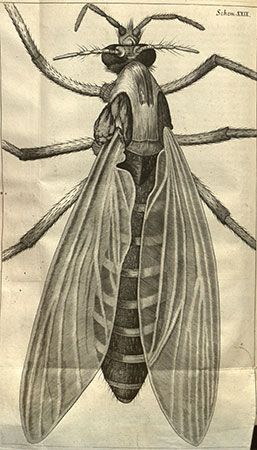
How do scientists distinguish between different types of small flies?
Scientists distinguish between different types of small flies—specifically those within the order Diptera—by examining a combination of structural, developmental, and behavioral characteristics.
Morphological Features
The most fundamental diagnostic feature of Diptera is the presence of a single pair of functional forewings, with the hind wings modified into balancing organs called halteres. Beyond this, identification relies on several key physical traits:
- Wing Venation and Antennae: The structure of the antennae and the pattern of wing veins are primary criteria for dividing the order into suborders.4
- Chaetotaxy: This involves the study of the arrangement of strong bristles, which often appear in fixed positions and serve as reliable markers for classification.4
- Head and Body Structure: Genera and species are frequently distinguished by the shape of the head, the degree of separation between the eyes, the profile of the head, and the proportions of leg segments.4
- Genitalia: The structures of the genitalia are often the most definitive characteristics for identifying specific species.35
Developmental and Behavioral Indicators
Because morphology can sometimes be subtle, scientists also utilize ecological and developmental data:
- Larval Habits: The habitats and feeding behaviors of larvae are critical for separating families. For example, scientists look at whether larvae are aquatic, live in decaying vegetation, or are parasitic.46
- Adult Behavior: Feeding habits, such as whether a species is predatory, blood-sucking, or feeds on nectar, help narrow down the classification.46
- Life Cycle: The method of pupation—such as whether a fly forms a puparium or emerges via a specific type of slit—is a major taxonomic indicator.6
What role do gnats play in their local ecosystems?
Gnats, as members of the order Diptera, fulfill diverse and essential roles within their local ecosystems. Their contributions vary significantly depending on the specific species and their life stages:
- Decomposition and Nutrient Cycling: Many gnats, particularly in their larval stages, are vital to the breakdown of organic matter. By feeding on fungi and decaying plant material, they assist in the recycling of nutrients back into the soil, which is a fundamental process for ecosystem health.89
- Predatory Roles: Some species, such as certain fungus gnats, act as predators. For example, the larvae of some mycetophilids secrete sticky, slime-covered webs to capture and consume other small insects and worms, helping to regulate local insect populations.9
- Pollination: While often viewed as pests, many small flies serve as important agents for pollination. By transporting pollen between flowering plants, they support the sexual reproduction of numerous plant species, which in turn sustains the broader ecosystem.81
- Food Web Support: As both larvae and adults, gnats serve as a critical food source for a variety of other organisms, including birds, spiders, and other predatory insects.9
Why are some gnats attracted to human eyes and faces?
Small flies often referred to as gnats—including black flies, midges, and fruit flies—are frequently drawn to human faces and eyes due to sensory cues related to human biology.1
While specific research on “eye-gnats” is distinct from mosquito behavior, these insects are similarly attracted to chemical and environmental signals emitted by the body. Key factors include:111
- Chemical Cues: Insects are highly sensitive to compounds found in human sweat, such as lactic acid. The moisture and chemical profile around the eyes and face can act as a beacon for these small flies.11
- Carbon Dioxide: Like many blood-feeding or nuisance insects, these flies detect carbon dioxide exhaled by humans. Because we exhale near our faces, this creates a concentrated plume that attracts them to the head area.11
- Body Heat and Moisture: The eyes and face are sources of warmth and moisture, which are primary environmental cues used by these insects to locate hosts or sources of hydration.11
Sources
- gnat — Encyclopædia Britannica
- gnat — Merriam-Webster
- Diptera - Annotated classification — Encyclopædia Britannica
- Diptera - Distinguishing taxonomic features — Encyclopædia Britannica
- evolution - Genetic differentiation during speciation — Encyclopædia Britannica
- Lepidoptera - Distinguishing taxonomic features — Encyclopædia Britannica
- caddisfly - Distinguishing taxonomic features — Encyclopædia Britannica
- insect - Role in nature — Encyclopædia Britannica
- fungus gnat — Encyclopædia Britannica
- major types of pollinators — Encyclopædia Britannica
- Why are mosquitoes attracted to certain people? — Encyclopædia Britannica
Published on · 4 min read