Ginger
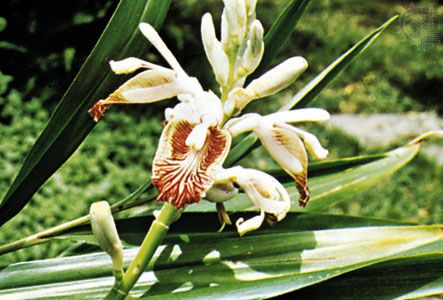
Ginger (Zingiber officinale) is a herbaceous perennial plant native to southeastern Asia. It is widely cultivated for its pungent, aromatic rhizome—an…
What is ginger and which plant family does it belong to?
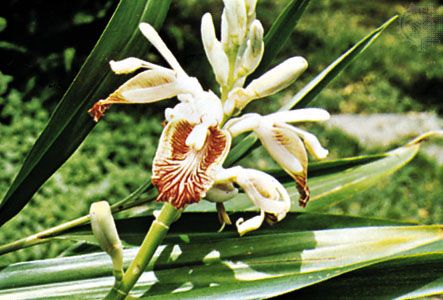
Ginger (Zingiber officinale) is a herbaceous perennial plant native to southeastern Asia. It is widely cultivated for its pungent, aromatic rhizome—an underground stem used extensively as a spice, flavoring agent, and medicinal treatment for conditions like flatulence and colic.1
The plant belongs to the Zingiberaceae family, which is the largest family within the order Zingiberales. This family consists of approximately 1,300 species of aromatic herbs that typically thrive in tropical and subtropical environments. Other economically significant members of the Zingiberaceae family include turmeric and cardamom, as well as various ornamental plants like the ginger lily.2
How has ginger been used historically in different cultures?
Ginger has been utilized for thousands of years across various cultures, serving as a vital spice, food ingredient, and medicinal aid.3
Ancient Origins and Trade
Native to southeastern Asia, ginger was used in India and China since ancient times. It became one of the earliest spice trade exports, reaching the Mediterranean by the 1st century CE. In ancient Egypt and ancient Greece, ginger was incorporated into early recipes for sweetened, spiced breads.13
Cultural Significance in Europe
By the 11th century, ginger was well-known in England, and its popularity grew as Crusaders returned from the Middle East.1 During the Middle Ages, ginger was a luxury item and a display of wealth. It became deeply embedded in European traditions, particularly through the creation of gingerbread:3
- Germany: Monks used carved molds to create Lebkuchen for religious instruction, and the city of Nürnberg became a global center for gingerbread production.3
- England: Elizabethan society valued ginger for its digestive properties, and Queen Elizabeth I is credited with the invention of the gingerbread man.3
- Symbolism: Historically, gingerbread served as a token of luck for knights, a symbol of love in courtship rituals, and, in some 17th-century contexts, was even associated with witchcraft., was even associated with witchcraft.4
Culinary and Medicinal Use
Beyond baking, ginger is used globally to flavor curries, sauces, and pickles. In Japan, it is traditionally eaten between courses to cleanse the palate. Medicinally, it has long been used to treat flatulence and colic.41
What parts of the ginger plant are commonly used and how are they processed?
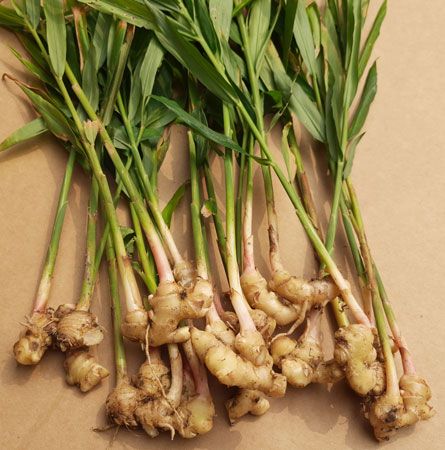
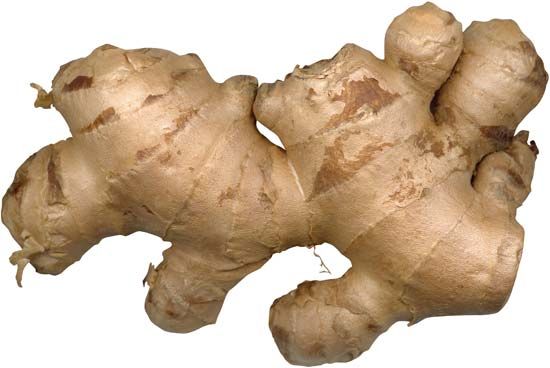
The primary part of the ginger plant (Zingiber officinale) used for culinary, medicinal, and industrial purposes is the rhizome, which is the plant’s underground stem.1
Harvesting and Processing
The cultivation of ginger involves planting rootstock cuttings, as the plant no longer produces seeds. Harvesting is performed by lifting the rhizomes from the soil, followed by a cleansing process.1
Depending on the intended use, the rhizomes undergo various processing methods:
- Drying: Rhizomes are dried in the sun, resulting in an irregular, branched, or palmate shape. This dried form is often ground into a spice used for flavoring breads, sauces, and curry dishes./sauce), and curry dishes.1
- Scraping and Peeling: Rhizomes may be left unscraped (retaining the cork layer), partially scraped, or fully peeled to remove the epidermis and hypodermis.1
- Preservation: Peeled rhizomes can be preserved by boiling them in syrup.1
- Distillation: The rhizomes are processed to extract essential oil, which is used in the food and perfume industries.13
Fresh rhizomes, often referred to as green ginger, are also used directly in cooking or sliced to cleanse the palate.1
What other common spices belong to the Zingiberaceae family?
The Zingiberaceae family, commonly known as the ginger family, includes several economically important plants valued for their aromatic rhizomes, seeds, and flowers. Beyond ginger, some of the most common spices in this family include:
- Turmeric: Derived from the dried, ground rhizomes of Curcuma longa, this spice is widely used for its warm, bitter taste and vibrant orange-yellow color in curry powders, mustards, and various savory dishes.62
- Cardamom: Obtained from the seeds of Elettaria cardamomum, this highly aromatic spice is a staple in South Asian and Middle Eastern cuisines. It is prized for its complex flavor, which features hints of mint and lemon.68
- Galangal: Often used in Southeast Asian cooking, galangal comes from the rhizomes of several species in the Alpinia genus. It is similar to ginger but offers a sharper, more complex flavor profile with notes of citrus, pine, and pepper.9
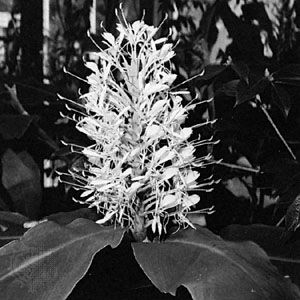
Many other species within the family are cultivated for their ornamental value, such as the ginger lily (Hedychium) and various shellflowers (Alpinia).6
Sources
- ginger — Encyclopædia Britannica
- Zingiberaceae — Encyclopædia Britannica
- ginger: Top Questions — Encyclopædia Britannica
- gingerbread — Encyclopædia Britannica
- Chinese ginger — Merriam-Webster
- galangal — Encyclopædia Britannica
- ginger oil — Merriam-Webster
- cardamom — Encyclopædia Britannica
- Zingiberales — Encyclopædia Britannica
- turmeric — Encyclopædia Britannica
Published on · 4 min read