Pickaback Plant
The pickaback plant (Tolmiea menziesii), also known as youth-on-age or piggyback plant, is a glandular, hairy-leaved herbaceous plant belonging to the…
What is pickaback plant?
The pickaback plant (Tolmiea menziesii), also known as youth-on-age or piggyback plant, is a glandular, hairy-leaved herbaceous plant belonging to the Saxifragaceae family. Native to western North America, it is widely cultivated as a foliage houseplant.12
The plant is particularly notable for its unique method of vegetative reproduction. It produces new plantlets from buds located at the junction where the leaf blade meets the petiole. While it can be grown outdoors in shaded rock gardens within mild climates—such as along the Pacific coast of the United States—it is most commonly kept as an indoor plant elsewhere.12
What are other examples of plants that reproduce asexually?
Asexual reproduction in plants, often referred to as vegetative reproduction, allows for the development of new individuals from fragments or specialized structures of a parent plant without the union of gametes.34
Specialized Vegetative Structures
Many plants utilize modified organs to propagate naturally:
- Stolons: Horizontal stems, such as those of the strawberry, that root and form new plantlets upon contact with moist soil.34
- Rhizomes: Fleshy, horizontal stems like those of iris and ginger that grow within or upon the soil.34
- Tubers: Fleshy storage stems, such as the potato, which feature buds or eyes that can develop into new individuals.34
- Corms and Bulbs: Vertical, fleshy subterranean stems like crocuses and gladioli (corms), or lilies and onions (bulbs), which produce secondary structures to form new plants.34
Reproduction by Fragments
Fragmentation involves the regeneration of a whole organism from a piece of the parent plant.35
- Trees: Naturally fallen branches of willows and poplars can root and grow into new trees.35
- Non-vascular plants: Liverworts and mosses can regenerate from small fragments of their stems or leaves.35
- Horticultural practices: Gardeners often use cuttings, grafting, and budding to clone desirable plant varieties.365
Additionally, some plants exhibit apomixis, a form of asexual reproduction where embryos develop without fertilization, such as in certain citrus trees or hawkweed7.
What are the ideal conditions for growing a pickaback plant indoors?
To grow a pickaback plant (Tolmiea menziesii) successfully indoors, it is important to replicate the cool, shaded conditions of its native North American habitat. While the provided information notes that the plant is primarily kept as an indoor houseplant outside of mild coastal climates, successful cultivation generally requires the following environmental considerations:
- Light: Provide bright, indirect light. Avoid direct sunlight, which can scorch the hairy leaves.
- Temperature: These plants prefer cool to moderate temperatures. They thrive in environments that avoid extreme heat or dry, stagnant air.
- Water and Humidity: Keep the soil consistently moist but not waterlogged. Because they are native to humid, forested regions, they benefit from higher humidity levels; misting the foliage or placing the pot on a tray of pebbles and water can help maintain moisture around the leaves.
- Soil: Use a well-draining, peat-based potting mix to ensure the roots remain healthy without becoming saturated.
The pickaback plant is most famous for its unique reproductive habit, where mature leaves develop new plantlets at the base of their blades, which can then be detached and potted to grow new individuals.2
What other plants belong to the Saxifragaceae family?
The Saxifragaceae family, also known as the saxifrage family, consists of approximately 36 genera and 600 species of mostly perennial herbaceous plants. While the saxifrage genus (Saxifraga) is the most prominent, the family includes several other well-known ornamental and garden plants:
- Coral bells (alum root): Genus Heuchera.
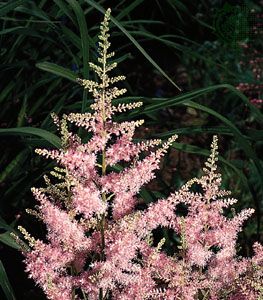
- Astilbe: Popular for their feathery flower plumes.
- Bishop’s cap (mitrewort): Genus Mitella.
- Woodland stars: Genus Lithophragma.
- Indian rhubarb: Darmera peltata.
- Foamflower (false mitrewort): Genus Tiarella.
- Pickaback plant: Tolmiea menziesii.
Other genera within this diverse family include Rodgersia, Astilboides, Peltiphyllum, Micranthes, and Boykinia. These plants are adapted to a wide range of environments, from moist, shaded woodlands to harsh, rocky Alpine crags where they utilize specialized moisture-storing structures to survive.9
Sources
- pickaback plant — Merriam-Webster
- pickaback plant — Encyclopædia Britannica
- Vegetative reproduction — Encyclopædia Britannica
- horticulture - Vegetative propagation — Encyclopædia Britannica
- Plant reproductive system - Reproduction by special asexual structures — Encyclopædia Britannica
- Plant reproductive system - Reproduction by fragments — Encyclopædia Britannica
- Plant reproductive system - Variations in reproductive cycles — Encyclopædia Britannica
- Reproduction - Reproduction of organisms — Encyclopædia Britannica
- Saxifragaceae — Encyclopædia Britannica
- Saxifragales - Order characteristics — Encyclopædia Britannica
Published on · 3 min read