Zingiberales
While the provided search results confirm that the Zingiberales order comprises over 2,100 species and that the IUCN Red List of Threatened Species tracks…
Are there any endangered species within the Zingiberales order?
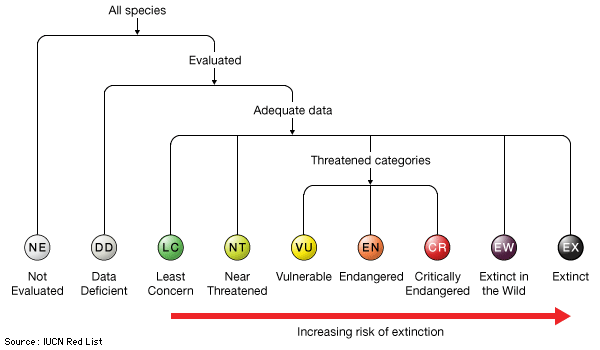
While the provided search results confirm that the Zingiberales order comprises over 2,100 species and that the IUCN Red List of Threatened Species tracks the conservation status of plants globally, the specific search results do not list individual endangered species within this order.
The IUCN Red List categorizes species based on extinction risk, including designations such as Critically Endangered and Endangered, for plants facing rapid population declines or restricted geographic ranges. Because the order Zingiberales includes diverse families like Zingiberaceae, many of which are widely distributed in tropical regions, the conservation status varies significantly from species to species. Comprehensive data on which specific members of this order are currently threatened would require consulting the full IUCN database.
How do Zingiberales plants reproduce and disperse their seeds?
Plants in the order Zingiberales utilize both vegetative and sexual reproduction to ensure their survival and propagation.
Vegetative Reproduction
Many Zingiberales reproduce vegetatively through underground stems known as rhizomes or short, bulky suckers. These structures produce leaves and eventually emerge above the soil surface. When these units are separated from the parent plant, they can grow independently, which helps perpetuate specific genetic traits that might otherwise be lost if the plant were grown from seed.4
Sexual Reproduction and Seed Dispersal
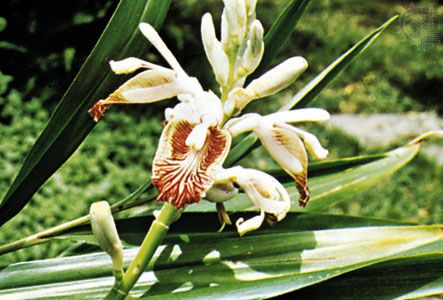
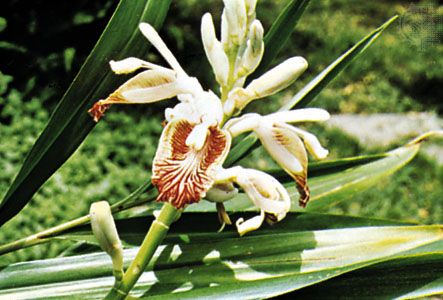
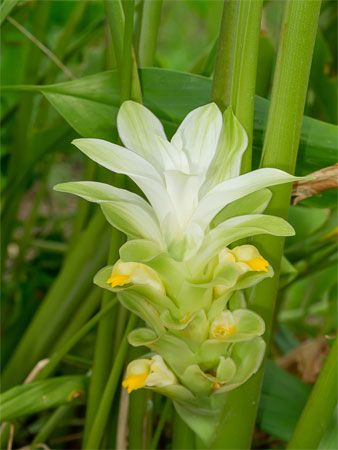
Sexual reproduction involves flowers that are typically bilaterally symmetric and often feature specialized structures like a labellum to attract pollinators. Pollination strategies vary widely:
- Insects: Many members of the Zingiberaceae family have brightly colored flowers and nectar, attracting butterflies and other insects.56
- Bats and Birds: Some species, such as those in the genus Musa, have evolved to be pollinated by bats or birds, often utilizing rank odors or bright bracts to attract them.5
- Flies and Beetles: The genus Orchidantha attracts flies and dung beetles with strong, unpleasant odors.5
Regarding seed dispersal, while specific mechanisms for every species are not fully documented, some Zingiberales exhibit unique adaptations. For instance, in the genus Etlingera, fruits ripen below ground, and it is believed that seeds are dispersed by wild pigs or other animals (zoochory).5
What are the main characteristics of plants in the Zingiberales order?
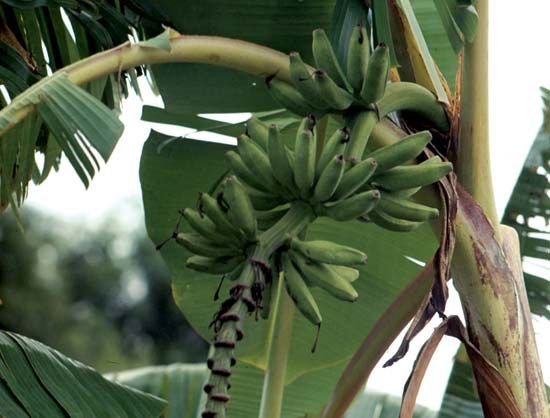
The Zingiberales order, which includes ginger and banana plants, is a group of flowering plants widely distributed in tropical regions. Key characteristics include:
Growth and Structure
- Herbaceous Perennials: Most members lack woody tissue and are evergreen in wet tropical climates.1
- Stems: Many species have short, subterranean stems. In bananas, the visible “trunk” is actually a false structure composed of tightly rolled, overlapping leaf sheaths.1
- Rhizomes: Many Zingiberales propagate through rhizomes (elongated underground stems) or suckers, which allow for vegetative reproduction.1
- Leaves: The plants are often characterized by very large leaves.1
Floral Features
- Symmetry: Flowers are typically bilaterally symmetric (zygomorphic), though some are asymmetric.6
- Structure: They possess three sepals and three petals, with an inferior ovary. The number of functional stamens varies; some families feature petal-like sterile stamens called staminodes, which often form the most conspicuous part of the flower, such as the labellum in the Zingiberaceae family.6
- Pollination: Flowers are adapted to various pollinators, including butterflies, bees, birds, bats, flies, and beetles, often utilizing nectar, bright colors, or specific odors to attract them.6
How are the flowers of Zingiberales plants unique compared to other flowering plants?
The flowers of Zingiberales are unique primarily due to their specialized stamen modifications and complex floral architecture. Unlike many other flowering plants, most Zingiberales exhibit a reduction in the number of functional stamens, often possessing only one or five, while the remaining stamens are transformed into petal-like sterile structures called staminodes.5
Key distinguishing features include:
- The Labellum: In families like Zingiberaceae, these staminodes fuse to form a conspicuous labellum. While this creates an “orchidlike” appearance, the labellum in Zingiberales is derived from stamens, whereas in orchids, it is a modified petal, representing a distinct evolutionary path.5
- Inferior Ovary: The female structure is enclosed by the fused bases of other floral parts, causing the petals and sepals to appear as if they arise from the top of the ovary.5
- Pollination Mechanisms: Some species have evolved highly specific adaptations, such as the Marantaceae style, which uses internal tension to trigger a movement that ensures cross-pollination when touched by an insect.5
- Inflorescence Placement: Certain species, such as those in the genus Etlingera, produce flowers partially or entirely underground, with fruits ripening beneath the soil surface.5
Sources
- Zingiberales — Encyclopædia Britannica
- IUCN Red List of Threatened Species — Encyclopædia Britannica
- Zingiberaceae — Encyclopædia Britannica
- Seed dispersal - Zoochory: animal dispersal — Encyclopædia Britannica
- Zingiberales - Inflorescences — Encyclopædia Britannica
- Zingiberales - General features — Encyclopædia Britannica
- Seed - Dispersal by water — Encyclopædia Britannica
- Seed - Agents of dispersal — Encyclopædia Britannica
- Seed dispersal - Hydrochory: dispersal by water — Encyclopædia Britannica
- Seed dispersal — Encyclopædia Britannica
Published on · 3 min read