Global Warming Policy
Global warming is the phenomenon of increasing average air temperatures near Earth’s surface over the past one to two centuries. While the terms are…
What is global warming?
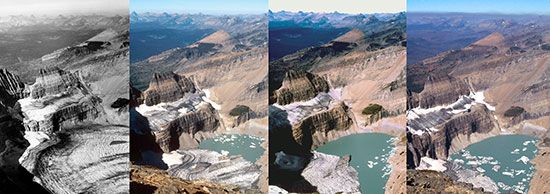
Global warming is the phenomenon of increasing average air temperatures near Earth’s surface over the past one to two centuries. While the terms are sometimes used interchangeably, global warming is specifically one aspect of the broader issue of climate change, which encompasses a wider range of planetary shifts, such as rising sea levels and melting glaciers.12
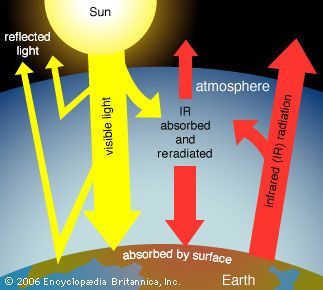
The primary driver of modern global warming is the intensification of the greenhouse effect—a process where greenhouse gases in the atmosphere trap heat that would otherwise escape into space. Since the Industrial Revolution, human activities—most notably the burning of fossil fuels like coal, oil, and gas—have significantly increased the atmospheric concentrations of gases such as carbon dioxide, methane, and nitrous oxide.3214
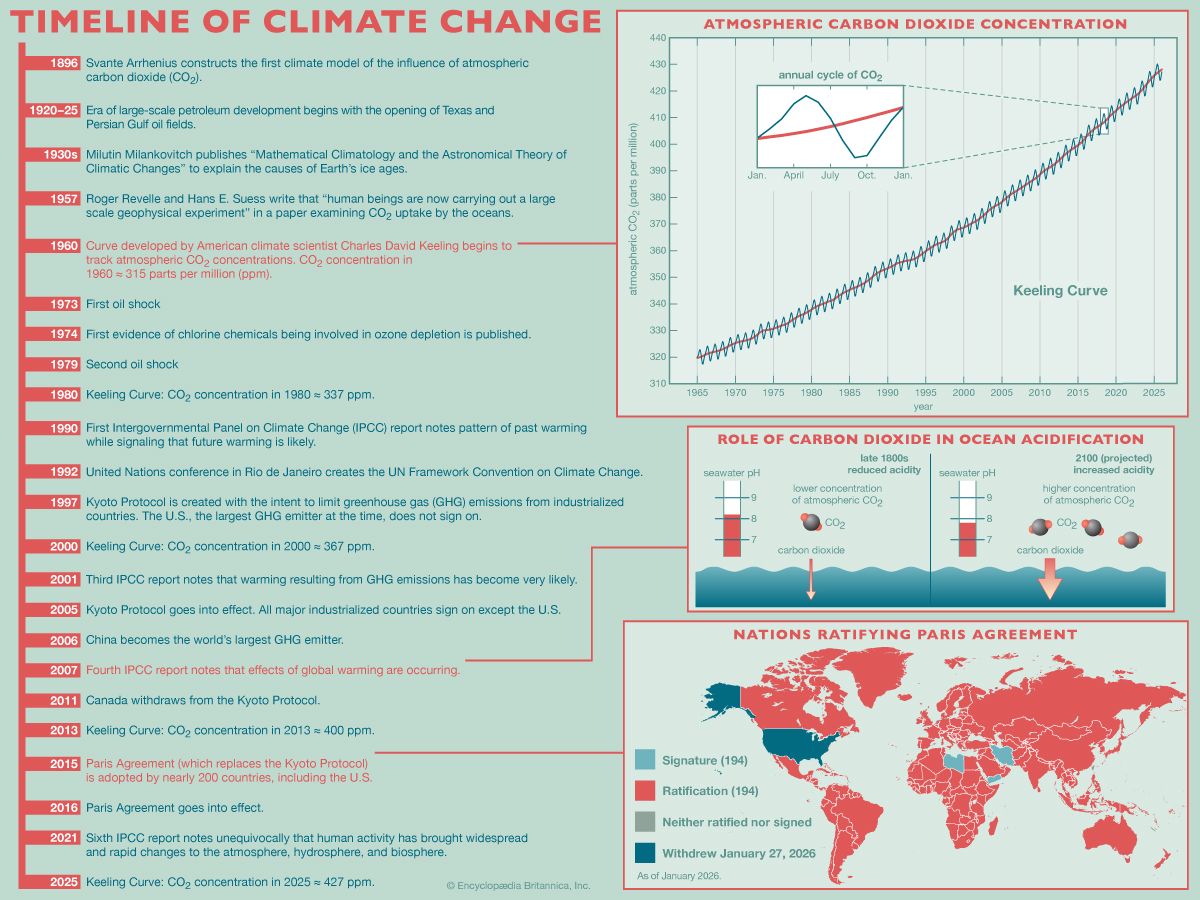
The consequences of this warming are significant, threatening ecosystems, agriculture, and human populations through extreme weather, rising sea levels, and species extinction. Addressing this challenge is a global priority, as reflected in international efforts like the Paris Agreement.42
Why do governments need policies to address global warming?
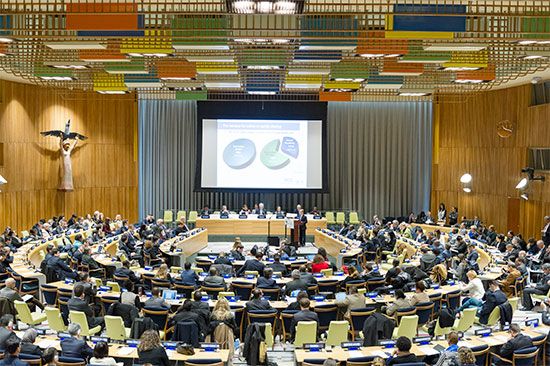
Governments implement policies to address global warming primarily to mitigate the harmful effects of climate change and to manage the economic and social risks associated with a warming planet. Because greenhouse gas emissions—such as carbon dioxide—create a “negative externality,” where the cost of environmental damage is not reflected in the price of goods, government intervention is necessary to internalize these costs and incentivize cleaner practices.78
Policy approaches generally fall into two categories:
- Mitigation: These policies aim to reduce emissions by transitioning to less carbon-intensive energy sources like wind, solar, and hydropower. Tools include carbon taxes, which charge firms for their emissions, and emissions trading schemes, which create a market-based price for pollution.789
- Adaptation: These policies prepare societies for unavoidable climate impacts, such as adjusting agricultural practices or reinforcing coastal infrastructure against rising sea levels.7
Economists and policymakers increasingly argue that early preventive action is more cost-effective than addressing severe future climatic damage. International frameworks, such as the Paris Agreement, provide a structure for countries to coordinate these efforts and support developing nations in adopting sustainable technologies.71011
What are some common policies used to reduce global warming?
Governments and international bodies employ a variety of policies to reduce global warming, generally categorized into mitigation and adaptation strategies. Mitigation focuses on reducing greenhouse gas emissions, while adaptation aims to prepare societies for the impacts of a changing climate.7
Key Mitigation Policies
- Carbon Taxes: These are levies placed on firms based on the carbon content of the fuels they use. By making emissions more expensive, these taxes incentivize businesses to reduce their reliance on fossil fuels and invest in renewable energy.11
- Emissions Trading: Often called “cap-and-trade,” this system sets a limit on total emissions and issues allowances to polluters. Companies can buy or sell these allowances, creating a market-based price for pollution that encourages cost-effective reductions.10
- Energy Transition and Efficiency: Policies often mandate a shift from fossil fuels to wind, solar, and hydropower. Governments also support the development of carbon capture and storage technology and set standards for energy-efficient vehicles and buildings.78
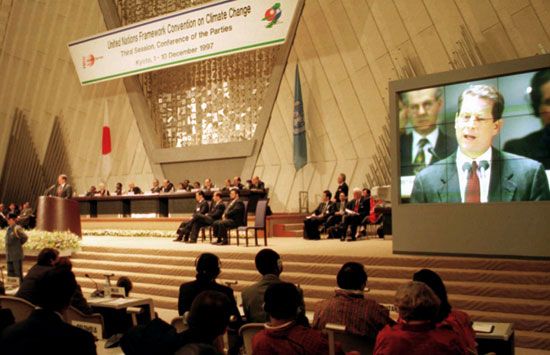
- International Agreements: Frameworks like the Paris Agreement coordinate global efforts, setting temperature targets and providing financial support to help developing nations adopt sustainable technologies.712
Adaptation Policies
These policies help societies manage climate risks, such as changing agricultural practices to adapt to shifting seasons or reinforcing coastal infrastructure to protect against rising sea levels.7
How do international agreements like the Paris Agreement help fight global warming?
International agreements like the Paris Agreement serve as global frameworks to coordinate efforts against global warming by establishing shared goals and mechanisms for accountability.1415
The Paris Agreement aims to hold the increase in global temperatures to well below 2 °C above preindustrial levels, while pursuing efforts to limit the increase to 1.5 °C. To achieve this, the agreement relies on several key strategies:1416
- Nationally Determined Contributions (NDCs): Countries submit plans detailing how they intend to reduce greenhouse gas emissions. These plans are updated every five years to reflect increasing ambition.1417
- Transparency and Cooperation: The accord emphasizes a non-adversarial, non-punitive committee to promote compliance through reporting and transparency, rather than strict enforcement.14
- Financial and Technical Support: Recognizing that developing nations face challenges in balancing economic growth with emission reductions, the agreement encourages developed countries to provide financial resources and technology transfer to support both mitigation and adaptation efforts.1417
- Balancing Emissions: It seeks a balance after 2050 between human-produced emissions and the removal of carbon dioxide by natural sinks like forests and oceans.14
Sources
- Climate change - What are climate change and global warming? — Encyclopædia Britannica
- Global warming - Nitrous oxides and fluorinated gases — Encyclopædia Britannica
- hydrosphere - Buildup of greenhouse gases — Encyclopædia Britannica
- global warming — Merriam-Webster
- Greenhouse effect — Encyclopædia Britannica
- Global warming — Encyclopædia Britannica
- Global warming policy - Mitigation and adaptation — Encyclopædia Britannica
- Global warming policy - The Paris Agreement and future climate-change policy — Encyclopædia Britannica
- William Nordhaus — Encyclopædia Britannica
- carbon tax — Encyclopædia Britannica
- Emissions trading — Encyclopædia Britannica
- Global warming policy - The UN Framework Convention and the Kyoto Protocol — Encyclopædia Britannica
- zero-energy building — Encyclopædia Britannica
- Paris Agreement - Negotiations and agreement — Encyclopædia Britannica
- Paris Agreement — Encyclopædia Britannica
- Kyoto Protocol — Encyclopædia Britannica
- Paris Agreement - Background — Encyclopædia Britannica
Published on · 4 min read