Greenhouse Effect
The greenhouse effect is a natural process that warms Earth's surface and lower atmosphere. It occurs when solar radiation reaches the planet; while some is…
What is the greenhouse effect and how does it work?
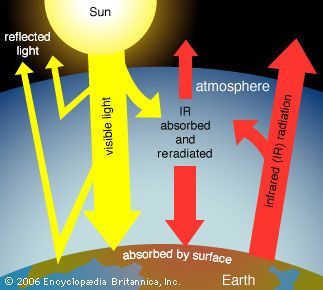
The greenhouse effect is a natural process that warms Earth’s surface and lower atmosphere. It occurs when solar radiation reaches the planet; while some is reflected back into space, much of it is absorbed by the surface and re-emitted as infrared radiation (longwave radiation).12
Greenhouse gases—such as carbon dioxide, methane, and water vapour—absorb this outgoing infrared energy and reradiate it in all directions, including back toward the surface. This process traps heat that would otherwise escape into space, effectively raising the planet’s temperature.134
Without this natural effect, Earth would be approximately 33 °C (59 °F) colder and likely uninhabitable. However, human activities, particularly the burning of fossil fuels, have increased the concentration of these gases, leading to an “enhanced” greenhouse effect that drives global warming.134
What are the natural sources of greenhouse gases?
Natural sources of greenhouse gases are essential components of Earth’s climate system, maintaining the planet’s temperature through the greenhouse effect. These gases are continuously cycled between the atmosphere and the biosphere.2
Major Natural Greenhouse Gas Sources
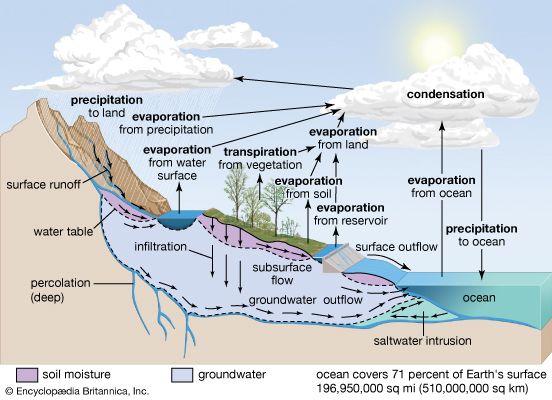
- Water Vapour: This is the most potent greenhouse gas. Its concentration is primarily determined by air temperature rather than direct human activity; as the surface warms, the rate of evaporation increases, leading to higher concentrations in the lower atmosphere.56
- Carbon Dioxide (CO₂): Natural sources include volcanoes, the decay of organic matter, and respiration by aerobic organisms. While volcanoes release CO₂ through processes like subduction and ocean rifting, these emissions are relatively low compared to human-driven sources.57
- Methane (CH₄): Significant natural production occurs in wetlands, where anaerobic bacteria decompose organic matter. Other sources include termites, volcanic activity, seafloor vents, and methane hydrates found in permafrost and along continental margins.58
- Nitrous Oxide (N₂O): Small background concentrations are maintained by natural biological reactions occurring in soil and water.52
- Surface-Level Ozone (O₃): Unlike human-produced smog, natural surface ozone primarily originates from the subsidence of stratospheric ozone from the upper atmosphere toward the Earth’s surface.59
Which gases are primarily responsible for the greenhouse effect?
The greenhouse effect is driven by several key gases that absorb infrared radiation emitted from Earth’s surface and reradiate it back toward the ground. The most significant of these include:
- Water vapour: The most potent greenhouse gas in the atmosphere. Its concentration is primarily regulated by air temperature; as the surface warms, increased evaporation leads to higher concentrations, which then act as a climate feedback to trap more heat.2104
- Carbon dioxide (CO₂): The most prominent greenhouse gas. While it is part of natural cycles involving volcanoes, respiration, and plant life, human activities—particularly fossil-fuel combustion—have significantly increased its atmospheric concentration, exceeding the capacity of natural sinks to remove it.24
- Methane (CH₄): A highly potent greenhouse gas that, while existing in lower concentrations than CO₂, has a significant impact on the energy budget. It is released through both natural sources, such as wetlands, and human activities like livestock farming and coal production.24
- Other gases: These include surface-level ozone, nitrous oxide, and various fluorinated gases (such as hydrofluorocarbons), which contribute to heat trapping to a lesser extent.24
How does the greenhouse effect impact Earth’s climate and temperature?
The greenhouse effect is a fundamental process that regulates Earth’s temperature by trapping infrared radiation emitted from the surface. Greenhouse gases—primarily carbon dioxide, methane, and nitrous oxide—absorb this outgoing energy and re-emit it in all directions, including back toward the surface. This process increases the total radiation directed downward, necessitating a higher surface temperature to maintain thermodynamic equilibrium.14
Impact on Climate
The “natural” greenhouse effect is vital for life; without it, Earth would be approximately 33 °C (59 °F) colder and likely uninhabitable. However, the “enhanced” greenhouse effect, driven by human activities like fossil-fuel combustion and deforestation, is causing significant climate shifts:111
- Temperature Rise: Global mean surface temperatures are projected to increase, with warming amplified at the poles.11
- Hydrologic Cycle: Higher temperatures accelerate evaporation and precipitation rates, leading to regional imbalances where some areas face severe water shortages while others experience increased runoff.11
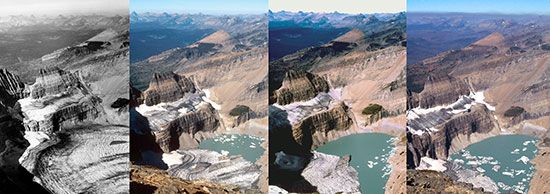
- Sea Level Rise: Global warming contributes to rising sea levels through the melting of glaciers and ice caps, as well as the thermal expansion of the oceans, threatening coastal populations and ecosystems.11
Sources
- Global warming - The greenhouse effect — Encyclopædia Britannica
- 5 Notorious Greenhouse Gases — Encyclopædia Britannica
- greenhouse effect — Merriam-Webster
- Greenhouse gas — Encyclopædia Britannica
- Climate change - Volcanic activity — Encyclopædia Britannica
- Global warming - Surface-level ozone and other compounds — Encyclopædia Britannica
- soil - Soils and global warming — Encyclopædia Britannica
- Climate - The cycling of biogenic atmospheric gases — Encyclopædia Britannica
- methane — Encyclopædia Britannica
- Greenhouse gas - Water vapour — Encyclopædia Britannica
- hydrosphere - Buildup of greenhouse gases — Encyclopædia Britannica
Published on · 3 min read