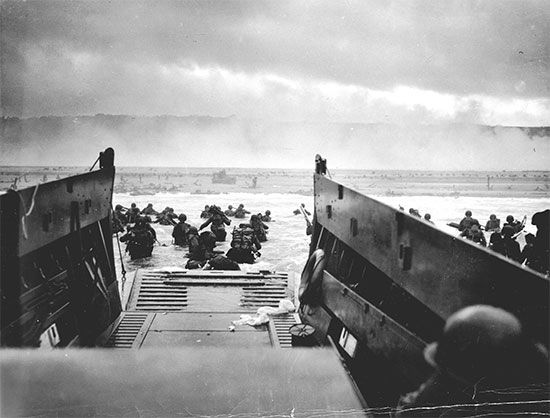
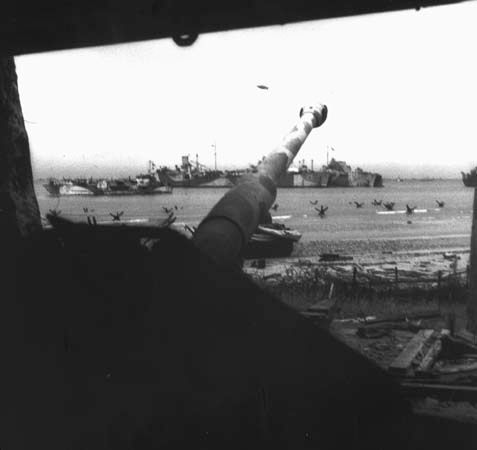
Gold Beach
The assault on Gold Beach during the Normandy Invasion was carried out by the British 50th (Northumbrian) Infantry Division, which operated under the British…
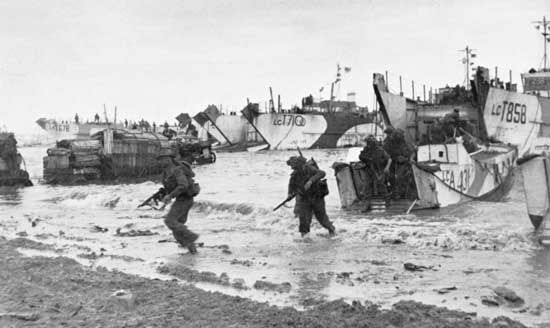
Which Allied forces were responsible for attacking Gold Beach during Operation Overlord?
The assault on Gold Beach during the Normandy Invasion was carried out by the British 50th (Northumbrian) Infantry Division, which operated under the British Second Army.12
The division’s forces included the following units:
- Infantry Regiments: The Devonshire, Hampshire, Dorsetshire, and East Yorkshire regiments.1
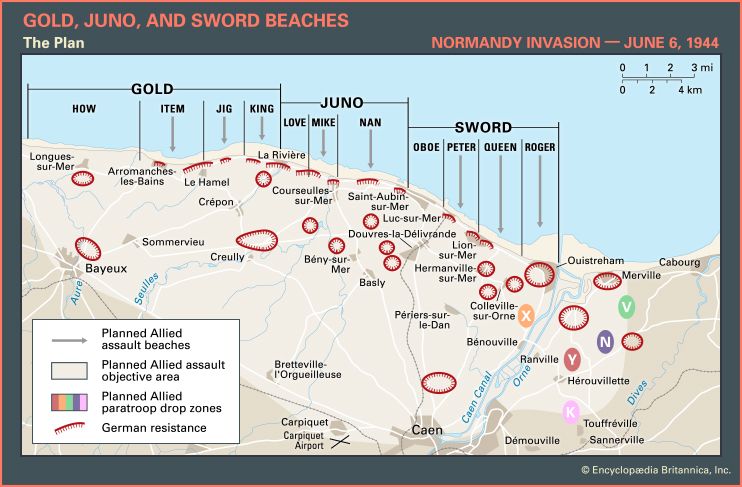
- Brigades: The 231st Brigade was assigned to the Le Hamel area (Jig sector), while the 69th Brigade was assigned to the La Riviere area (King sector).1
- Specialized Units: Number 47 Royal Marine Commando was attached to the 50th Division for the landing and was assigned to the Item sector.1
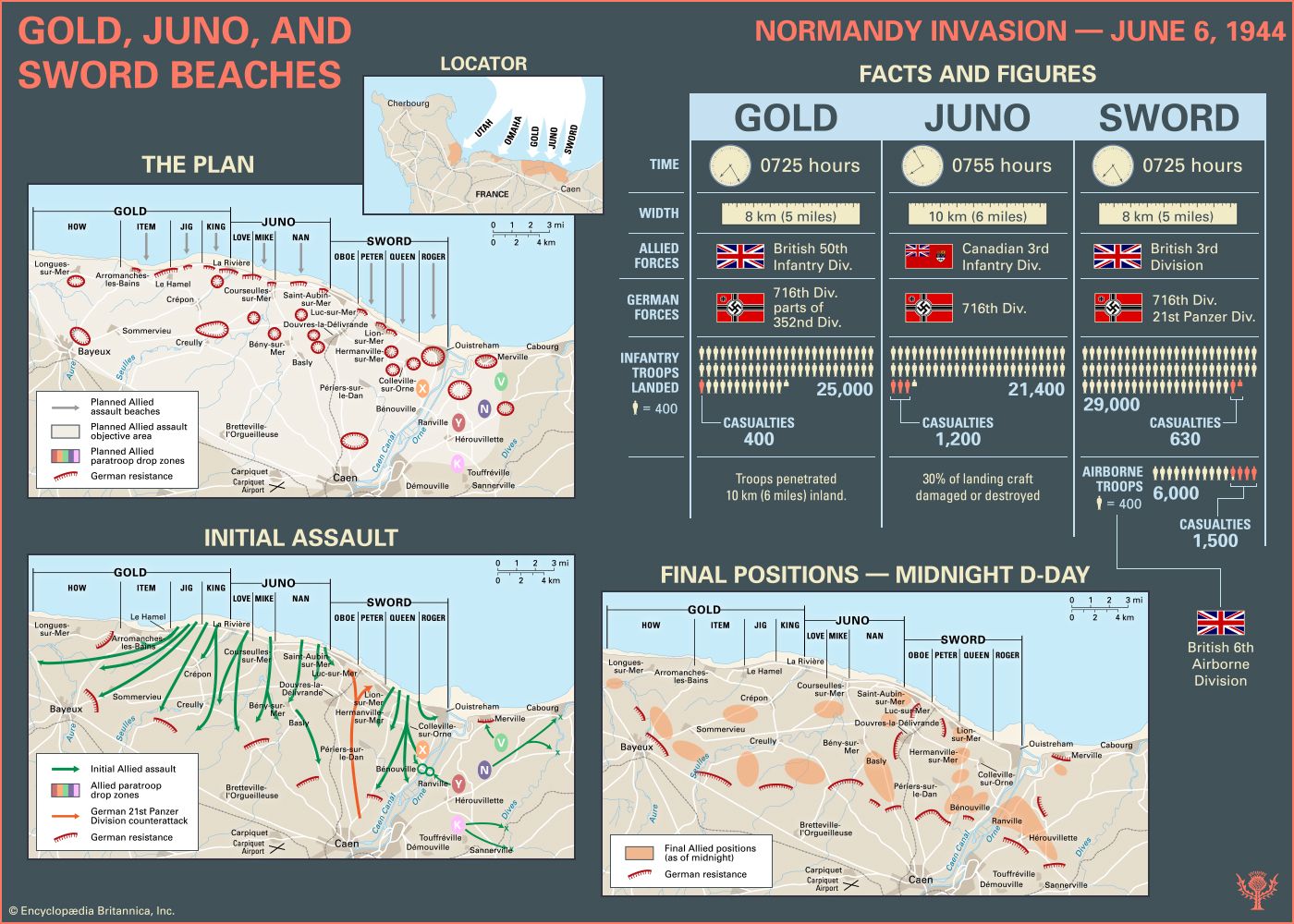
By the evening of D-Day, these forces had successfully landed 25,000 men and secured a significant beachhead, penetrating 10 km inland.1
How did the weather conditions affect the Gold Beach operation on D-Day?
Weather conditions played a significant role in the operations at Gold Beach on D-Day, primarily by influencing the tide and the effectiveness of defensive obstacles.
While the invasion was originally scheduled for early June, it was delayed by 24 hours due to poor weather, with General Dwight D. Eisenhower ultimately deciding to proceed on June 6 after receiving a favorable forecast from chief meteorologist James Martin Stagg3.1
On the morning of the landing, the wind blew directly from the northwest, which caused the water to pile up rapidly along the coast. This had two major consequences for the British 50th Infantry Division:3
- Obstacle Submergence: The rising water covered the outer defensive obstacles installed by German forces before British demolition teams could reach them. Consequently, the teams were unable to clear these hazards.3
- Landing Craft Damage: Because the obstacles remained in place, many landing craft were compromised. Specifically, 20 LCTs carrying tanks struck mines, resulting in moderate to severe damage.3
What were the main objectives for the Allied forces at Gold Beach?
The British 50th (Northumbrian) Infantry Division was assigned several critical objectives for the assault on Gold Beach during the Normandy Invasion. These primary goals included:
- Cutting the Caen-Bayeux highway: A key strategic route to disrupt German movement in the region.1
- Capturing Arromanches: Securing the small port to facilitate further logistics and operations.1
- Linking with Allied forces: Establishing contact with American troops from Omaha Beach to the west at Port-en-Bessin and with Canadian forces from Juno Beach to the east.1
- Neutralizing the Longues battery: Taking the heavily fortified German artillery position from the rear.1
By the evening of D-Day, the 50th Division had successfully landed 25,000 troops and penetrated 10 km inland, achieving a link-up with the Canadians and reaching the heights above Port-en-Bessin, though the highway and the link with American forces remained incomplete at that time.1
What challenges did the Allied forces face while landing on Gold Beach?
Allied forces landing at Gold Beach on D-Day encountered several significant challenges:
- Environmental and Tidal Obstacles: Strong winds from the northwest caused water to rise more rapidly than expected. This submerged German-installed defensive obstacles before demolition teams could reach them, preventing their clearance. Consequently, 20 landing craft (LCTs) carrying tanks struck mines, resulting in moderate to severe damage.1
- Defensive Fire: Demolition personnel tasked with clearing beach hazards were hindered by direct enemy fire, which prevented them from completing their mission.1
- Fortified Positions: German troops were entrenched in houses along the coast, particularly at Le Hamel and La Riviere. Additionally, a formidable observation post protected by one-metre-thick concrete directed fire from a battery of 155-mm guns located inland.1
- Potential Counterattacks: While the infantry resistance proved largely ineffective, the Allies faced the threat of Kampfgruppe Meyer, a mechanized unit based in Bayeux that had practiced rapid maneuvers to counter invasion attempts.1
Despite these hurdles, the British 50th Infantry Division successfully secured the beachhead, suffering 400 casualties.1
Sources
- Gold Beach — Encyclopædia Britannica
- Facts and Statistics about the Normandy Invasion — Encyclopædia Britannica
- Normandy Invasion - The decision to go — Encyclopædia Britannica
- British commandos - Commandos at Normandy — Encyclopædia Britannica
- Normandy Invasion - The landings — Encyclopædia Britannica
Published on · 3 min read