Juno Beach
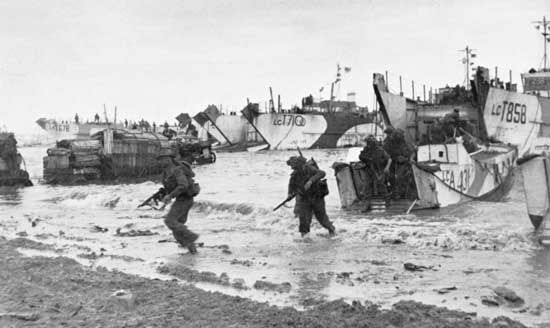
The assault on Juno Beach during the Normandy Invasion of World War II was carried out by the Canadian 3rd Infantry Division.
Which Allied forces were primarily responsible for landing on Juno Beach?
The assault on Juno Beach during the Normandy Invasion of World War II was carried out by the Canadian 3rd Infantry Division.1
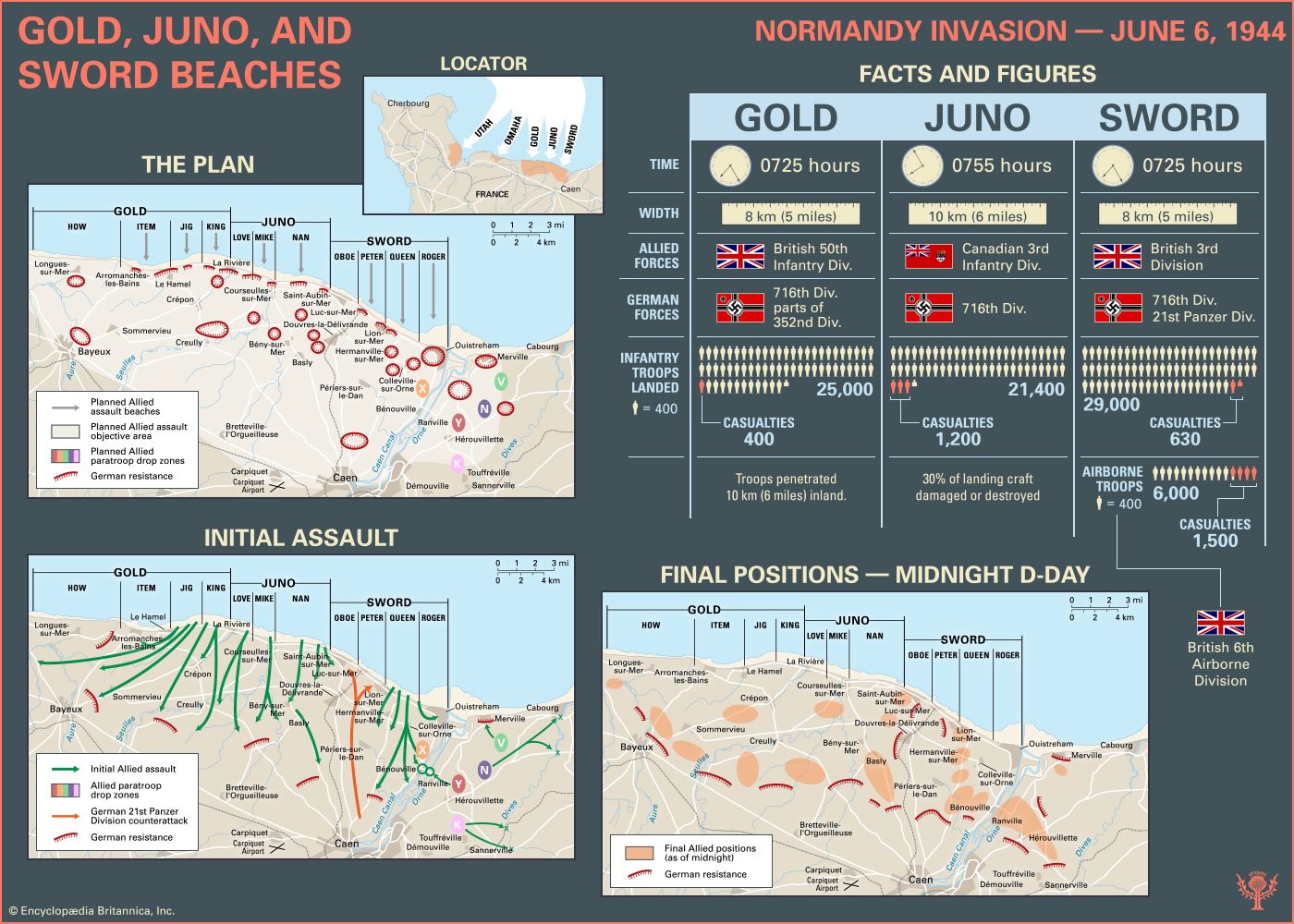
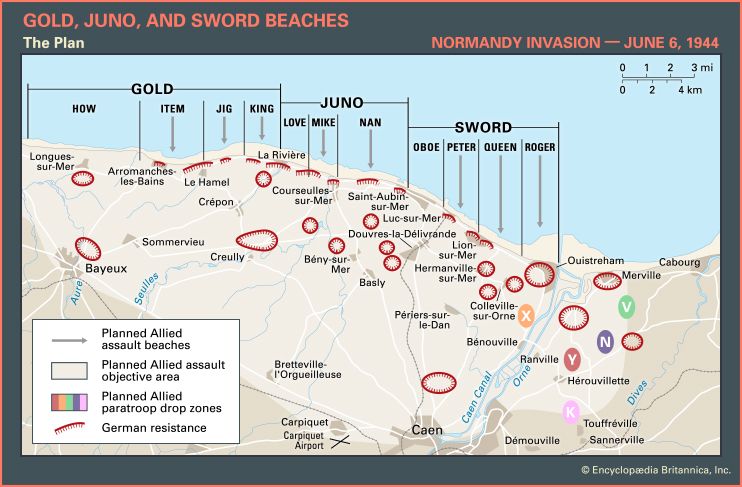
Assigned to the British Second Army, the division was divided into two brigades for the operation: the 7th Brigade, which landed at Courseulles in the Mike sector, and the 8th Brigade, which landed at Bernières in the Nan sector. Despite facing significant challenges, including partially submerged beach obstacles and heavy fire from German defensive positions, the Canadian forces successfully secured the area by the end of D-Day, June 6, 1944.1
What was the strategic importance of Juno Beach in the D-Day landings?
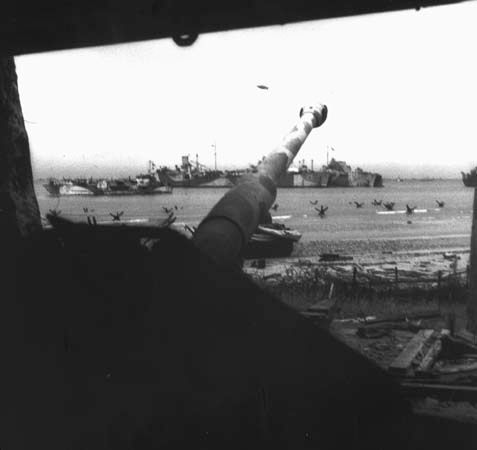
The strategic importance of Juno Beach during the Normandy Invasion was centered on its role in connecting the Allied beachheads and securing vital inland infrastructure. The primary objectives for the Canadian 3rd Infantry Division were to:
- Link Allied Forces: Establish a continuous front by forming a connection between the British forces landing at Gold Beach to the west and Sword Beach to the east.1
- Control Transportation: Cut the Caen–Bayeux road, a critical route for German troop movements.1
- Seize Strategic Assets: Capture the Carpiquet airport located west of Caen to deny its use to the enemy and support Allied air operations.1
While the Canadians successfully linked with the British 50th Division from Gold Beach by evening, the failure to close the gap with the British 3rd Division at Sword Beach created a vulnerability. This gap allowed the German 21st Panzer Division to counterattack, nearly reaching the sea and threatening the integrity of the entire landing operation.12
How did the Canadian forces perform in their assault on Juno Beach?
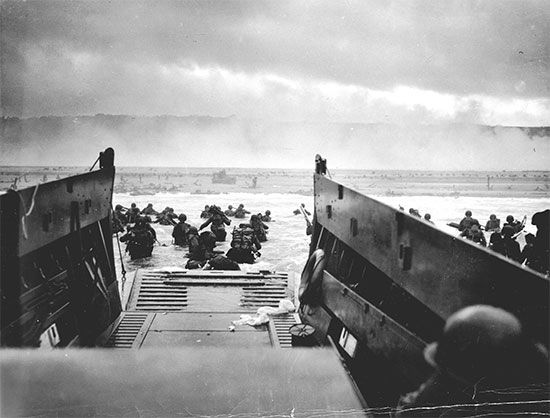
The Canadian 3rd Infantry Division’s assault on Juno Beach was a display of resilience in the face of significant tactical adversity. Due to natural offshore reefs, the landing was delayed until 0755 hours, forcing troops to navigate partially submerged obstacles that destroyed or damaged roughly 30 percent of their landing craft.1
As soldiers waded ashore, they entered enfilading fire from German positions, resulting in severe initial casualties; for instance, Company B of the Royal Winnipeg Rifles was reduced to a single officer and 25 men. Despite these losses—totaling 1,200 casualties out of 21,400 troops—the Canadians made steady progress, capturing Bernières and Saint-Aubin by mid-morning.1
Their performance was marked by a notable achievement: the 1st Hussar tank regiment became the only Allied unit on D-Day to reach its final objective, briefly interdicting the Caen–Bayeux road. By evening, they had successfully linked with the British 50th Division, though a gap remained to the east near Sword Beach.1
What was the codename for the operation to capture Juno Beach?
There was no specific codename for the operation to capture Juno Beach itself; rather, Juno Beach was the designated name for one of the five landing areas of the broader Normandy Invasion, which was codenamed Operation Overlord.145
The invasion of Normandy, commonly referred to as D-Day, involved the simultaneous landing of Allied forces on five beaches, each assigned a specific codename: Utah, Omaha, Gold, Juno, and Sword. Juno Beach was the sector assigned to the Canadian 3rd Infantry Division, which operated as part of the British Second Army.461
Sources
- Juno Beach — Encyclopædia Britannica
- Normandy Invasion - The landings — Encyclopædia Britannica
- Normandy Invasion - The German response — Encyclopædia Britannica
- How the Normandy Invasion Happened: Infographic Overview — Encyclopædia Britannica
- Facts and Statistics about the Normandy Invasion — Encyclopædia Britannica
- Normandy Invasion - The Allied commanders — Encyclopædia Britannica
Published on · 3 min read