Paris Basin
The Paris Basin is a major geographic region and the heartland of France, consisting of a lowland area centered around Paris. Geologically, it is a…
What is Paris Basin?
The Paris Basin is a major geographic region and the heartland of France, consisting of a lowland area centered around Paris. Geologically, it is a structural depression situated between the Armorican Massif, the Massif Central, the Ardennes, the Vosges, and the Rhineland.12
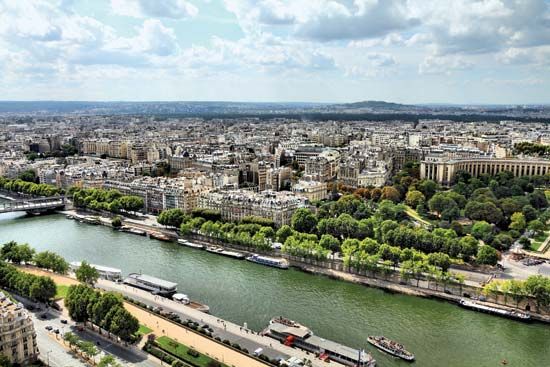
The region is primarily drained by the Seine River and its tributaries, which converge on the capital. The basin is characterized by sedimentary beds of limestone, sand, and clay that dip toward the center, creating concentric patterns and distinctive scarp edges. These geological formations support diverse landscapes, ranging from the fertile, loamy plateaus of regions like Île-de-France and Champagne to the forested sandy areas of Fontainebleau. While much of the natural vegetation has been replaced by human activity, the basin remains a vital agricultural and economic center for the country.132
How does the Seine River influence life in the Paris Basin?
The Seine River is fundamental to life in the Paris Basin, serving as a vital economic, environmental, and historical artery. Its influence is characterized by several key roles:
- Economic Hub: The river acts as a major traffic highway, linking Paris to the sea and the port of Le Havre. It facilitates the transport of heavy goods, such as petroleum products and building materials, via barge traffic.42
- Resource Supply: The river is an essential resource for the riverine population. It provides cooling water for thermal and nuclear power stations and supplies half of the water used for industry and human consumption in the Paris region, as well as three-fourths of the water used between Rouen and Le Havre.4
- Urban Development: The mutual interdependence of the river and the city of Paris has been forged since the early Middle Ages. The river’s crossing points helped establish the city, and its islands, such as the Île de la Cité, remain at the heart of the metropolis.45
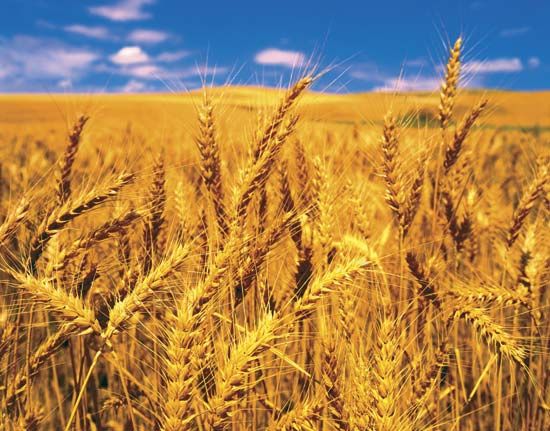
- Agricultural Foundation: The fertile platforms surrounding the river, known as the Île-de-France, have served as a rich cereal-growing region for centuries, supported by the river’s drainage network.4
What are the geological differences between the Paris Basin and the Massif Central?
The Paris Basin and the Massif Central represent two distinct geological regions of France with fundamentally different structures and origins.
The Paris Basin
The Paris Basin is a structural depression characterized by extensive sedimentary deposits. Its geology consists of alternating beds of limestone, sand, and clay that dip toward the center, creating concentric patterns and level plateaus. These formations are primarily from the Paleogene and Neogene periods, often covered by windblown limon (loamy soil). The landscape is defined by gentle slopes and outward-facing scarp edges, with occasional isolated hills known as buttes.13
The Massif Central
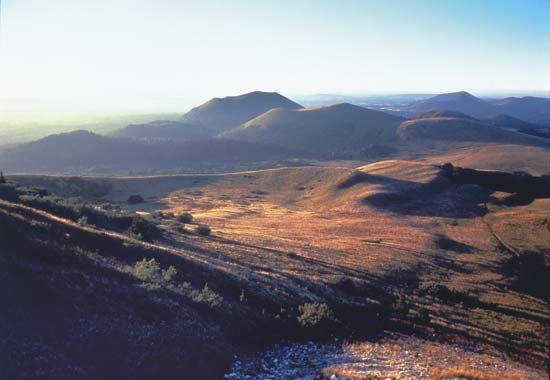
In contrast, the Massif Central is an ancient, uplifted upland area. Its foundation is primarily composed of crystalline rocks, such as granite, gneiss, and schist, dating back to the Hercynian earth movements of the Carboniferous and Permian periods. Unlike the basin, the massif was significantly altered by Alpine mountain-building, which caused intense fracturing, faulting, and widespread volcanic activity. This resulted in complex structures, including volcanic cones, deep gorgelike valleys, and high plateaus reaching elevations between 2,000 and 3,000 feet.67
Why is the soil in the Paris Basin considered so good for agriculture?
The Paris Basin is widely considered to have some of the finest arable soil in France due to a combination of geological and environmental factors.
The primary driver of this fertility is the presence of limon, a windblown loamy soil that mantles the limestone and chalk plateaus of the central basin and the northwest. This material, deposited by periglacial action, provides a highly favorable medium for agriculture. Additionally, the underlying limestone and chalk formations enrich the soil with lime, which is generally beneficial for crop growth.31
Beyond natural composition, the region’s agricultural success is supported by:
- Climate: The basin experiences a temperate climate that falls between oceanic and continental influences, providing adequate conditions for cereal production.89
- Human Intervention: Farmers have historically maintained and improved soil quality through drainage and manuring, which has been essential in transforming various parts of the landscape into productive farmland.1
- Proximity to Markets: The region’s central location and its role as the heartland of France provide logistical advantages that favor large-scale arable farming.109
Sources
- Paris Basin — Encyclopædia Britannica
- France - The Seine system — Encyclopædia Britannica
- France - The Paris Basin — Encyclopædia Britannica
- Seine River — Encyclopædia Britannica
- Paris - Transportation of Paris — Encyclopædia Britannica
- Massif Central — Encyclopædia Britannica
- France - The Massif Central — Encyclopædia Britannica
- France - Soils of France — Encyclopædia Britannica
- France - The continental region — Encyclopædia Britannica
- France - Grains — Encyclopædia Britannica
- France - Agriculture , forestry, and fishing — Encyclopædia Britannica
Published on · 3 min read