Omaha Beach
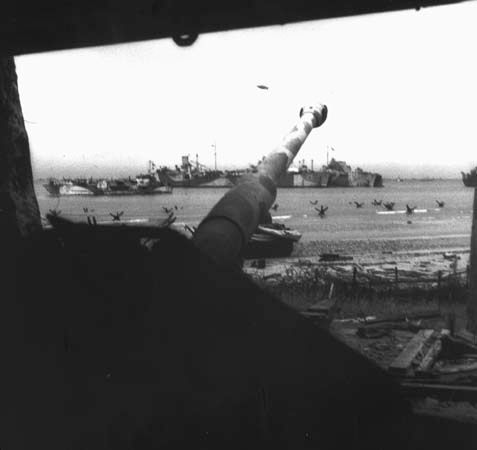
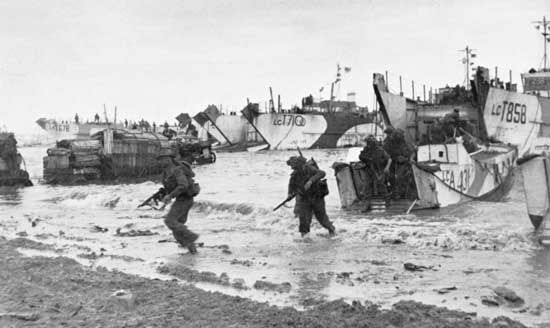
Omaha Beach was one of the five primary landing areas during the Normandy Invasion on June 6, 1944, marking a pivotal moment in World War II.
What was Omaha Beach and why was it significant in World War II?
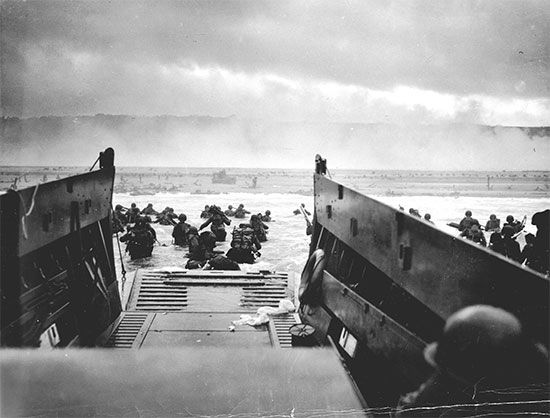
Omaha Beach was one of the five primary landing areas during the Normandy Invasion on June 6, 1944, marking a pivotal moment in World War II.123
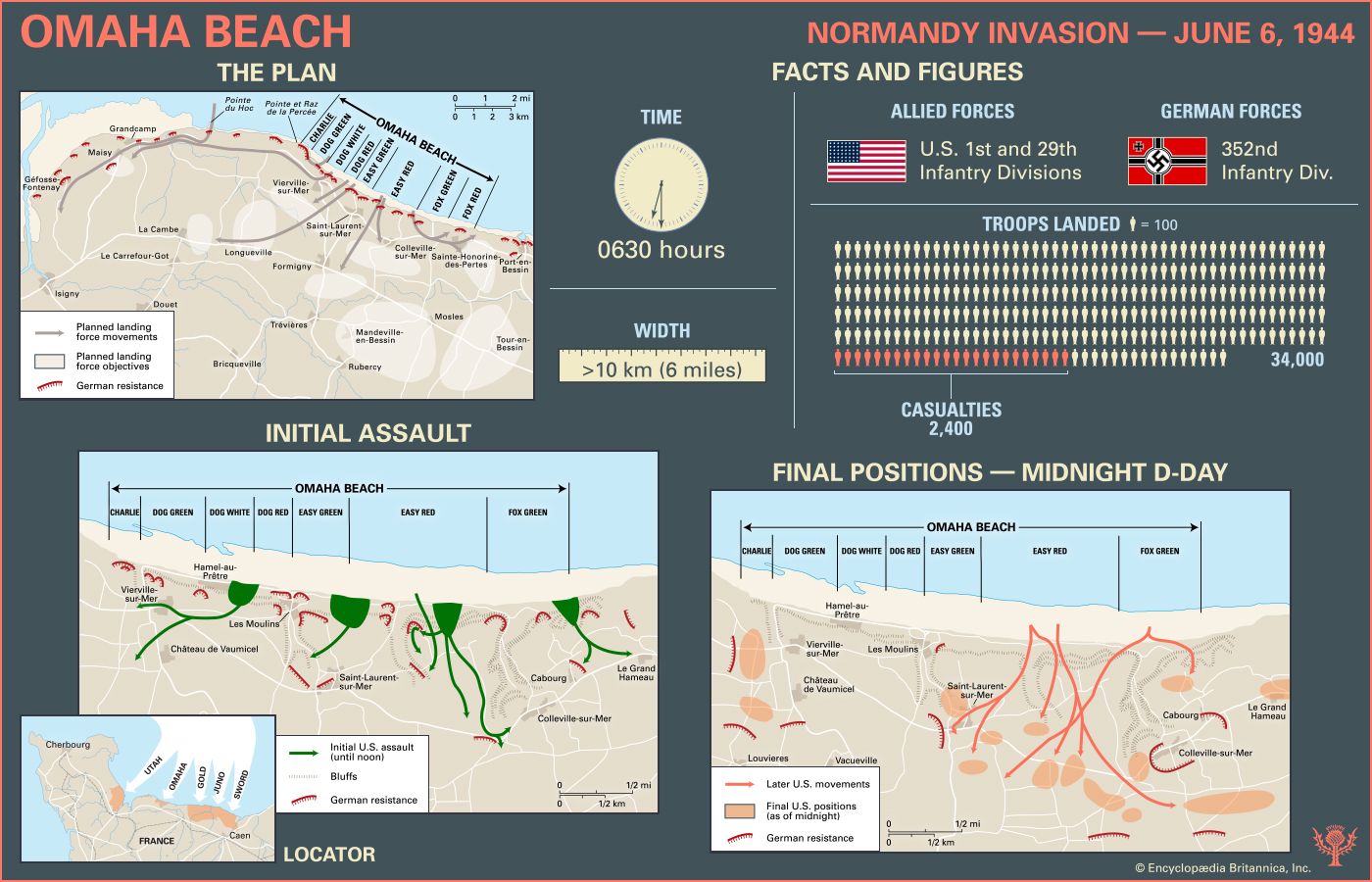
Its significance lies in the intensity of the struggle and the strategic necessity of the assault. Unlike other beaches where Allied forces faced lighter opposition, U.S. troops at Omaha encountered the veteran 352nd German Infantry Division, which utilized formidable defenses, including mines, “resistance nests,” and high-ground artillery positions. The landing was a “killing zone” where American forces suffered approximately 2,400 casualties—the highest of any D-Day beach—and faced the threat of total failure throughout the morning.4256
The success of the operation was only secured through the persistence of small, organized groups of soldiers, the support of U.S. Navy destroyers firing at point-blank range, and the daring assault by U.S. Army Rangers at Pointe du Hoc to neutralize German artillery. By nightfall, the Allies had established a precarious but vital toehold, enabling the subsequent liberation of northern France.6253
What was the aftermath of the battle at Omaha Beach, and how did it impact the course of World War II?
The aftermath of the battle at Omaha Beach on June 6, 1944, was defined by a hard-won, fragile foothold that proved critical to the success of the Normandy Invasion.24
Immediate Aftermath
By the end of D-Day, U.S. forces had landed 34,000 troops but suffered 2,400 casualties—the highest of any landing beach. The initial assault failed to reach planned objectives, leaving troops in scattered, disorganized groups. However, by midnight, these units had secured a toehold around the villages of Vierville, Saint-Laurent, and Colleville. While the German 352nd Infantry Division lost 20 percent of its strength, it lacked the reserves to push the Allies back into the sea.72
Impact on World War II
The survival of the Omaha beachhead was essential for the broader Allied campaign:
- Consolidation: The beachhead allowed the U.S. V Corps to link up with British and Canadian forces, eventually forming a continuous front that facilitated the liberation of northern France.3
- Strategic Momentum: Despite the near-disaster, the success at Omaha prevented a collapse of the invasion plan, which Dwight D. Eisenhower had feared might necessitate a full withdrawal.4
- Path to Victory: The establishment of this front enabled the Allies to break out of Normandy, eventually leading to the liberation of Paris and the collapse of German resistance in France.8
What specific units were assigned to assault Omaha Beach during the D-Day invasion?
The assault on Omaha Beach on June 6, 1944, was primarily conducted by the U.S. 1st Infantry Division and the 116th Regiment of the U.S. 29th Infantry Division.43
The landing plan assigned these units to specific sectors across the beach, moving from west to east:
- 116th Regiment (29th Division): Assigned to land at the Dog (Green, White, and Red) and Easy Green sectors.4
- 16th Regiment (1st Division): Assigned to land at the Easy Red and Fox Green sectors.4
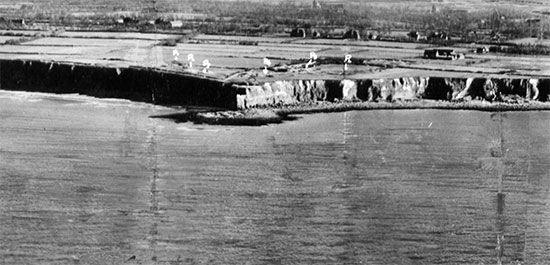
Additionally, the U.S. Army Rangers—specifically the 2nd and 5th Ranger Battalions—played a critical role in the operation. While the main infantry force assaulted the beach, elements of the 2nd Ranger Battalion (Companies D, E, and F) conducted a specialized seaborne assault on Pointe du Hoc to neutralize German artillery. Other Ranger companies, intended to support this mission or land at Omaha, became heavily involved in the desperate fighting on the beach itself when the initial signals for the Pointe du Hoc assault were not met.4
What role did naval and air support play in the Omaha Beach landing?
Naval and air support were critical factors in preventing the total failure of the Omaha Beach landings, where initial bombardments had proven largely ineffective against German defenses.2
Naval Support
As the infantry struggled against heavy fire and became pinned down on the beach, U.S. Navy destroyers played a decisive role. These ships steamed into shallow water—risking grounding—to engage German fortifications at point-blank range. By blasting these positions, the naval gunfire significantly reduced the intensity of the German resistance, allowing small groups of American troops to advance, scale the cliffs, and eventually open the beach exits by midday.36
Air Support
Allied air superiority was a fundamental pillar of the entire Normandy Invasion. Allied air forces flew more than 20,000 combat sorties on D-Day alone, which severely hampered the German capacity to wage war on the ground and maintain strength in the air. Supreme Allied Commander Dwight D. Eisenhower later emphasized the necessity of this support, stating that without air supremacy, the invasion would not have been possible.3
Sources
- Omaha Beach — Merriam-Webster
- Normandy Invasion - The landings — Encyclopædia Britannica
- Facts and Figures About the Landings on Omaha Beach During the Normandy Invasion on June 6, 1944 — Encyclopædia Britannica
- Omaha Beach — Encyclopædia Britannica
- Normandy Invasion — Encyclopædia Britannica
- Weapons and uniforms of troops on D-Day — Encyclopædia Britannica
- World War II - The Allied invasions of western Europe, June–November 1944 — Encyclopædia Britannica
- Facts and Statistics about the Normandy Invasion — Encyclopædia Britannica
- Normandy Invasion - The lodgment area established — Encyclopædia Britannica
- D-Day in pictures — Encyclopædia Britannica
Published on · 4 min read