Goldenrod
Goldenrod (genus Solidago) is a group of approximately 150 species of perennial herbs belonging to the aster family. These plants are primarily native to…
What are the key characteristics that help identify goldenrod plants?
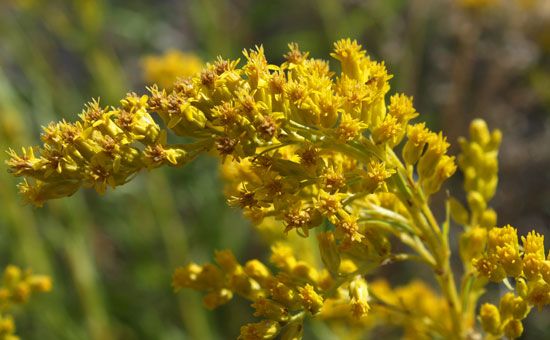
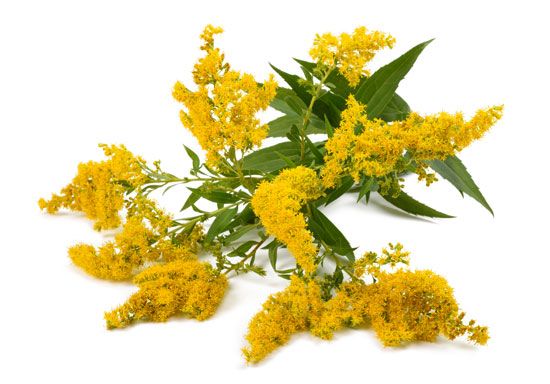
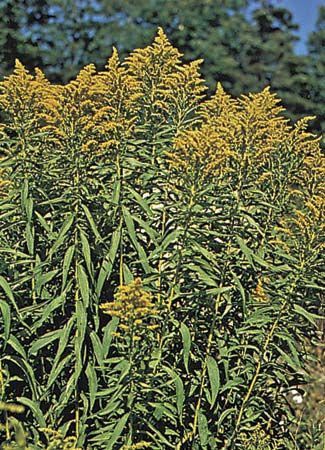
Goldenrod (genus Solidago) is a group of approximately 150 species of perennial herbs belonging to the aster family. These plants are primarily native to North America and are recognizable by several key physical traits:
- Leaves: They typically feature toothed leaves that are arranged alternately along the stem. These leaves are often lance-shaped, though shapes can vary by species.12
- Flowers: The most distinct characteristic is their showy, yellow flower heads. These heads are composed of both disk and ray flowers and are often arranged in one-sided clusters or branched sprays at the top of the stem.12
- Growth Habit: Depending on the species, goldenrods may grow as single-stemmed plants or in clumps. Some species spread through creeping rhizomes, which can lead to aggressive growth in certain environments.1
- Stems: While some species have smooth stems, others—such as the Canadian goldenrod—are notably hairy.1
These plants are highly adaptable and can be found in diverse habitats, including woodlands, swamps, fields, and roadsides.1
How does goldenrod reproduce and spread in nature?
Goldenrod plants reproduce and spread through both sexual and vegetative means.
Sexual Reproduction Goldenrods utilize a system of pollination that relies primarily on insects to facilitate outcrossing, though some species, such as Solidago speciosa, also produce significant amounts of airborne pollen for wind pollination. The flowers employ a “plunger” mechanism where the style pushes pollen out to be collected by visitors; if cross-pollination does not occur, the stigma may eventually curl to self-pollinate, ensuring seed production ensuring seed production.13
Vegetative Spread Beyond seed production, many goldenrod species spread aggressively through creeping rhizomes. These underground stems allow the plant to expand its footprint and colonize new areas vegetatively, which contributes to the plant’s ability to naturalize in various environments.3
This combination of efficient insect-assisted pollination and robust vegetative growth allows goldenrods to thrive in diverse habitats, ranging from woodlands and swamps to fields and roadsides.31
What are some popular cultivars of goldenrod used in gardening?
While many goldenrod species are considered wild, several are valued in gardening for their vibrant autumn blooms. Popular cultivars and species often used in ornamental settings include:
- Canadian goldenrod (Solidago canadensis): Known for its hairy stems and lance-shaped leaves, this species is frequently cultivated as a garden ornamental, though it can naturalize readily in new areas.1
- Woundwort (Solidago virgaurea): Native to Europe and Asia, this species is commonly grown in gardens and has a historical background as a source of yellow dye and traditional medicine.1
- Blue stem, or woodland, goldenrod (Solidago caesia): Prized for its delicate, arching sprays of flowers, this species is well-suited for woodland-style gardens.1
- Ohio goldenrod (Solidago ohioensis): Often selected for its distinct, large flat-topped flower clusters, this plant is particularly well-adapted to moist garden conditions.1
When selecting goldenrod for your garden, it is important to consider their growth habits, as some species spread via rhizomes and may require management to prevent them from becoming overly aggressive in your landscape.1
How many species of goldenrod exist, and what are some common varieties?
The genus Solidago, commonly known as goldenrod, consists of approximately 150 species of perennial herbs belonging to the aster family. While the majority of these species are native to North America, a small number are also found in Europe and Asia.1
Several notable species include:
- Canadian goldenrod (S. canadensis): Recognized by its hairy stems and lance-shaped leaves, this species is often used as an ornamental but can naturalize easily.1
- Giant goldenrod (S. gigantea): The state flower of Nebraska, this species can grow up to 2 meters tall and is considered an invasive species in some parts of Eurasia.1
- Blue stem, or woodland, goldenrod (S. caesia): Known for its delicate, arching flower sprays, its range spans from Quebec to Texas.1
- Ohio goldenrod (S. ohioensis): Native to the Great Lakes region, it is distinguished by its large, flat-topped flower clusters.1
- Woundwort (S. virgaurea): A species native to Europe and Asia, historically used in medicine and as a source of yellow dye.1
- Ground goldenrod (S. mollis): A low-growing, velvety species found in the prairies of central North America.5
Sources
- Goldenrod — Encyclopædia Britannica
- early goldenrod — Merriam-Webster
- Asteraceae - Pollination — Encyclopædia Britannica
- Seed dispersal — Encyclopædia Britannica
- solidago — Merriam-Webster
- ground goldenrod — Merriam-Webster
Published on · 3 min read