Marguerite
The marguerite (Argyranthemum frutescens), also known as the Paris daisy, is an ornamental plant belonging to the aster family.
What is Marguerite?
The marguerite (Argyranthemum frutescens), also known as the Paris daisy, is an ornamental plant belonging to the aster family.12
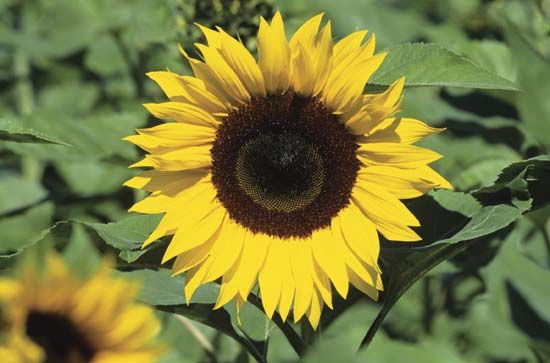
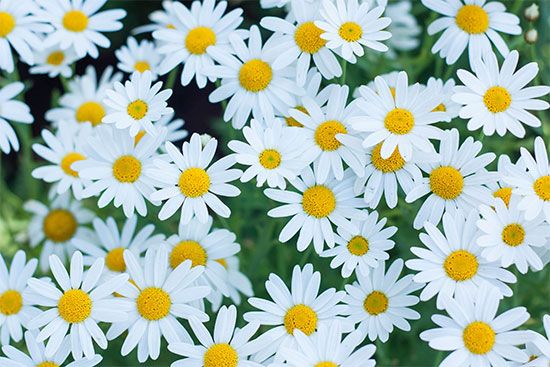
Native to the Canary Islands, this shrubby perennial is frequently grown as an annual in colder regions. It is characterized by its aromatic, deeply lobed leaves and compact flower heads, which typically feature white or yellow ray flowers surrounding a yellow disk. Cultivars with pink blooms or double flowers have also been developed.1
The term is also used more broadly to describe various single-flowered chrysanthemums or daisies. Additionally, “marguerite yellow” refers to a specific pale yellow-green color. A related species, the golden marguerite (Anthemis tinctoria), is also commonly cultivated as a garden ornamental.231
What is the difference between an annual and a perennial plant?
The primary difference between an annual and a perennial plant lies in the duration of their life cycles.
Annual Plants
An annual is a plant that completes its entire life cycle—from germination and growth to flowering and death—within a single growing season. For these plants, the seed is typically the only part that survives to the next season. Common examples include many vegetables like corn and beans, as well as garden flowers such as zinnias and marigolds.56
Perennial Plants
A perennial is a plant that persists for several years. While the aboveground portions of many herbaceous perennials may die back in autumn, the plant survives through specialized underground structures—such as bulbs, rhizomes, corms, or tubers—which allow it to produce new growth in the following season. All trees and shrubs are perennials, as are many garden favorites like chrysanthemums and poppies.76
How did the word for pearl come to mean a daisy?
The word “marguerite,” which refers to the daisy, originates from the Middle French margarite. This term historically carried the dual meaning of both “pearl” and “daisy.”
The linguistic connection stems from the Greek word margaritēs, which means “pearl.” Over time, the name was applied to the daisy because the flower’s appearance—specifically its white, rounded petals surrounding a central disk—resembles the luster and shape of a pearl. This etymological evolution reflects how botanical naming conventions often draw inspiration from the physical characteristics of the natural world.2
What are some other common flowers in the Asteraceae family?
The Asteraceae family is one of the largest and most diverse plant families, encompassing over 25,000 species of herbaceous plants, shrubs, and trees. Beyond the well-known daisy, this family includes a wide variety of popular garden ornamentals, food crops, and wildflowers.101112
Common flowers and plants in the Asteraceae family include:
- Garden Ornamentals: Ageratum, aster, chrysanthemum, cosmos, dahlia, marigold, and zinnia.1112
- Wildflowers and Perennials: Black-eyed Susan, blanketflower, coneflower, goldenrod, ironweed, and yarrow.11
- Food Crops: Artichoke, lettuce, endive, salsify, sunflower, and stevia.1112
- Other Notable Plants: Burdock, chicory, dandelion, edelweiss, ragweed, and wormwood.1112
These plants are characterized by their composite flower heads, which are often made up of many small florets.1311
Sources
- Marguerite — Encyclopædia Britannica
- marguerite — Merriam-Webster
- Paris daisy — Merriam-Webster
- marguerite yellow — Merriam-Webster
- Is That Plant 'Perennial' or 'Annual'? — Merriam-Webster
- Perennial — Encyclopædia Britannica
- Annual — Encyclopædia Britannica
- Angiosperm - General features — Encyclopædia Britannica
- Plant development - Seasonal adaptations — Encyclopædia Britannica
- Asteraceae — Encyclopædia Britannica
- Asteraceae - Physical characteristics — Encyclopædia Britannica
- list of plants in the family Asteraceae — Encyclopædia Britannica
- Asteraceae - Economic importance — Encyclopædia Britannica
- Daisy — Encyclopædia Britannica
Published on · 2 min read