Ironweed
The term "ironweed" refers to two distinct subjects:
What is Ironweed?
The term “ironweed” refers to two distinct subjects:
Botanical Definition
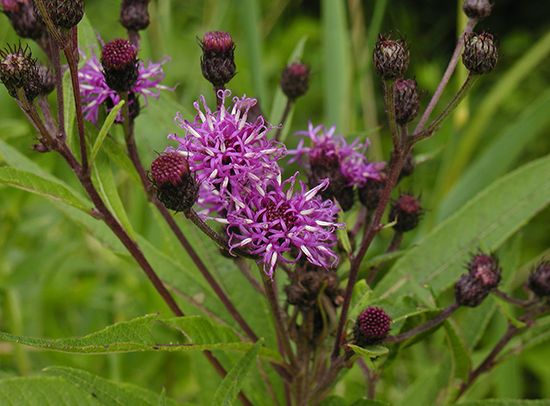
Ironweed is a genus (Vernonia) comprising approximately 500 species of perennial plants within the aster family (Asteraceae). These plants are characterized by alternate, toothed leaves and clusters of tubular flowers, typically in shades of purple, white, or pink. While some species are herbaceous and found globally, others grow as shrubs or trees in tropical regions. Notable varieties include the Great ironweed (V. arkansana) and the Common ironweed (V. fasciculata).12
Literary Work
Ironweed is also a celebrated 1983 novel by American author William Kennedy. Set in Albany, New York, during the Great Depression, the story follows the life of Francis Phelan, an alcoholic vagrant. The book earned widespread acclaim and won the 1984 Pulitzer Prize for fiction. Kennedy also wrote the screenplay for the 1987 film adaptation of the novel.3
What role do ironweed plants play in supporting local pollinators?
Sorry, the Britannica knowledge base does not contain information regarding the specific role of ironweed plants in supporting local pollinators.
How does the plot of William Kennedy’s novel Ironweed reflect the Great Depression?
William Kennedy’s novel Ironweed reflects the Great Depression by focusing on the life of Francis Phelan, an alcoholic vagrant navigating the city of Albany during the height of the economic crisis.2
Through Phelan’s experiences, the narrative captures the stark reality of displacement and social marginalization that defined the era. By centering the story on a character drifting through life, Kennedy illustrates the profound instability and loss of status faced by many individuals during the 1930s. The novel serves as a gritty examination of survival, blending historical context with the personal struggles of a man disconnected from the stability of society.2
What are some other common wildflowers found in the Asteraceae family?
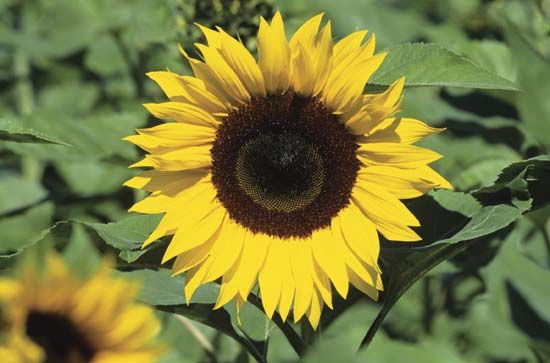
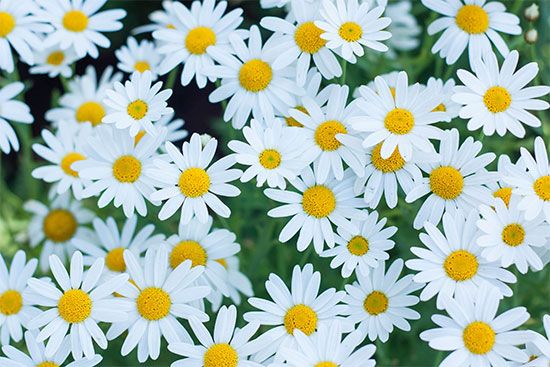
The Asteraceae family, also known as the aster, daisy, or composite family, is one of the largest families of flowering plants, encompassing over 25,000 species. These plants are characterized by their composite flower heads, which are made up of many small florets.456
Beyond the well-known aster and daisy, many other common wildflowers belong to this diverse family, including:
- Black-eyed Susan (Rudbeckia hirta), a popular coneflower6
- Goldenrod (genus Solidago)6
- Dandelion (genus Taraxacum)6
- Chicory (Cichorium intybus)6
- Yarrow (genus Achillea)6
- Fleabane (genus Erigeron)6
- Burdock (genus Arctium)6
- Tansy (genus Tanacetum)6
- Ironweed (genus Vernonia)6
- Tickseed (genus Coreopsis)6
These plants are found globally and exhibit a wide range of growth forms, from herbaceous plants to shrubs and trees.46
Sources
- ironweed — Merriam-Webster
- William Kennedy — Encyclopædia Britannica
- Ironweed — Encyclopædia Britannica
- Asteraceae — Encyclopædia Britannica
- Asteraceae - Physical characteristics — Encyclopædia Britannica
- Daisy — Encyclopædia Britannica
- Asterales — Encyclopædia Britannica
- Aster — Encyclopædia Britannica
- list of plants in the family Asteraceae — Encyclopædia Britannica
Published on · 2 min read