Gonionemus
Gonionemus is a genus of small marine hydrozoans characterized by a bell-shaped jellyfish stage and a solitary, nonswimming polyp stage. While these…
What role do Gonionemus play in marine ecosystems?
Gonionemus is a genus of small marine hydrozoans characterized by a bell-shaped jellyfish stage and a solitary, nonswimming polyp stage. While these organisms are widely distributed in warmer regions of the Atlantic and Indo-Pacific oceans, the provided information does not detail their specific ecological roles, such as their position in the food web or their interactions with other marine species.1
It is important to note that Gonionemus vertens is known for its unusually potent venom, which poses a significant health risk to humans. Stings can cause severe symptoms, including blistering, joint pain, respiratory distress, and potential liver malfunction, making them a hazard to swimmers in areas where they congregate in dense shoals. Additionally, some species have been introduced to new environments, such as northwestern Europe, through the transport of oysters to which their polyps attach.1
What are the unique physical characteristics of Gonionemus species?
Gonionemus species are small marine hydrozoans that exhibit distinct physical characteristics across their life cycle stages.1
The Medusa Stage
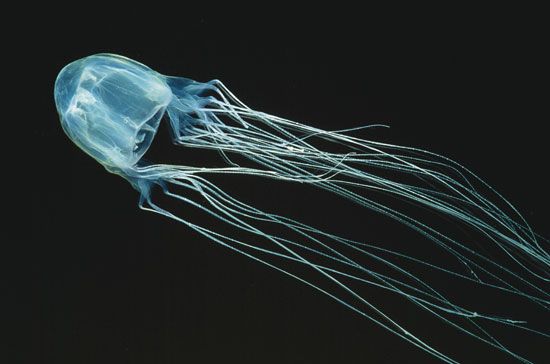
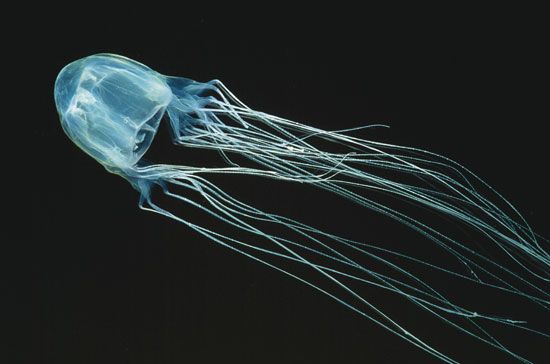
The most recognizable form of Gonionemus is the bell-shaped jellyfish, which typically measures 15 mm (0.6 inches) or more in diameter. Key features of this stage include:1
- Manubrium: A central, tubular structure hangs from the middle of the bell and contains the mouth.1
- Tentacles: The rim of the bell is lined with hollow tentacles, which are equipped with specialized stinging structures known as nematocysts.1
The Polyp Stage
The life cycle begins as a planula larva, which eventually settles and transforms into a solitary, nonswimming polyp. This stage is physically distinct from the medusa:1
- Size: The polyp is very small, measuring less than 1 mm in height.1
- Development: Unlike colonial hydrozoans, Gonionemus polyps are solitary. They reproduce by budding off new medusae from their lower end.1
These organisms are primarily found in warmer regions of the Atlantic and Indo-Pacific oceans, though they have been introduced to other areas through human activity, such as the transport of oysters.1
Are there any known interactions between Gonionemus and humans, such as stings or other impacts?
Interactions between Gonionemus and humans are primarily defined by the potent sting of the species Gonionemus vertens. In regions where these jellyfish form dense shoals, they pose a significant danger to swimmers.1
A sting from G. vertens triggers an immediate burning sensation, followed by rapid skin blistering and local edema. Within 10 to 30 minutes, victims typically experience systemic symptoms, including:
- General weakness1
- Numbness1
- Joint pain in the arms and legs1
- Labored breathing, which may temporarily cease1
- Potential liver malfunction1
These acute symptoms generally persist for four to five days. The risk is particularly notable in warm seas, though the distribution of these hydrozoans has expanded to areas like northwestern Europe, often facilitated by the transport of oysters to which their polyps attach.1
How does Gonionemus differ from other hydrozoan genera?
Gonionemus is distinguished from many other hydrozoan genera primarily by its life cycle and colonial structure. While many hydrozoans form complex, feathery, or bushy colonies where polyps remain physically attached and share a common coelenteron, Gonionemus species are characterized by a solitary, nonswimming polyp stage.12
These polyps are exceptionally small, measuring less than 1 mm in height, and they do not form the polymorphic colonies seen in many other hydrozoan groups, such as the Siphonophora, which feature specialized individuals for feeding, defense, and locomotion. Instead, Gonionemus polyps reproduce asexually by budding off individual medusae from their lower end.12
Furthermore, while some hydrozoans lack a free medusa stage entirely, Gonionemus produces a conspicuous, bell-shaped medusa that functions as the primary reproductive phase, releasing gametes directly into the water. Taxonomically, the genus is classified within the order Limnomedusae, though it is sometimes noted in broader contexts regarding hydrozoan diversity.123
Sources
- Gonionemus — Encyclopædia Britannica
- Gonionemus — Merriam-Webster
- cnidarian - Reproduction and life cycles — Encyclopædia Britannica
Published on · 3 min read