Gove Peninsula
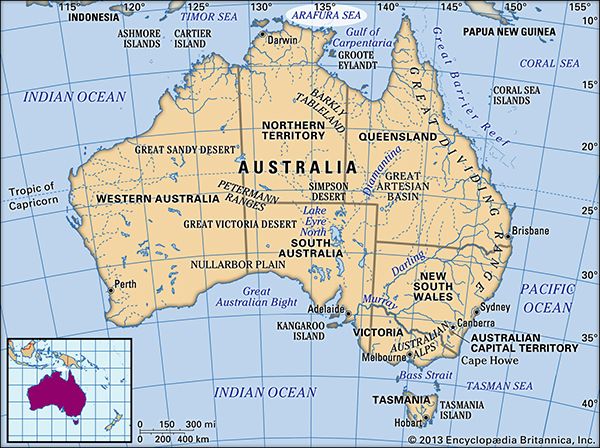
The Gove Peninsula is a landform extending from the northeastern corner of Arnhem Land in Australia's Northern Territory into the Arafura Sea.
What is Gove Peninsula?
The Gove Peninsula is a landform extending from the northeastern corner of Arnhem Land in Australia’s Northern Territory into the Arafura Sea.1
The region is notable for its significant bauxite deposits, which were discovered in 1952. Following the commencement of mining operations in 1971 and the opening of an alumina reduction plant in 1972, the town of Nhulunbuy was established to support the workforce. Because the peninsula is located within an Aboriginal reserve, the mining operations contribute royalties to the Aboriginal Benefits Trust Fund, reflecting an important intersection of industrial development and Indigenous land rights.1
What is bauxite and how is it used?
Bauxite is a naturally occurring rock that serves as the primary ore of aluminum.4 It is composed of a mixture of hydrous aluminum oxides, along with impurities such as iron oxide, silica, and titania. Physically, bauxite varies significantly in appearance—ranging from earthy and clay-like to hard and rock-like—and can appear in colors including red, brown, yellow, gray, or cream.23
Processing and Uses
Bauxite is the essential starting material for the production of alumina (aluminum oxide), which is then used in several industrial applications:45
- Aluminum Metal Production: The vast majority of alumina (about 90 percent) is “smelter-grade.” It is processed via the Bayer process and subsequently refined into aluminum metal through the Hall-Héroult electrolytic process.45
- Ceramics and Industrial Products: Calcined alumina is used to manufacture high-strength, heat-resistant products, including spark-plug insulators, integrated-circuit packages, laboratory ware, grinding wheels, and dental implants.5
- Chemical Processing: Activated alumina, a porous form of the material, acts as a substrate for catalysts and as an adsorbent to remove water from gases and liquids.5
What is the significance of Arnhem Land to Aboriginal Australians?
Arnhem Land holds profound significance for Aboriginal Australians, serving as a region of deep historical and cultural continuity. Occupied by Aboriginal peoples since the late Pleistocene, the area is home to numerous sites featuring ancient rock carvings and paintings, which stand as enduring testaments to their long-standing presence and heritage.67
The region is widely recognized for its rich artistic traditions, including sculpture, basketry, and beadwork, which have received significant international acclaim. These cultural practices are not merely historical; they remain vibrant today, with contemporary artists and musicians—such as the band Yothu Yindi—using their work to raise awareness of Indigenous traditions and the issues affecting their communities.7
Today, Arnhem Land is primarily designated as a large Aboriginal reserve, providing a space where traditional connections to the land are maintained.6 This status is particularly meaningful given the region’s history of resistance against European encroachment, including the violent conflicts that occurred during the early 20th century as pastoral interests expanded into their territories.89
How does mining impact the local environment?
Mining operations significantly impact the local environment through surface disturbance, water consumption, and pollution. These effects can vary in severity, ranging from landscape alteration to potential risks for public health and local ecosystems.1011
Environmental Impacts
- Surface Disturbance: Large-scale mining, particularly surface mining, requires moving vast amounts of rock, which can disrupt the integrity of the land, affect agricultural activities, and displace local flora and fauna. Historically, abandoned sites often left behind “lunarlike” landscapes characterized by waste piles, subsidence, and precipitous slopes.101211
- Water Issues: Mining can lead to the contamination of groundwater and surface water through the release of organic compounds or inorganic contaminants. Additionally, mining operations often require significant water consumption for drilling, site remediation, and processing.1013
- Air Quality: Certain extraction methods, such as those used for oil shale, involve heating processes that result in the emission of carbon dioxide, a primary greenhouse gas.10
Reclamation and Mitigation
Modern mining practices increasingly prioritize land reclamation to restore or enhance the capability of disturbed land for future use, such as farming, reforestation, or recreation. Integrated reclamation efforts—which include backfilling, regrading, and revegetating—are essential to reduce erosion, slope instability, and water-quality degradation.1412
Sources
- Gove Peninsula — Encyclopædia Britannica
- aluminum processing - Extraction and refining — Encyclopædia Britannica
- aluminum processing - Ores — Encyclopædia Britannica
- bauxite — Encyclopædia Britannica
- alumina — Encyclopædia Britannica
- Arnhem Land — Encyclopædia Britannica
- Northern Territory - The arts — Encyclopædia Britannica
- Northern Territory - British settlement — Encyclopædia Britannica
- Colonization of Australia - Northern Territory — Encyclopædia Britannica
- oil shale - Environmental issues — Encyclopædia Britannica
- coal mining - Reclamation equipment — Encyclopædia Britannica
- land reclamation - Reclamation of mine spoils — Encyclopædia Britannica
- coal mining - Health, safety, and environment — Encyclopædia Britannica
- mining - Water control — Encyclopædia Britannica
Published on · 3 min read