Hells Canyon
Hells Canyon is located in the northwestern United States, forming the border between Idaho and Oregon. It is carved by the Snake River and separates the…
Where is Hells Canyon located, and what makes it unique among canyons in the United States?
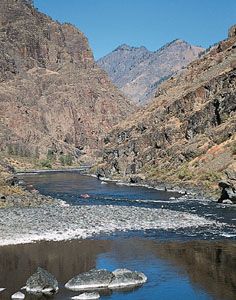
Hells Canyon is located in the northwestern United States, forming the border between Idaho and Oregon. It is carved by the Snake River and separates the Seven Devils and Wallowa mountain ranges1.12
What makes Hells Canyon unique is its remarkable depth. Reaching a maximum of 7,900 feet (2,400 meters), it is the deepest gorge on the North American continent. For a 40-mile stretch, the canyon exceeds 1 mile (1.6 km) in depth, with walls that in some areas rise perpendicularly for thousands of feet. The landscape is further distinguished by its vibrant coloration, featuring shades of yellow, red, and orange. Today, much of the area is protected within the Hells Canyon National Recreation Area, which spans over 1,000 square miles.1
How deep is Hells Canyon, and how does it compare to other famous canyons like the Grand Canyon?
Hells Canyon reaches a maximum depth of 7,900 feet (2,400 meters), making it the deepest gorge on the North American continent. For a 40-mile stretch of its 125-mile length, the canyon exceeds 1 mile (1.6 km) in depth.1
While the Grand Canyon is perhaps the most famous canyon in the United States, Hells Canyon surpasses it in vertical depth. The Grand Canyon reaches a maximum depth of approximately 6,000 feet (1,800 meters), whereas Hells Canyon extends nearly 2,000 feet deeper. Both landmarks are significant geological features carved by major river systems, with Hells Canyon shaped by the Snake River as it separates the Seven Devils and Wallowa mountain ranges.1
What is the geological history of Hells Canyon, and how was it formed?
The provided search results do not contain information regarding the specific geological history or the formation process of Hells Canyon. While the sources confirm that the canyon was carved by the Snake River and separates the Seven Devils and Wallowa mountain ranges, they do not detail the tectonic or erosional events that created the gorge.1
What recreational activities are popular in Hells Canyon National Recreation Area?
The Hells Canyon National Recreation Area offers a variety of outdoor experiences within its 1,020-square-mile expanse. While the provided information focuses on the area’s geography and administrative history, the designation of 67 miles of the Snake River as a national wild and scenic river highlights the region’s suitability for water-based recreation, such as boating and river exploration.1
The rugged terrain, characterized by walls rising thousands of feet and dramatic color variations, provides a scenic backdrop for visitors exploring the Wallowa-Whitman, Nezperce, and Payette national forests. These areas are known for supporting diverse outdoor activities, including hiking, wildlife viewing, and photography, within one of North America’s most significant geological landmarks.1
Sources
- Hells Canyon — Encyclopædia Britannica
- Hells Canyon — Merriam-Webster
Published on · 2 min read