Grand Canyon Series
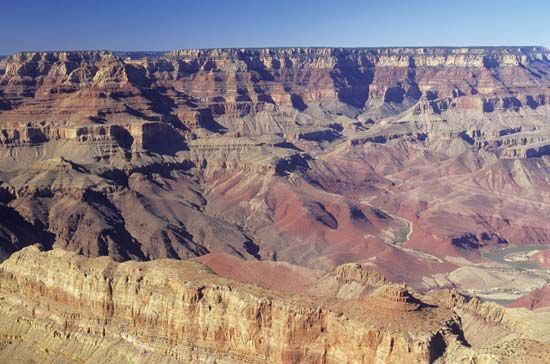
The Grand Canyon Series is a major sequence of Precambrian rocks located in northern Arizona. These formations, which reach thicknesses of approximately…
What types of rocks and minerals are commonly found in the Grand Canyon Series?
The Grand Canyon Series is a major sequence of Precambrian rocks located in northern Arizona. These formations, which reach thicknesses of approximately 3,400 meters, are composed of the following primary rock types:
- Quartz sandstones: Found throughout the series, often representing shallow-water deposits.1
- Shales: These sedimentary rocks are interbedded with sandstones and carbonate layers.1
- Carbonate rocks: This category includes thick sequences of limestone, which contain calcareous algaelike structures indicating the presence of ancient organisms.1
- Conglomerate: A layer of conglomerate is found at the base of the series, deposited directly upon the eroded surface of the underlying Vishnu Schist.1
The deposition of these materials likely occurred in a large, slowly subsiding deltaic region near sea level, preserving evidence of early life such as wormlike tracks and trails.1
What can the Grand Canyon Series tell us about ancient life forms and ecosystems?
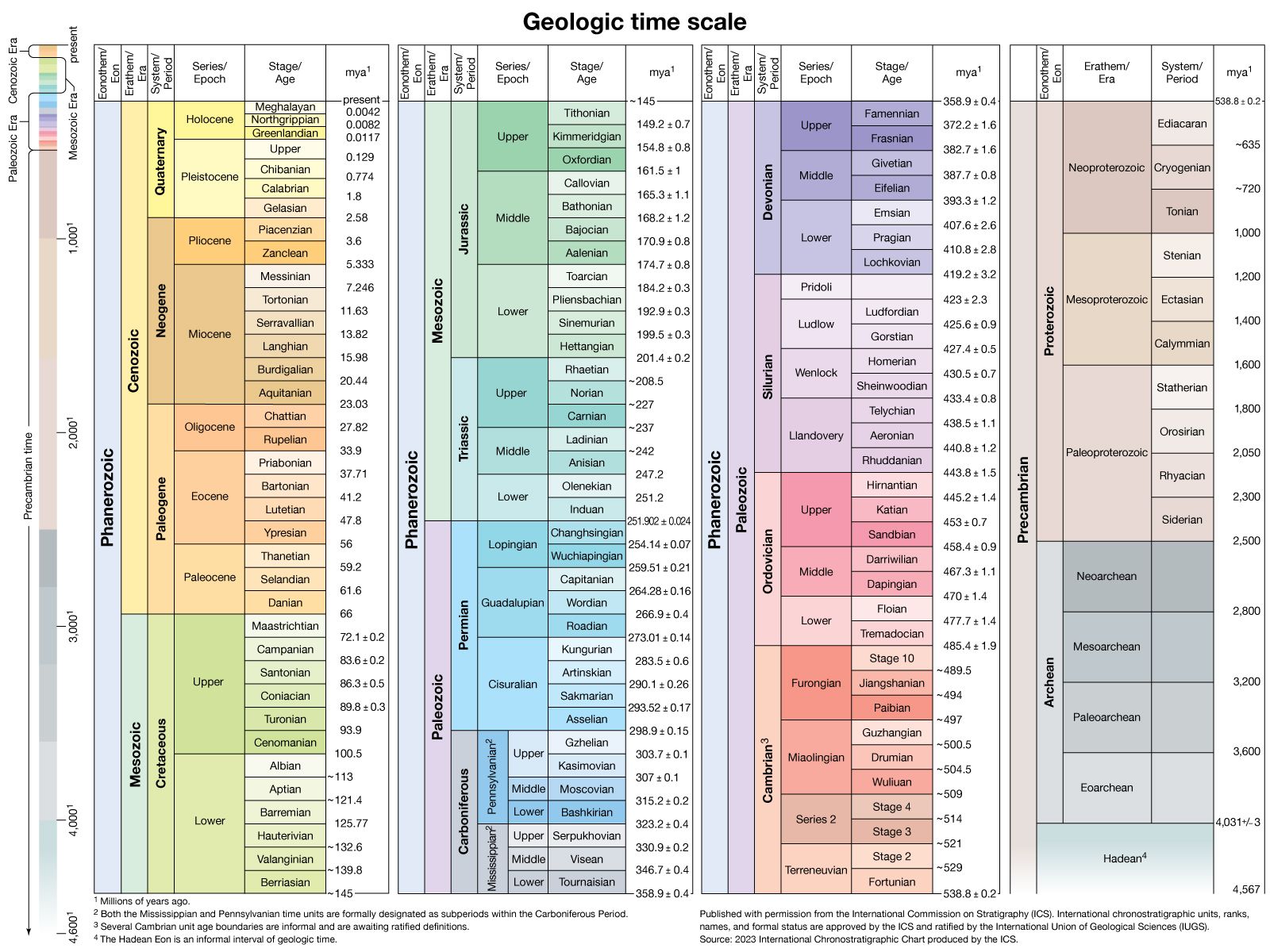
The Grand Canyon Series provides a significant window into the Precambrian environment, revealing evidence of early life forms and the ecosystems they inhabited. These rocks, which date from approximately 3.8 billion to 540 million years ago, suggest that the region was once a large, slowly subsiding deltaic area near sea level.2
The fossil record within these strata indicates the presence of primitive biological activity:
- Calcareous algaelike structures: Found within the thick sequences of carbonate rocks, these structures serve as evidence of ancient algae or similar microbial communities.2
- Wormlike traces: The presence of tracks and trails in the sedimentary layers provides evidence of early, soft-bodied organisms moving through the deltaic environment.2
These findings align with broader scientific understanding of the Precambrian, a period that saw the emergence of microfossils, stromatolites, and eventually the development of multicellular organisms and sexual reproduction before the Cambrian explosion.13
How was the Grand Canyon Series formed and what are its main geological layers?
The Grand Canyon Series was formed through a complex sequence of geological events during Precambrian time. Initially, the underlying Vishnu Schist was uplifted, folded, and metamorphosed before being eroded into a flat surface. Upon this eroded foundation, a conglomerate layer was deposited, followed by a massive accumulation of sediments—totaling approximately 3,400 meters—in a slowly subsiding, deltaic region near sea level.1
The main geological layers of the series include:
- Basal Conglomerate: The lowermost layer resting directly on the Vishnu Schist.1
- Sedimentary Sequence: A thick accumulation of quartz sandstones, shales, and carbonate rocks, which are thought to be shallow-water deposits.1
Following its deposition, the series underwent uplift and tilting, leading to a significant period of erosion before the subsequent deposition of Paleozoic Era rocks. The series is separated from these younger layers by a major erosion surface known as an unconformity.1
What are some of the most significant fossils discovered in the Grand Canyon Series?
The Grand Canyon Series contains limited but significant fossil evidence from the Precambrian, a time when life was primarily simple and soft-bodied. Because these rocks date from approximately 3.8 billion to 540 million years ago, they preserve traces of early biological activity rather than the complex skeletal remains found in younger strata.2
The most significant fossil evidence discovered within these layers includes:
- Calcareous algaelike structures: These are found within the series’ thick sequences of carbonate rocks and serve as evidence of ancient algae or similar microbial communities that thrived in the region’s shallow, deltaic environment.2
- Wormlike traces: The sedimentary rocks also contain tracks and trails, which provide physical evidence of the movement of early, soft-bodied organisms.2
These findings are vital for understanding the early history of life on Earth, as they document the presence of organisms prior to the Cambrian explosion, when life-forms without skeletons dominated the planet.52
Sources
- Grand Canyon Series — Encyclopædia Britannica
- Precambrian - Precambrian life — Encyclopædia Britannica
- Precambrian — Encyclopædia Britannica
- Grand Canyon - Geologic history — Encyclopædia Britannica
- fossil record — Encyclopædia Britannica
Published on · 3 min read