Grand Traverse Bay
Grand Traverse Bay is a northeastern arm of Lake Michigan that indents the northwest coast of the Lower Peninsula of Michigan, U.S. The bay spans 32 miles…
What is Grand Traverse Bay?
Grand Traverse Bay is a northeastern arm of Lake Michigan that indents the northwest coast of the Lower Peninsula of Michigan, U.S. The bay spans 32 miles (51 km) in length and 12 miles (19 km) in width.1
The bay is uniquely divided into an East Arm and a West Arm by the Old Mission Peninsula, which extends 17 miles (27 km) into the water. Traverse City is situated at the base of this peninsula, at the southern end of the bay’s West Arm. To the west of the bay lies the Leelanau Peninsula.12
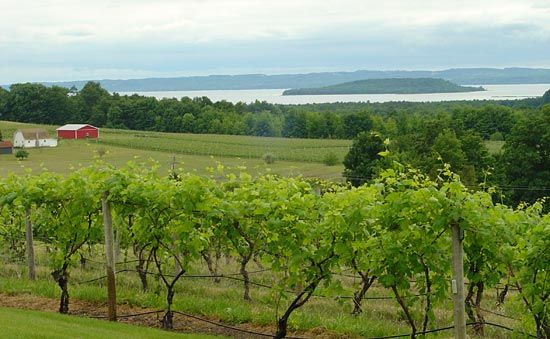
The region is well-known for its year-round fishing, as well as its status as a significant summer resort area and a prominent center for cherry growing.12
How does the Old Mission Peninsula shape the bay’s geography?
The Old Mission Peninsula acts as a significant geographical divider for Grand Traverse Bay. By extending 17 miles (27 km) into the water while maintaining a width of only 3 miles (5 km), it effectively splits the bay into two distinct sections: the East Arm and the West Arm.1
This landform originates from the base of the bay, where Traverse City is located, and stretches northward into Lake Michigan. The presence of the peninsula not only defines the bay’s unique shape but also serves as a prominent landmark, featuring a lighthouse at its northern tip that sits nearly at the 45th parallel north.13
Why is the region famous for cherry growing?
The region surrounding Grand Traverse Bay is famous for cherry growing primarily due to the moderating influence of Lake Michigan.
The lake acts as a thermal regulator for the adjacent land, creating a favorable climate that supports fruit cultivation along its eastern shore. This unique environmental condition allows the area to thrive as a major agricultural hub, with Traverse City developing into one of the nation’s primary cherry-processing markets. The region’s prominence in this industry is further celebrated annually through events such as the National Cherry Festival held in July.
What are some other major bays in the Great Lakes region?
The Great Lakes region features several prominent bays that significantly shape the geography and history of the surrounding states. Some of the most notable include:
- Green Bay: An inlet of northwestern Lake Michigan, this bay extends 118 miles (190 km) and is partially sheltered by the Door Peninsula. Historically, it served as a vital portage route for the fur trade between the Great Lakes and the Mississippi River.5
- Saginaw Bay: Located in eastern Michigan, this southwestern arm of Lake Huron stretches 51 miles (82 km). It serves as an important approach to the port of Bay City and is a popular destination for commercial fishing and recreation.6
- Grand Traverse Bay: A 32-mile (51 km) long arm of Lake Michigan, this bay is uniquely divided into an East Arm and a West Arm by the Old Mission Peninsula. The region is well-known for its cherry orchards and summer resorts.7
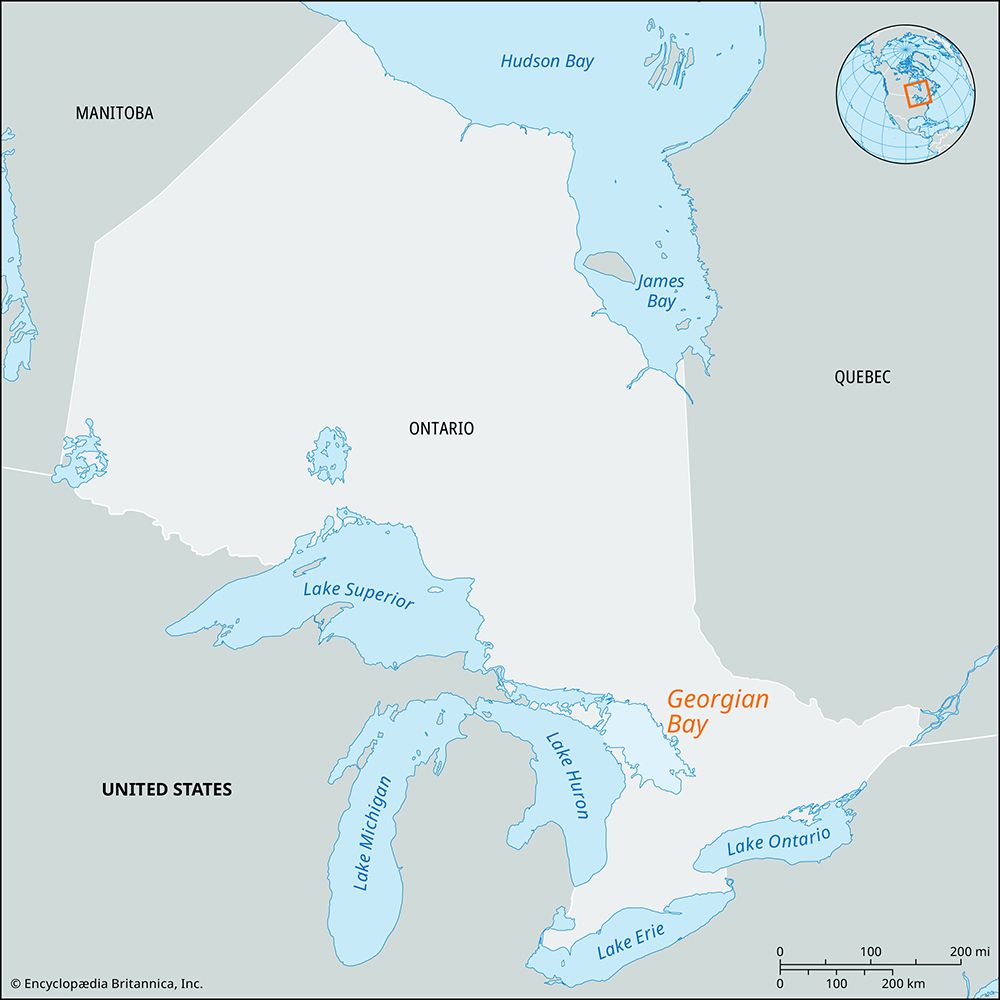
- Georgian Bay: Situated in the northeastern part of Lake Huron, this large bay is a significant feature of the Great Lakes basin, historically linked to the drainage patterns of the upper lakes.8
Sources
- Grand Traverse Bay — Encyclopædia Britannica
- Traverse City — Encyclopædia Britannica
- Grand Traverse Bay — Merriam-Webster
- Lake Michigan — Encyclopædia Britannica
- Great Lakes - Geology — Encyclopædia Britannica
- Great Lakes - Hydrology and climate — Encyclopædia Britannica
- Saginaw Bay — Encyclopædia Britannica
- Green Bay — Encyclopædia Britannica
- Saginaw — Encyclopædia Britannica
Published on · 2 min read