Grape Phylloxera
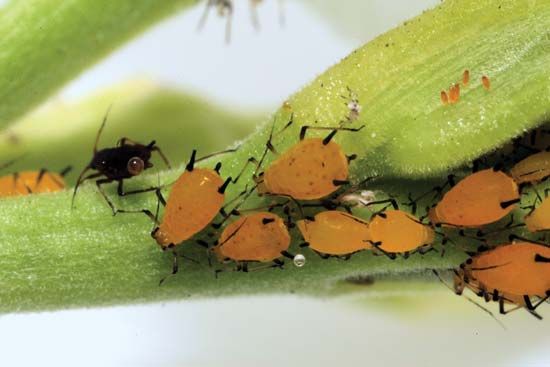
Grape phylloxera (Phylloxera vitifoliae) is a small, greenish-yellow insect that acts as a highly destructive pest to grapevines. By feeding on the plant's…
What is Grape phylloxera?
Grape phylloxera (Phylloxera vitifoliae) is a small, greenish-yellow insect that acts as a highly destructive pest to grapevines. By feeding on the plant’s fluids, the insect causes the formation of galls on leaves and nodules on roots, which eventually lead to the rotting and death of the vine.1
Introduced to Europe from the eastern United States in the mid-19th century, the pest devastated the wine industries of France, Germany, and Italy within decades. It also posed a significant threat to vineyards in California and Australia.12
The industry was ultimately saved by grafting European Vitis vinifera vines onto the rootstocks of grape species native to the eastern United States, which possess a natural immunity to the phylloxera louse. Other control methods, including the use of fumigants and the development of hybrids, have also been employed to manage the parasite.12
How does the process of grafting work to save grapevines?
Grafting is a horticultural technique that saves grapevines by joining the desirable fruiting parts of one plant with the resilient root system of another. To combat the devastating effects of the grape phylloxera louse, viticulturists graft the scion—a segment of a stem from a high-quality European wine grape (Vitis vinifera)—onto the rootstock of a grape species native to the eastern [United States].3415
The process relies on the following principles:
- Cambial Contact: The cambium layers—the actively dividing cells located just beneath the bark—of both the scion and the rootstock must be placed in intimate association.3
- Callus Formation: Once joined, the wounded surfaces respond by producing callus tissue. These cells interlock and fuse, creating a continuous, living connection that allows the plant to function as a single organism.3
- Resistance: Because the American rootstock is naturally immune to the phylloxera louse, it protects the vine from the root-rotting damage that would otherwise kill the susceptible European variety.15
What are some other major pests that threaten agricultural crops?
Agricultural crops face threats from a wide variety of organisms, including viruses, bacteria, fungi, nematodes, weeds, and rodentsplant/weed), and rodents. However, insects are among the most significant pests, causing damage either directly by feeding on plant tissues or indirectly by transmitting diseases.76
Major Insect Pests
- Locusts: Species such as the desert locust and migratory locust can form massive, migratory swarms that are capable of completely destroying crops across vast regions.67
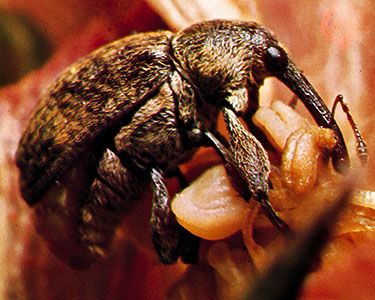
- Cotton Pests: Cotton is particularly vulnerable to hundreds of insect species, including the boll weevil, pink bollworm, and various aphids and stinkbugs.8
- Introduced Pests: When insects are introduced to new environments without their natural predators, they can become devastating. Examples include the Colorado potato beetle and the European corn borer.9
Control Strategies
Managing these threats is essential for food security. Approaches include:
- Cultural Practices: Techniques like crop rotation, sanitation, and roguing (removing infected plants) help reduce pest populations.10
- Chemical Control: The use of pesticides—such as insecticides, fungicides, and herbicides—is a primary method for commercial growers.108
- Biological Control: Introducing natural predators or parasites, such as the vedalia beetle used to control scale insects, offers a sustainable alternative to chemicals.109
- Genetic Resistance: Breeding crops for natural resistance or using genetically modified varieties like Bt cotton are critical goals in modern agriculture.108
How did the Great French Wine Blight change the global wine industry?
The Great French Wine Blight, caused by the introduction of the grape phylloxera louse from the eastern United States in the mid-19th century, fundamentally reshaped the global wine industry by nearly destroying viticulture across Europe, particularly in France, Italy, and Germany.21
The crisis forced a permanent shift in agricultural practice: to save the susceptible Vitis vinifera vines, growers were required to graft their plants onto the rootstocks of American grape species, which possessed a natural immunity to the pest. This necessity established grafting as the standard method for maintaining vineyards worldwide.21
Furthermore, the devastation prompted a regulatory revolution. Following the recovery of the vineyards, European governments sought to protect the integrity and reputation of their wine regions by enacting strict laws. These regulations mandated that regional names and quality rankings be reserved exclusively for wines produced in specific areas under highly regulated procedures. This framework of regional protectionism was so influential that many newer wine-producing nations have since adopted similar systems to ensure quality and authenticity in their own markets.2
Sources
- Grape phylloxera — Encyclopædia Britannica
- wine - The spread of viticulture — Encyclopædia Britannica
- graft — Encyclopædia Britannica
- Grape — Encyclopædia Britannica
- Pierre-Marie-Alexis Millardet — Encyclopædia Britannica
- insect - Damage to growing crops — Encyclopædia Britannica
- horticulture - Pest control — Encyclopædia Britannica
- cotton - Pests and diseases — Encyclopædia Britannica
- locust — Encyclopædia Britannica
- insect - Ecological factors — Encyclopædia Britannica
Published on · 3 min read