Gray Seal
The gray seal (Halichoerus grypus) is a seal belonging to the family Phocidae, found in North Atlantic waters, including the British Isles, the Baltic…
What is gray seal?
The gray seal (Halichoerus grypus) is a seal belonging to the family Phocidae, found in North Atlantic waters, including the British Isles, the Baltic region, and off the coast of Newfoundland.1
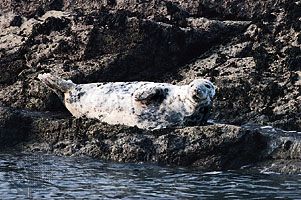
Characterized by a robust appearance and a heavy head, the species is marked by a spotted gray and black coat. Males are significantly larger than females, reaching lengths of about 3 metres (10 feet) and weights of 300 kg (660 pounds). These gregarious, slow-moving animals are typically found near cliffs and rocks, where they feed on fish. During the breeding season, which occurs in late winter or autumn depending on the location, males gather harems of approximately 10 females, and litters generally consist of a single white-coated pup.1
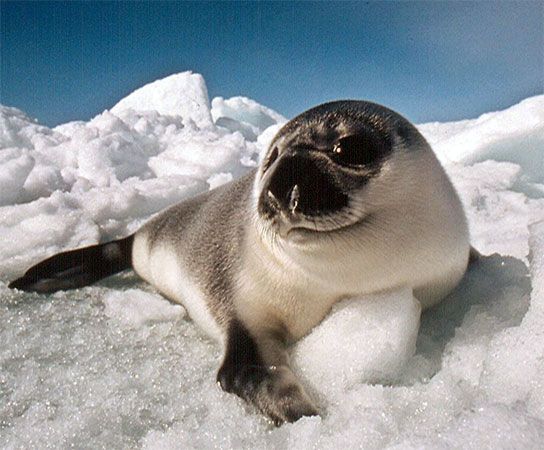
It is important to note that the gray seal is a distinct species from the hooded seal, which is known for the unique nasal ornamentation found in mature males.2
What are the main differences between gray seals and hooded seals?
Gray seals and hooded seals are both members of the family Phocidae, but they exhibit distinct physical and behavioral differences.
Physical Characteristics
- Nasal Ornamentation: The most notable difference is that mature male hooded seals possess a unique, inflatable nasal sac and a reddish nasal septum that can be inflated like a balloon to attract females and intimidate rivals. Gray seals lack this feature.13
- Size: Gray seal males reach about 3 metres (10 feet) in length. Hooded seal males are slightly smaller on average, measuring about 2.6 metres (8.5 feet).31
- Coat: Gray seals have a spotted gray and black coat. Hooded seal pups, known as “bluebacks,” have a distinct gray belly and bluish-dark fur on their backs.31
Habitat and Behavior
- Environment: Gray seals are commonly found near rocks and cliffs in the North Atlantic. Hooded seals are typically found in open waters and on pack ice across the North Atlantic and Arctic oceans.31
- Social Structure: Gray seals are gregarious and often gather in harems. Hooded seals are generally solitary, becoming gregarious only during breeding and molting seasons.31
How do gray seals adapt to living in cold North Atlantic waters?
Gray seals (Halichoerus grypus) have evolved specific physiological adaptations to thrive in the cold waters of the North Atlantic. Like other marine mammals, they rely on a combination of anatomical features to maintain their body temperature in an environment where water conducts heat much more rapidly than air.14
The primary adaptation for gray seals is a thick layer of blubber, which is a dense layer of fat and collagen located beneath the skin. This layer serves as a highly effective insulator, significantly reducing heat loss from the animal’s core to the surrounding cold water.4
Additionally, marine mammals often utilize countercurrent blood exchange to regulate their body temperature. This mechanism allows them to conserve heat by warming blood returning from the body’s periphery through vessels wrapped around arteries carrying warm blood to the surface. Conversely, when the animal needs to shed excess heat, it can redirect blood flow to superficial veins to release warmth into the environment. These adaptations, combined with their robust body size, allow gray seals to maintain homeostasis despite the frigid conditions of their habitat.415
What are the primary predators of gray seals in the wild?
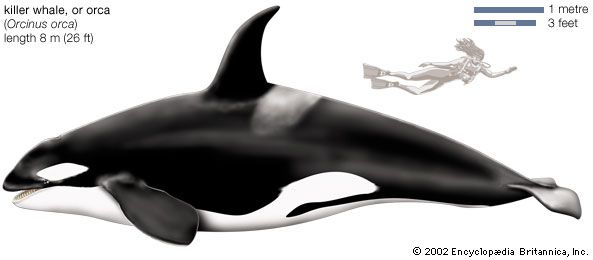
The primary predators of seals, including the gray seal (Halichoerus grypus), are killer whales, polar bears, large sharks, and human beings.7
While specific predation rates can vary by region and age, these apex predators pose the most significant threats to gray seals in their natural North Atlantic habitat.16
Sources
- gray seal — Encyclopædia Britannica
- gray seal — Merriam-Webster
- hooded seal — Encyclopædia Britannica
- cetacean - Circulation and thermoregulation — Encyclopædia Britannica
- How do sea otters stay warm? — Encyclopædia Britannica
- killer whale — Encyclopædia Britannica
- seal — Encyclopædia Britannica
Published on · 3 min read