Lynx
There are four recognized species of lynx, all of which are short-tailed cats belonging to the family Felidae. These species are found across the forests of…
How many species of lynx exist, and where are they found?
There are four recognized species of lynx, all of which are short-tailed cats belonging to the family Felidae. These species are found across the forests of Europe, Asia, and North America.1
The four species are:
- Eurasian lynx (L. lynx): The largest member of the genus, it inhabits a wide range across the boreal and deciduous forests of Europe and Asia, stretching from Scandinavia to Kamchatka.1
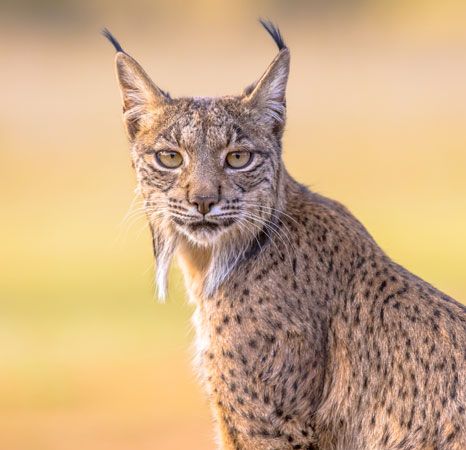
- Iberian lynx (L. pardinus): Endemic to the Iberian Peninsula in southwestern Europe, it is primarily found in the mountainous scrublands and oak forests of Spain and Portugal.12
- Canada lynx (L. canadensis): Found throughout the forested regions of Canada and Alaska, as well as in parts of the northern United States.13
- Bobcat (L. rufus): Inhabits a broad range from southern Canada through the contiguous United States and into Mexico.britannica.com/place/United-States) and into Mexico.24
How do lynx adapt to their environment, particularly in winter?
Lynx, particularly the Canada lynx, possess specialized physical and behavioral adaptations that allow them to thrive in cold, snowy environments.
Physical Adaptations
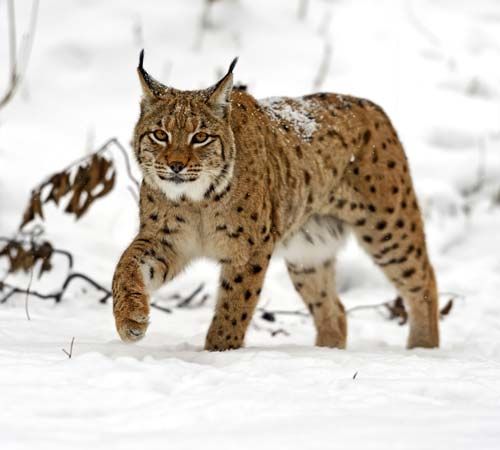
The most notable adaptation for winter survival is the lynx’s large, densely furred paws. These act like natural snowshoes, supporting the animal’s weight on deep snow and preventing it from sinking, which facilitates efficient movement and hunting. Additionally, the Canada lynx undergoes a seasonal change in its coat; it is thick and gray during the winter to provide insulation and camouflage, becoming thinner and reddish-brown in the summer.367
Behavioral and Ecological Adaptations
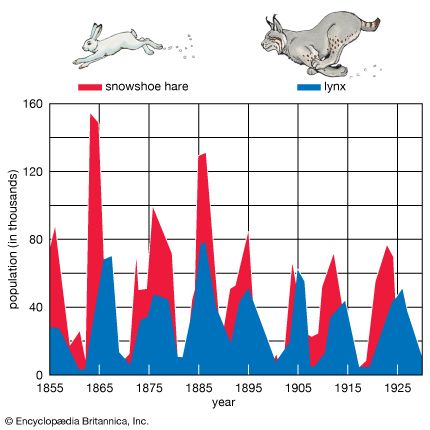
- Dietary Flexibility: The Canada lynx is highly dependent on the snowshoe hare, and its population cycles are closely tied to hare density. When prey is scarce, the lynx can switch to alternative food sources, including various small mammals, birds, and occasionally carrion.89
- Denning: To protect their young from harsh conditions, females construct dens in sheltered locations such as fallen logs, boulder piles, or hollow trees, often lining them with conifer needles and forest litter for warmth.8
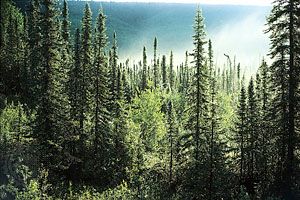
- Energy Management: Survival in the taiga depends on maintaining an energy balance. By utilizing their specialized paws to navigate the snow, lynx can effectively hunt their primary prey, ensuring they obtain the necessary daily energy intake despite the challenging winter climate.39
What is the average lifespan of a lynx in the wild compared to in captivity?
The lifespan of a lynx varies by species and environment, with individuals generally living longer in captivity than in the wild.
- Canada lynx (L. canadensis): These cats can live for approximately 16 years in the wild. In captivity, they are known to survive significantly longer, with the oldest-known individual reaching nearly 27 years of age.12
- Eurasian lynx (L. lynx): While some individuals have been known to live until age 17 in the wild, most rarely live longer than 10–12 years. In captivity, this species has been recorded living up to 24 years.211
Generally, three of the four lynx species have lifespans of at least 13 years in the wild. Factors such as prey availability, habitat quality, and human-related pressures influence these survival rates in their natural environments.212
How do lynx differ from other wild cat species like bobcats or mountain lions?
Lynx species are distinct from other wild cats, such as the bobcat and mountain lion (also known as the puma), through specific physical and ecological adaptations.
Lynx vs. Bobcat
While the bobcat and Canada lynx are closely related and often confused, they can be distinguished by several key features:
Feature
Bobcat
Canada Lynx
Facial Ruff
Smaller, lacks dark margin
Larger, with prominent dark margin
Ear Tufts
Shorter
Longer
Tail Tip
Dark on top, white underneath
Dark all over
Paws
Smaller, without furry pads
Larger, with furry pads
Coat
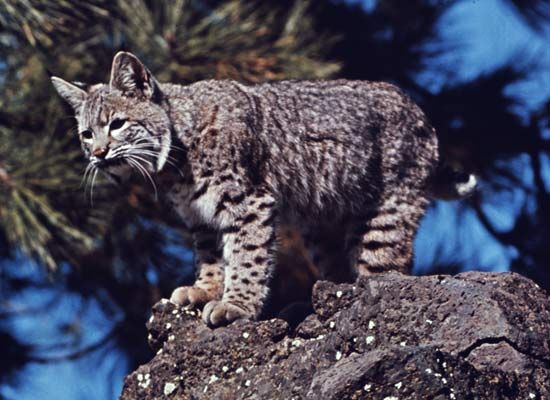
More brownish/reddish with spots
More grayish with indistinct spots
The Canada lynx is physically adapted for deep snow, using its large, furry paws as snowshoes to stay atop the snowpack, whereas the bobcat generally avoids deep snow and is more widely distributed across diverse habitats, including deserts and shrublands.752
Lynx vs. Mountain Lion
The mountain lion (or puma) is significantly larger than any lynx species. While lynx are characterized by their short, “bobbed” tails, tufted ears, and facial ruffs, the mountain lion possesses a long, thick tail and lacks the distinctive ear tufts and ruff associated with the Lynx genus.52
Sources
- Eurasian lynx - Distribution and habitat — Encyclopædia Britannica
- lynx — Encyclopædia Britannica
- Canada lynx - Distribution and habitat — Encyclopædia Britannica
- Iberian lynx — Encyclopædia Britannica
- bobcat — Encyclopædia Britannica
- Taiga - Mammals — Encyclopædia Britannica
- Canada lynx - Physical features — Encyclopædia Britannica
- Canada lynx: Top Questions — Encyclopædia Britannica
- Canada lynx - Diet — Encyclopædia Britannica
- Eurasian lynx - Diet — Encyclopædia Britannica
- Eurasian lynx - Reproduction and development — Encyclopædia Britannica
- Canada lynx - Reproduction and development — Encyclopædia Britannica
Published on · 4 min read