Great Basin National Park
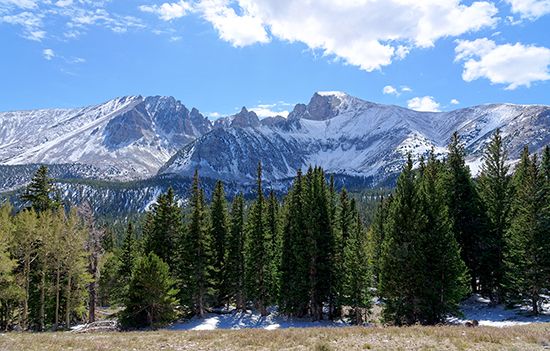
Great Basin National Park, located in eastern Nevada, was established in 1986 to protect a diverse high-desert landscape that includes the southern Snake…
What is the historical significance of Great Basin National Park, including its establishment and cultural heritage?
Great Basin National Park, located in eastern Nevada, was established in 1986 to protect a diverse high-desert landscape that includes the southern Snake Range and Wheeler Peak. The park is historically significant for its unique ecological and geological features, most notably the ancient bristlecone pines—some of the oldest living organisms on Earth—and the intricate Lehman Caves.
The cultural heritage of the region is deeply rooted in the history of Indigenous peoples of the Great Basin, including the Shoshone, Paiute, and Washoe. These groups utilized the area’s varied ecological zones for thousands of years, leaving behind evidence of their presence, such as rock art and burial sites within Lehman Caves. The cavern itself was discovered by prospector Absalom Lehman in the 1880s and was designated a national monument in 1922 before being incorporated into the national park system.
How do the bristlecone pine trees in the park contribute to scientific research?
Bristlecone pines are invaluable to scientific research, primarily serving as the foundation for dendrochronology, the study of dating and interpreting past events through tree rings. Because these trees grow in harsh, high-elevation environments where their annual growth is directly influenced by moisture and temperature, their rings provide a highly sensitive, long-term record of paleoclimates and climatic trends.48
The scientific significance of these trees includes:
- Chronological Records: By correlating ring sequences from living and dead specimens, scientists have established continuous climate chronologies extending back thousands of years.4
- Calibration of Dating Methods: Dead bristlecone pine wood, which can provide rings as old as 8,200 years, is used to calibrate and verify the accuracy of carbon-14 dating.8
- Environmental Monitoring: As some of the oldest non-clonal organisms on Earth, these trees act as biological archives, helping researchers understand how ancient ecosystems responded to environmental extremes.9
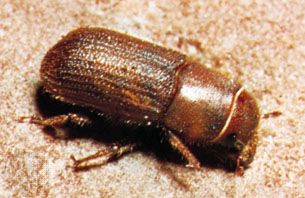
While they are essential for reconstructing historical climate data, these trees are also studied for their vulnerability to modern stressors, such as drought and bark beetle infestations, which provide insights into the impacts of changing climate conditions.9
What Native American tribes have historical connections to the Great Basin area?
The Great Basin culture area, which spans across much of modern-day Nevada and Utah as well as parts of Oregon, Idaho, Wyoming, Colorado, Arizona, Montana, and California, is home to several Indigenous peoples with deep historical connections to the region.5310
These groups are primarily categorized by their linguistic affiliations:
- Washoe: Speakers of a Hokan language.5
- Numic-speaking tribes: A division of the Uto-Aztecan language family, including the Mono, Paiute, Bannock, Shoshone, Ute, and Gosiute.5
Historically, these peoples were organized into mobile, kin-based bands of hunters and gatherers who adapted to the region’s arid environment by following an annual round across various ecological zones. While many groups maintained traditional pedestrian lifestyles, those in the northern and eastern sections of the Great Basin adopted horses by the 18th century, which facilitated broader travel and increased interaction with Great Plains cultures.511
Where is Great Basin National Park located, and what are its main geographical features?
Great Basin National Park is located in eastern Nevada, situated just west of the town of Baker and approximately 40 miles southeast of Ely. Established as a national park in 1986, it encompasses 121 square miles.2
The park’s geography is defined by several prominent features:
- Snake Range: The park is primarily composed of the southern portion of this mountain chain, which rises abruptly from the desert floor.2
- Wheeler Peak: Reaching an elevation of 13,065 feet, this peak is the park’s highest point and is home to the southernmost permanent icefield in the United States.2
- Lehman Caves: Located at the eastern base of Wheeler Peak, this intricate cavern features a spectacular array of limestone deposits, including stalactites and stalagmites.21
- Flora and Geological Formations: The park contains ancient groves of bristlecone pines and the 75-foot-high limestone Lexington Arch.2
Sources
- Lehman Caves — Encyclopædia Britannica
- Great Basin National Park — Encyclopædia Britannica
- Indigenous peoples of the Great Basin - Technology and economy — Encyclopædia Britannica
- bristlecone pine — Encyclopædia Britannica
- Native American - The Great Basin — Encyclopædia Britannica
- pine - Major North American pines — Encyclopædia Britannica
- National Park Service - Establishment of the NPS — Encyclopædia Britannica
- geochronology - Tree-ring growth — Encyclopædia Britannica
- dendrochronology — Encyclopædia Britannica
- Indigenous peoples of the Great Basin: Top Questions — Encyclopædia Britannica
- Indigenous peoples of the Great Basin — Encyclopædia Britannica
- Basin and Range Province — Encyclopædia Britannica
Published on · 3 min read