Geochronology
Geochronology is the scientific field dedicated to determining the age and history of Earth’s rocks and rock assemblages. It serves as a fundamental pillar…
What is geochronology and how does it relate to Earth science?
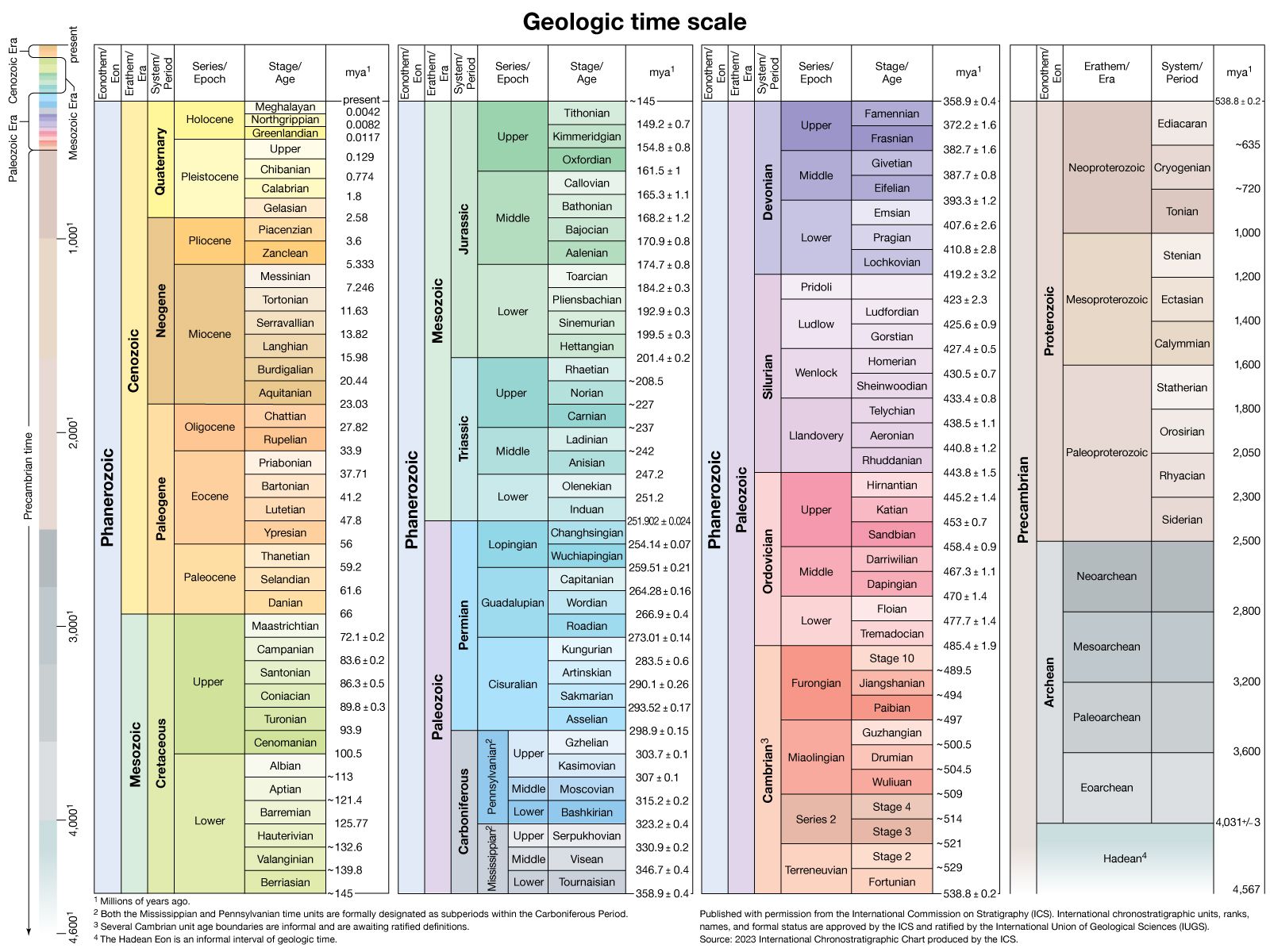
Geochronology is the scientific field dedicated to determining the age and history of Earth’s rocks and rock assemblages. It serves as a fundamental pillar of Earth science by allowing researchers to decipher the sequence of past geologic events and construct a geologic time scale1.123
Geochronology relates to Earth science through two primary approaches:
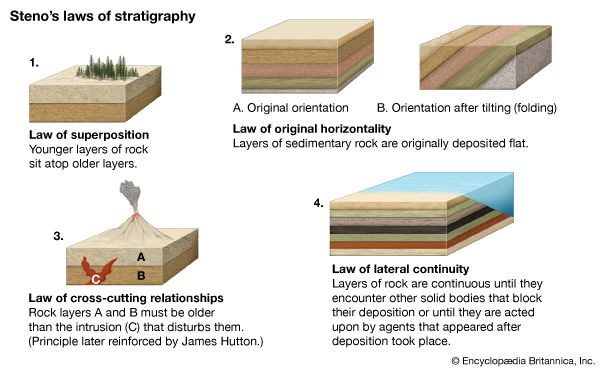
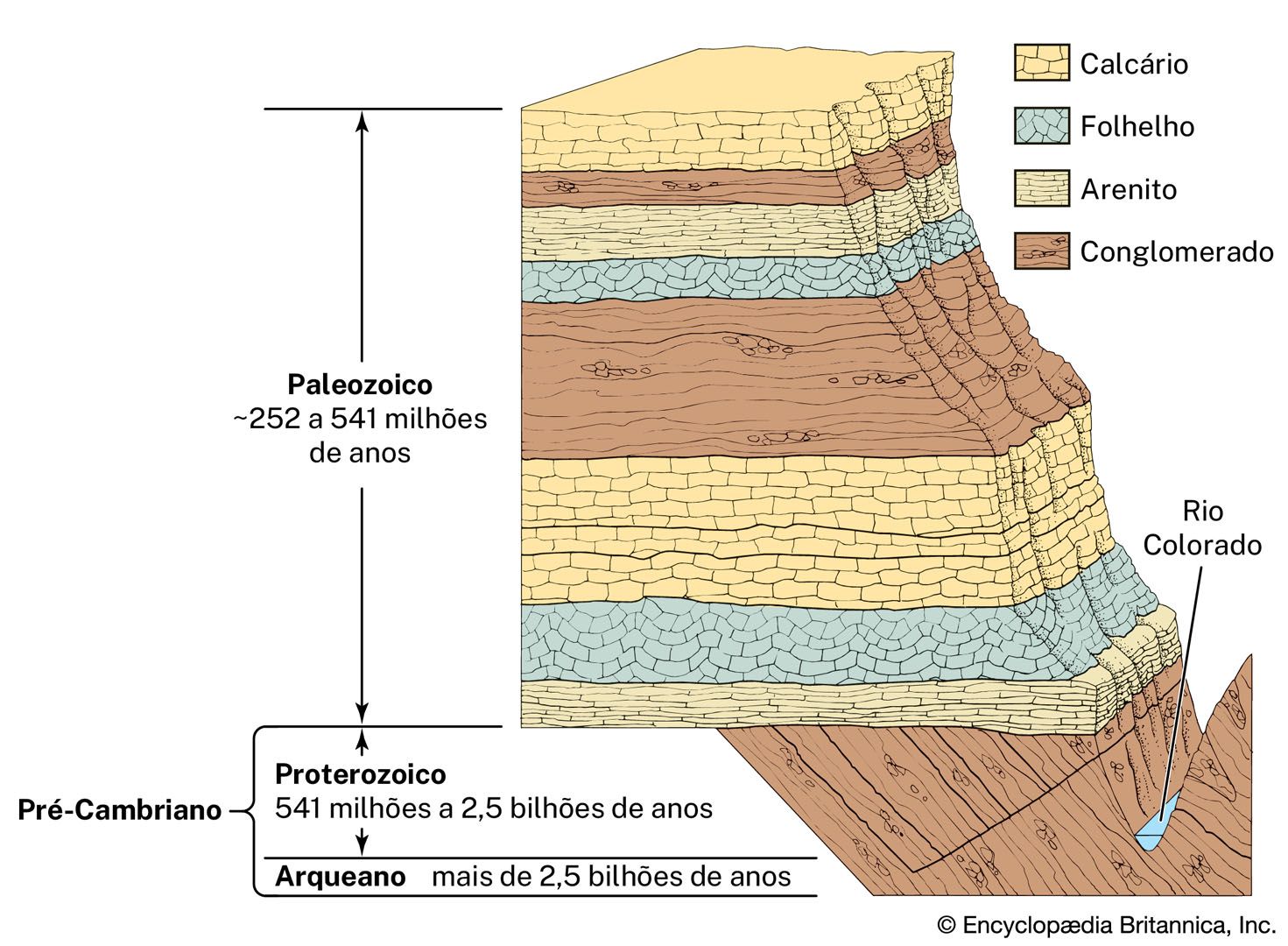
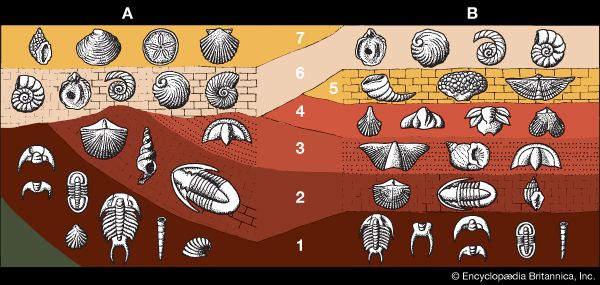
- Relative Dating: Historically, geologists determined the relative ages of sedimentary rock strata by observing their position in an outcrop—where the oldest layers are at the base—and by analyzing the fossil content within them.23
- Absolute Dating: Modern geochronology utilizes radiometric dating, which measures the constant rate at which radioactive atoms decay into daughter atoms. This provides numerical ages for rocks, enabling scientists to calibrate the fossil record and date igneous and metamorphic rocks that lack fossils.1234
By integrating these methods, geochronologists can correlate global tectonic processes, volcanic activity, and mountain building, ultimately revealing the 4.6-billion-year history of our planet.34
What are the main methods used in geochronology to determine the age of rocks and fossils?
Geochronology employs a variety of methods to determine the age of rocks and fossils, broadly categorized into relative and absolute dating techniques.17
Relative Dating
Relative dating establishes the sequence of events without providing a specific numerical age.
- Stratigraphy: Geologists examine rock strata, typically assuming that lower layers are older than those above them.17
- Biostratigraphy: This method involves identifying and arranging fossils within sedimentary rock layers. By comparing these fossil assemblages, scientists can correlate the relative ages of rock units across different locations.786
Absolute Dating
Absolute dating provides numerical ages by measuring the decay of radioactive isotopes at a constant, known rate.19
- Radiometric Dating: This technique measures the ratio of parent isotopes (such as uranium, potassium, or rubidium) to their stable daughter products. Common schemes include:110
- Uranium-Lead Dating: Highly precise, this method uses two uranium-lead chronometers to provide robust ages for igneous and metamorphic rocks.111
- Potassium-Argon Dating: Frequently used to date volcanic minerals.6
- Carbon-14 Dating: A cosmogenic isotope method used for dating biogenic materials from the past 60,000 years.10
- Magnetostratigraphy: By analyzing the magnetic orientation preserved in rocks, scientists can correlate them with a known sequence of Earth’s historical magnetic polarity reversals.6

How has geochronology contributed to our understanding of Earth’s history?
Geochronology has fundamentally transformed our understanding of Earth’s history by providing the tools to move from purely descriptive observations to a precise, quantitative chronology of our planet’s 4.6-billion-year existence.3512
Establishing the Geologic Time Scale
Historically, geologists relied on relative dating, using the law of superposition to determine that deeper rock layers are older than those above them. By correlating these layers with fossil content—a process known as biostratigraphy—scientists were able to construct a relative geologic time scale that organized Earth’s history into a sequence of events.3512
The Impact of Radiometric Dating
The development of radiometric dating in the 20th century revolutionized the field by allowing for numerical age determination. By measuring the decay of radioactive isotopes using mass spectrometers, researchers can now:313512
- Assign specific ages to igneous and metamorphic rocks that lack fossils.35
- Determine the age of Earth itself—approximately 4.6 billion years—by dating meteorites and the oldest terrestrial minerals.513
- Calibrate the relative time scale, providing a precise framework for understanding tectonic processes, mountain building, and the evolution of life.51213
What is the difference between relative and absolute dating methods in geochronology?
In geochronology, the primary distinction between relative and absolute dating lies in how they measure the passage of time.
Relative Dating
Relative dating determines the chronological order of past events without assigning a specific numerical age. It relies on logical deduction and visual observation of rock sequences.115
- Key Concept: The law of superposition is fundamental, stating that in an undisturbed sequence of sedimentary layers, the oldest rocks are at the bottom and the youngest are at the top.115
- Application: Geologists use biostratigraphy and physical features like cross-beds or dikes to correlate rock units across different locations. While it does not provide a date in years, it is essential for establishing the sequence of geologic history.1516
Absolute Dating
Absolute dating provides a numerical age, representing the time elapsed since a rock-forming event.16
- Key Concept: These methods rely on the decay of radioactive isotopes within minerals. By measuring the ratio of parent atoms to daughter products, scientists can calculate the age of a sample.116
- Application: Techniques such as uranium-lead dating require sophisticated equipment, such as mass spectrometers, to analyze minute quantities of material. Unlike relative dating, absolute dating allows for the calibration of the fossil record and the dating of rocks that lack fossils.9616
Sources
- dating: Top Questions — Encyclopædia Britannica
- geochronology — Merriam-Webster
- geochronology — Encyclopædia Britannica
- dating - Uranium–lead method — Encyclopædia Britannica
- geology - Historical geology and stratigraphy — Encyclopædia Britannica
- dating - Distinctions between relative-age and absolute-age measurements — Encyclopædia Britannica
- dating - Origin of radioactive elements used — Encyclopædia Britannica
- dating - Principles of isotopic dating — Encyclopædia Britannica
- dating - Double uranium-lead chronometers — Encyclopædia Britannica
- biostratigraphy — Merriam-Webster
- Tertiary Period - Correlation of Tertiary strata — Encyclopædia Britannica
- geologic history of Earth - Time scales — Encyclopædia Britannica
- Earth sciences - Radiometric dating — Encyclopædia Britannica
- Holocene Epoch - Chronology and correlation — Encyclopædia Britannica
- dating - Determination of sequence — Encyclopædia Britannica
- dating - Uranium-series disequilibrium dating — Encyclopædia Britannica
Published on · 4 min read