Greater Antilles
The Greater Antilles are the four largest islands of the Antilles island group, which together account for nearly 90 percent of the total land area of the…
What are the main islands that make up the Greater Antilles?
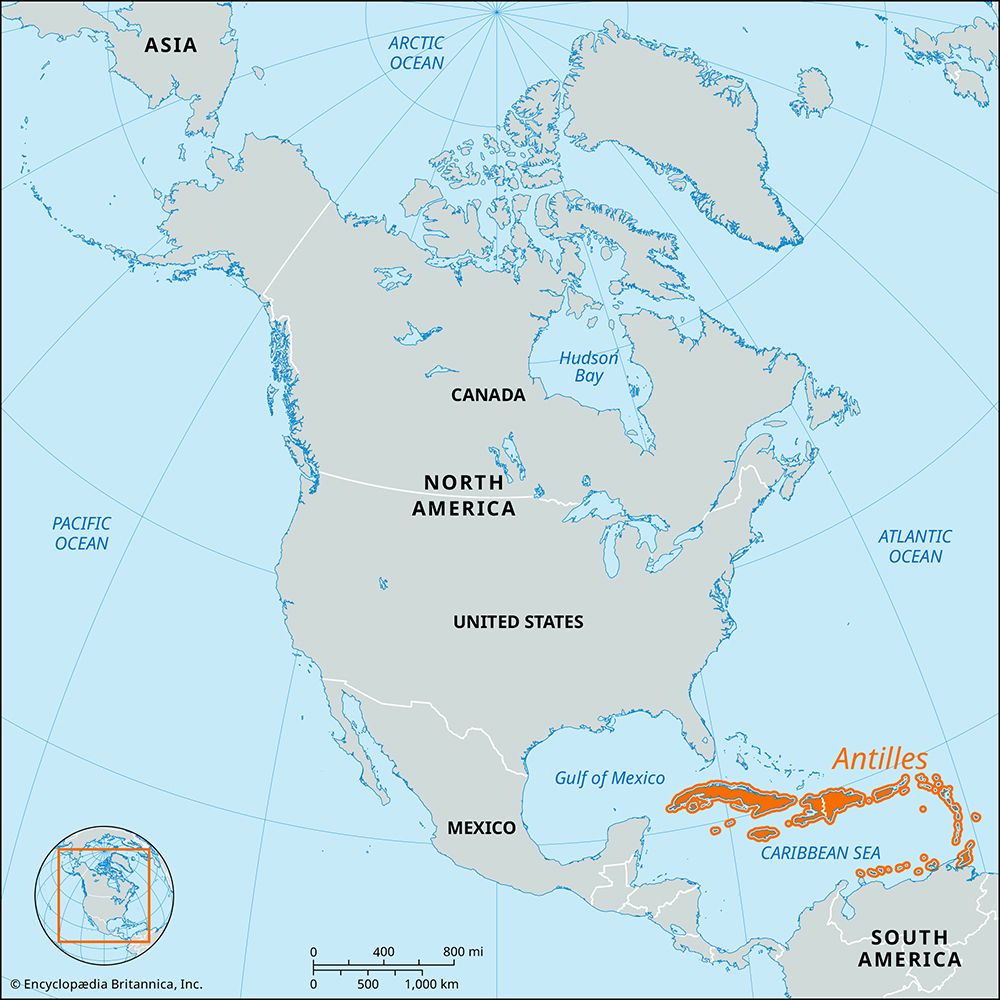
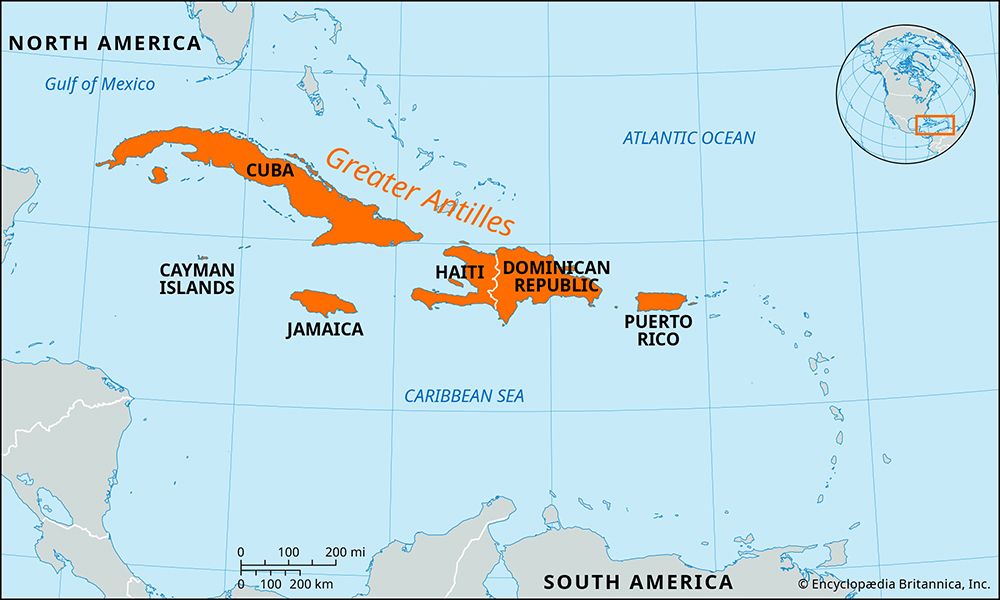
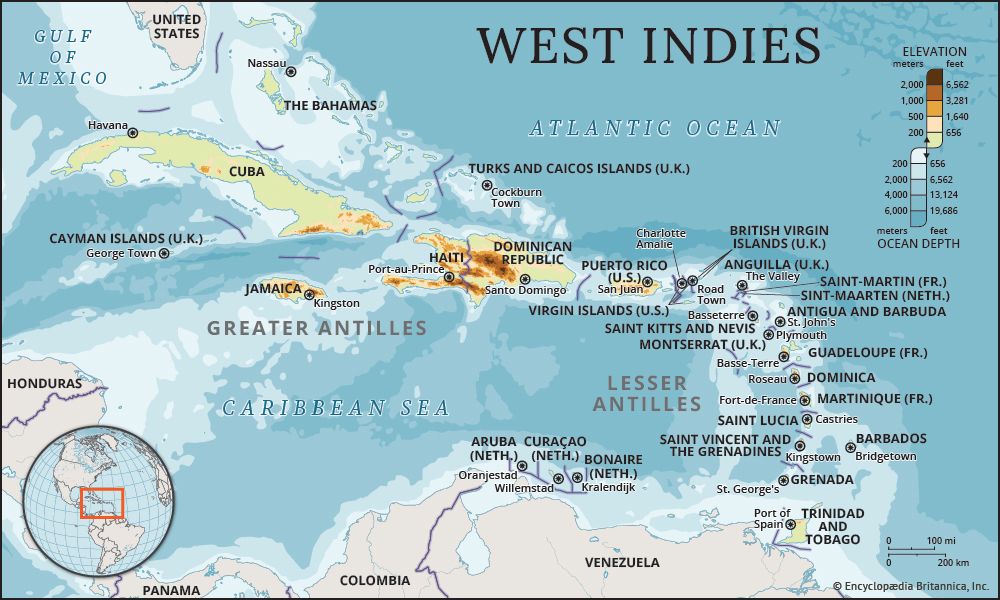
The Greater Antilles are the four largest islands of the Antilles island group, which together account for nearly 90 percent of the total land area of the West Indies.1
The four main islands are:
- Cuba
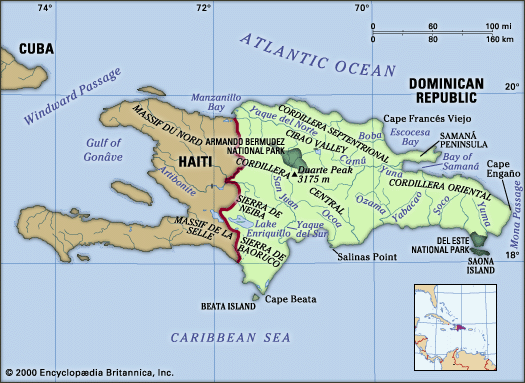
- Hispaniola (which comprises the nations of Haiti and the Dominican Republic)
- Jamaica
- Puerto Rico
In addition to these primary landmasses, the Greater Antilles include various outlying islands and the Cayman Islands.123
What are the major cultural influences found in the Greater Antilles?
The cultural landscape of the Greater Antilles is the result of a complex history of indigenous habitation, European colonization, and the forced migration of enslaved African peoples, followed by later waves of global immigration.
Indigenous Foundations
Before European contact, the region was inhabited by indigenous groups, most notably the Taino. These Arawakan-speaking peoples developed a sophisticated society characterized by stratified social structures led by hereditary chiefs (caciques), complex religious practices involving zemi spirits, and advanced agricultural techniques like conuco cultivation. While the indigenous populations were largely decimated following the arrival of Europeans, their legacy persists in archaeological remnants and certain cultural practices.456
Colonial and African Influences
Beginning in 1492, the region was partitioned by Spanish, French, British, and Dutch powers. This era introduced European languages, administrative systems, and the plantation economy. The subsequent importation of enslaved Africans fundamentally reshaped the demographic and cultural identity of the islands, creating societies with deep African roots.4785
Modern Diversity
Post-emancipation, the social hierarchy was further influenced by the arrival of Chinese, South Asian, Portuguese, Syrian, and Lebanese immigrants, who contributed to the region’s modern cultural and economic diversity. Today, these islands reflect a blend of these varied influences, though the persistence of colonial-era structures has historically contributed to significant social and economic inequality.7
What languages are commonly spoken in the Greater Antilles?
The languages spoken in the Greater Antilles reflect the region’s diverse colonial history and cultural evolution. The primary official languages are determined by the historical influence of European powers:
- Spanish: This is the official language of Cuba, the Dominican Republic, and Puerto Rico.910
- French and Haitian Creole: In Haiti, both are official languages. While French is used in formal settings and the school system, Haitian Creole is the first language for approximately 95% of the population.11
- English and Jamaican Creole: In Jamaica, English is the official language. However, Jamaican Creole—which incorporates vocabulary and phrasing from West African languages, Spanish, and French—is also widely spoken.1213
While indigenous languages like those of the Taino people were once dominant, they have almost entirely disappeared following European colonization. Today, the linguistic landscape is defined by these European-derived official languages alongside distinct creole languages that emerged from the region’s complex history of migration and cultural exchange.41413
How do the political systems vary among the islands of the Greater Antilles?
The political systems of the Greater Antilles are highly diverse, reflecting unique colonial histories and modern international relationships.
- Jamaica: As a constitutional monarchy, Jamaica operates under a parliamentary system with the British monarch as the titular head of state. Executive power is held by the prime minister, and the legislature is a bicameral parliament consisting of an elected House of Representatives and an appointed Senate.17
- Cuba: The country is a unitary socialist republic with a totalitarian government. The Communist Party of Cuba exerts direct influence over most aspects of life. Legislative authority rests with the National Assembly of People’s Power, which appoints the Council of State and the president.18
- Haiti: Haiti is an independent republic, though its political history has been marked by instability and frequent transitions. The political process has often been characterized by a divide between the urban elite and the rural population, with many citizens expressing disillusionment with formal political institutions and electoral processes.1920
- Dominican Republic: Also an independent republic, the nation shares the island of Hispaniola with Haiti. Its history has been shaped by periods of military rule and political disorder, though it has generally experienced more stability than its neighbor.20
- Puerto Rico: Officially a “freely associated state” within the U.S. federal system, Puerto Rico is a self-governing commonwealth. While residents are U.S. citizens, they do not vote in U.S. presidential elections. The island maintains its own constitution, which provides for executive, legislative, and judicial branches.2122
Sources
- Greater Antilles — Encyclopædia Britannica
- Antilles — Encyclopædia Britannica
- West Indies — Encyclopædia Britannica
- West Indies - The Pre-Columbian period — Encyclopædia Britannica
- Central American and northern Andean Indian - Modern developments — Encyclopædia Britannica
- Native American art - Regional style: West Indies — Encyclopædia Britannica
- West Indies - Emancipation — Encyclopædia Britannica
- Leeward Islands — Encyclopædia Britannica
- Puerto Rico: Country Facts — Encyclopædia Britannica
- Haiti: Top Questions — Encyclopædia Britannica
- Cuba: Country Facts — Encyclopædia Britannica
- Jamaica: Top Questions — Encyclopædia Britannica
- Jamaica - Ethnic groups and languages — Encyclopædia Britannica
- American Indian languages — Encyclopædia Britannica
- Arawak — Encyclopædia Britannica
- Dominican Republic - Ethnicity — Encyclopædia Britannica
- Jamaica - Constitutional framework — Encyclopædia Britannica
- Cuba - Constitutional framework — Encyclopædia Britannica
- Haiti - Political process — Encyclopædia Britannica
- Dominican Republic — Encyclopædia Britannica
- Puerto Rico - Government — Encyclopædia Britannica
- Puerto Rico — Encyclopædia Britannica
Published on · 3 min read