Hispaniola
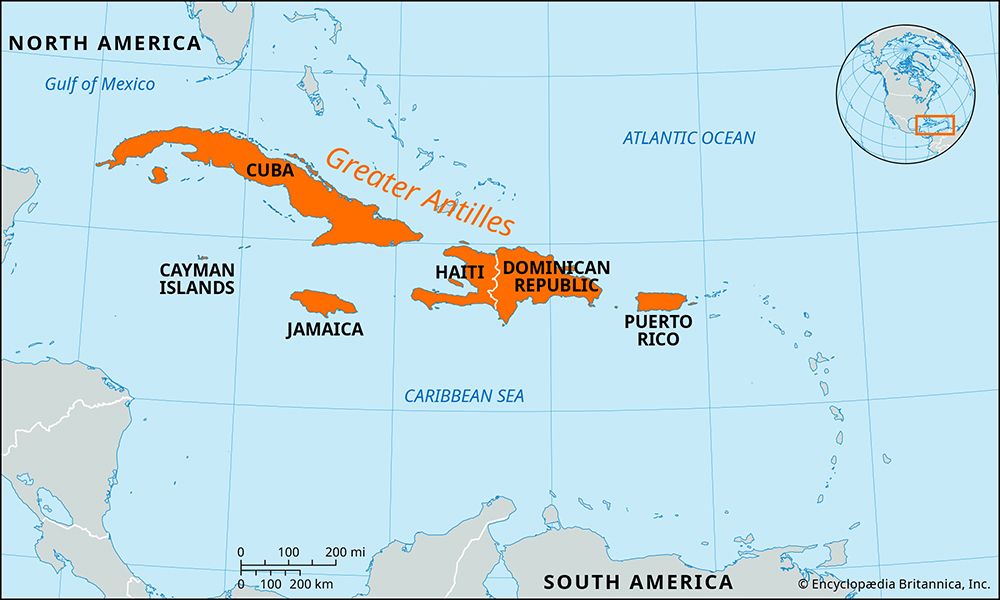
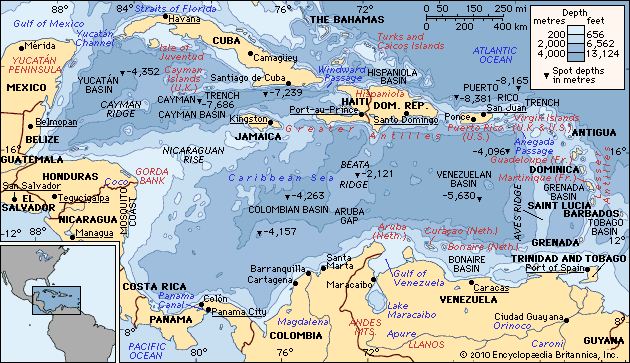
The island of Hispaniola, located in the Greater Antilles of the West Indies, is divided politically between two independent nations:
How is Hispaniola divided politically between Haiti and the Dominican Republic?
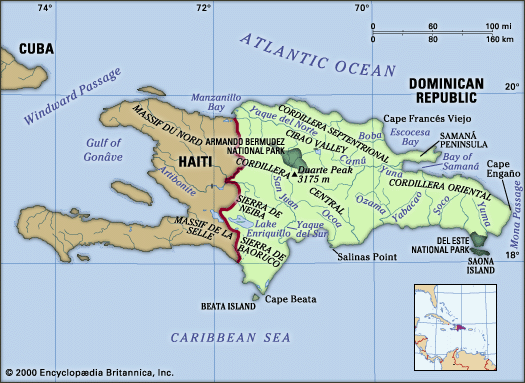
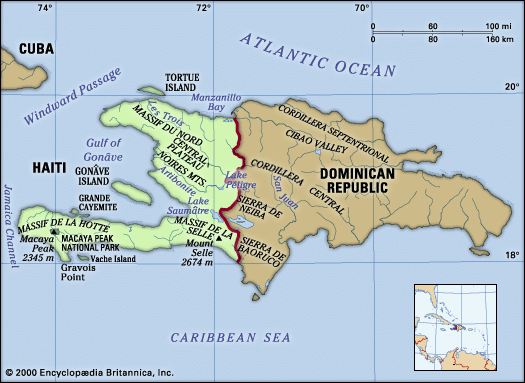
The island of Hispaniola, located in the Greater Antilles of the West Indies, is divided politically between two independent nations:12
- The Dominican Republic: Occupies the eastern two-thirds of the island. Its capital is Santo Domingo, located on the southern coast.2
- Haiti: Occupies the western third of the island. It is bordered to the east by the Dominican Republic and is surrounded by the Caribbean Sea and the Atlantic Ocean.23
Historically, the political boundaries of the island have shifted through various colonial conflicts and occupations, including a period of Haitian rule over the entire island from 1822 to 1844. Today, the two nations maintain distinct political identities while sharing the same landmass.421
How do the cultures and languages of Haiti and the Dominican Republic differ on Hispaniola?
The cultural and linguistic landscape of Hispaniola is deeply rooted in the island’s divergent colonial histories under Spain and France.56
Language
The two nations are linguistically distinct due to their respective colonial legacies:
- Dominican Republic: The official language is Spanish, reflecting its long history as a Spanish colony.56
- Haiti: The official languages are Haitian Creole and French. Haitian Creole is a creole language that emerged from contact between French and African languages during the colonial plantation era.78
Cultural Influences
While both countries share African and European heritage, their cultural expressions have developed differently:
- Dominican Republic: Society largely reflects its Hispanic heritage, though it is also influenced by African traditions. Following independence in 1844, there was a concerted effort to emphasize Spanish cultural roots. A notable cultural symbol is the merengue, which evolved into a distinct Dominican style that distanced itself from Haitian musical roots.95
- Haiti: Haitian culture is heavily shaped by its revolutionary history and African roots. A central element is Vodou, a religion with West African origins that remains a significant part of religious and social life, often practiced alongside Roman Catholicism.510
How did the sugar plantation system affect the demographics and economy of Hispaniola?
The sugar plantation system fundamentally reshaped the demographics and economy of Hispaniola, particularly in the French colony of Saint-Domingue (modern-day Haiti).1213
Demographic Impact
The demand for labor on sugar plantations led to a massive influx of enslaved Africans. By 1789, Saint-Domingue’s population reached approximately 556,000, with roughly 500,000 being enslaved people—a hundredfold increase over the previous century. This created a society deeply fragmented by race, class, and gender, consisting of a small white elite, a group of free people of color (affranchis), and a vast enslaved majority. In contrast, the Spanish colony on the eastern side of the island remained less populated, reaching only about 100,000 people by the 18th century.13101214
Economic and Ecological Consequences
Saint-Domingue became France’s most prosperous colony, exporting sugar, coffee, and other goods, with its output accounting for nearly two-thirds of French foreign investments by the 1780s. However, this wealth came at a severe cost:1310
- Ecological Degradation: Massive deforestation for sugar fields caused significant erosion and reduced soil productivity.1310
- Human Cost: The system relied on brutal, exploitative slavery, where enslaved people faced malnutrition, disease, and backbreaking labor.121310
What is the historical significance of Hispaniola in relation to Christopher Columbus and European colonization?
Hispaniola holds profound historical significance as the site of the first permanent European presence in the Western Hemisphere, marking the beginning of a transformative and often devastating era of colonization.
Columbus and the Spanish Foundation
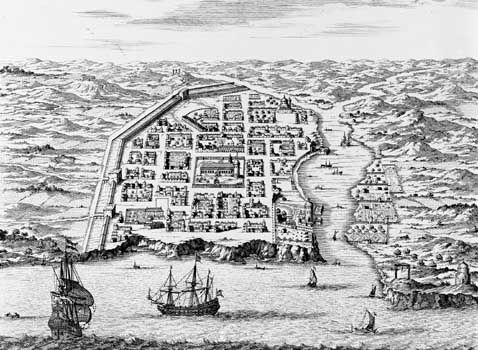
On December 6, 1492, Christopher Columbus sighted the island, which the indigenous Taino called Quisqueya, and renamed it La Isla Española (Hispaniola). In 1496, his brother Bartholomew Columbus founded Santo Domingo, which became the capital of the first Spanish colony in the New World and the base for subsequent expeditions of conquest across the Americas.171819
Impact on Indigenous Populations
The arrival of Europeans brought catastrophic consequences for the native Taino and Ciboney peoples. The Spanish subjected them to slavery to mine for gold, and the combination of brutal working conditions and European diseases decimated the population. By the end of the 16th century, the indigenous population had virtually vanished.17
Colonial Legacy
Hispaniola served as the prototype for the colonial plantation system. After the Spanish focus shifted toward mainland conquests, the western portion of the island eventually fell under French control, becoming the prosperous but exploitative colony of Saint-Domingue.171820
Sources
- Haiti - Land — Encyclopædia Britannica
- Hispaniola — Encyclopædia Britannica
- history of the Dominican Republic - Power struggles and Dominican nationalism — Encyclopædia Britannica
- Dominican Republic — Encyclopædia Britannica
- Dominican Republic - Cultural life — Encyclopædia Britannica
- Latin American dance - Dominican Republic and Haiti — Encyclopædia Britannica
- Haiti: Country Facts — Encyclopædia Britannica
- Haiti - Religion — Encyclopædia Britannica
- Haiti - Early period — Encyclopædia Britannica
- Dominican Republic - The colonial era — Encyclopædia Britannica
- creole languages — Encyclopædia Britannica
- history of the Dominican Republic - The colonial era in the Dominican Republic — Encyclopædia Britannica
- Haiti - Plantations and enslaved people — Encyclopædia Britannica
- Dominican Republic - Ethnicity — Encyclopædia Britannica
- history of Haiti - Plantations and enslaved people — Encyclopædia Britannica
- Haiti - Manufacturing — Encyclopædia Britannica
- history of Haiti - Early period — Encyclopædia Britannica
- Santo Domingo — Encyclopædia Britannica
- history of the Dominican Republic — Encyclopædia Britannica
- Christopher Columbus - The fourth voyage and final years of Christopher Columbus — Encyclopædia Britannica
Published on · 4 min read