Greenshank
The greenshank (Tringa nebularia) is an Old World shorebird belonging to the family Scolopacidae.
What is Greenshank?
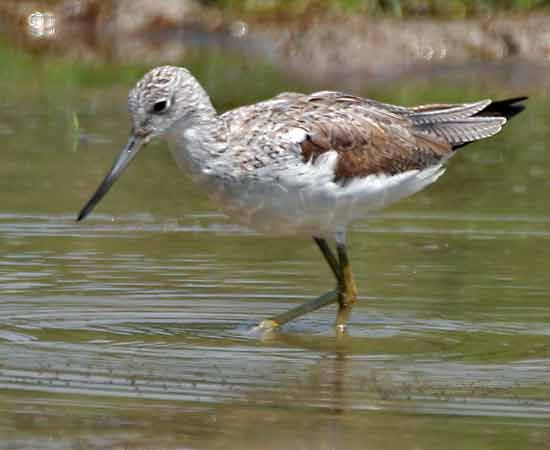
The greenshank (Tringa nebularia) is an Old World shorebird belonging to the family Scolopacidae.12
Measuring approximately 30 cm (12 inches) in length, this slender bird is characterized by its greenish legs, white rump, and a long, slightly upturned bill. As deep waders, they are typically found in habitats such as moors, flat meadows, swamps near lakes, or wooded bogs.12
During the summer, greenshanks breed in northern Europe and Asia, often returning to the same territory and mate each year. They typically lay a clutch of four cryptically colored, speckled eggs, which are incubated by both parents for about 23 to 24 days. After hatching, the chicks are highly mobile and are protected by their parents until they are ready to fly, which occurs at approximately 26 days of age. Outside of the breeding season, these birds migrate to winter in southern Europe, Africa, Asia, and occasionally as far as Tasmania and New Zealand.13
What are some other types of shorebirds in the Scolopacidae family?
The family Scolopacidae is a diverse group of small to medium-sized shorebirds found worldwide, characterized by their varied bill shapes and often intricate, camouflaged plumage. Beyond the greenshank, this family includes several other notable groups:4
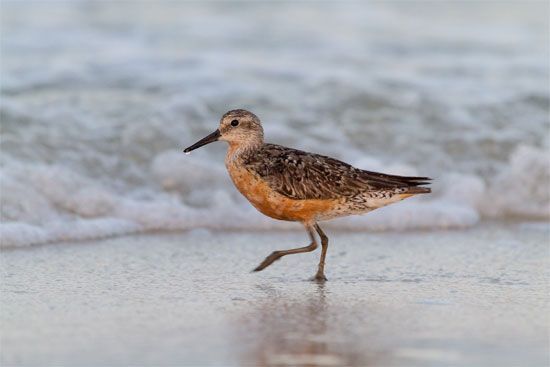
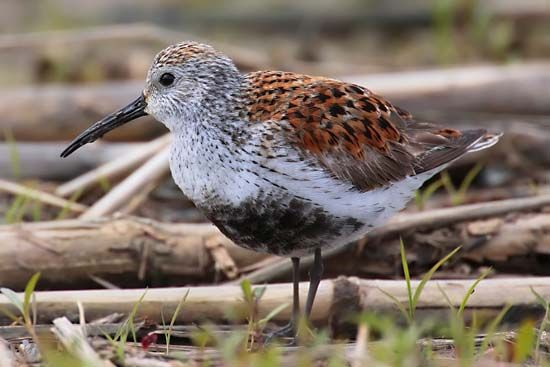
- Sandpipers: A broad category of birds that frequent mudflats and beaches. This group includes species such as the knot, sanderling, dunlin, and the purple sandpiper.5
- Woodcocks: Squat-bodied birds adapted to damp, dense woodlands. They are known for their long, sensitive bills used to extract earthworms from the soil.6
- Snipes: Often associated with woodcocks, these birds are known for their long bills and cryptic coloration.54
- Tattlers, Curlews, and Godwits: These are also prominent members of the Scolopacidae family, each exhibiting specialized adaptations for foraging in their respective habitats.7
- Turnstones: Distinctive shorebirds that are also classified within this family.4
These birds generally nest on the ground and are known for their migratory habits, often traveling long distances between breeding and wintering grounds.5
How do greenshanks use their long, upturned bills to find food?
The greenshank (Tringa nebularia) is a member of the family Scolopacidae, a group of shorebirds known for their specialized feeding adaptations. While the specific mechanics of the greenshank’s bill are not detailed in isolation, it belongs to a family characterized by slender, flexible bills that are often straight or curved up or down to suit specific foraging methods.11011
In the Scolopacidae family, these bills are typically equipped with a mobile tip containing a concentration of tactile sense organs. This allows the birds to function as specialized probers; they can control the tip of the upper jaw using jaw muscles to grasp prey, such as worms or larvae, located underground or in mud, and inch the food along the bill toward the throat for swallowing.11
What are some of the biggest challenges greenshanks face during their long migrations?
The provided search results do not contain information regarding the specific challenges greenshanks face during their long migrations.
While the greenshank is known to travel from breeding grounds in northern Europe and Asia to wintering areas as far south as Africa, Tasmania, and New Zealand, the available data does not detail the environmental or biological obstacles encountered during these journeys.1
Sources
- Greenshank — Encyclopædia Britannica
- Charadriiform - Shorebirds (suborder Charadrii) — Encyclopædia Britannica
- greenshank — Merriam-Webster
- Shorebird — Encyclopædia Britannica
- Scolopacidae — Merriam-Webster
- Sandpiper — Encyclopædia Britannica
- scorpaeniform - Annotated classification — Encyclopædia Britannica
- Charadriiform - Annotated classification — Encyclopædia Britannica
- Woodcock — Encyclopædia Britannica
- Charadriiform - Adaptations for feeding — Encyclopædia Britannica
- Ciconiiform - Bill shape — Encyclopædia Britannica
Published on · 2 min read