Charadriiform
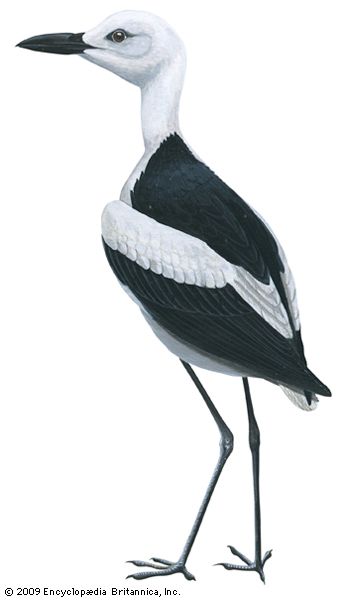
Charadriiform birds, which include sandpipers, gulls, and auks, play diverse roles in their ecosystems as predators and components of the food web. They…
How do Charadriiform birds contribute to their ecosystems and interact with other species?
Charadriiform birds, which include sandpipers, gulls, and auks, play diverse roles in their ecosystems as predators and components of the food web. They primarily consume animal matter, such as invertebrates, fish, and occasionally the eggs or young of other birds.123
Their interactions with other species are varied:
- Predation and Piracy: Some species, like skuas and jaegers, act as “pirates,” harassing other birds to steal their food. Larger gulls may prey on the eggs and nestlings of other seabirds.3
- Foraging Relationships: Gulls often follow agricultural machinery to consume exposed grubs and mice, while certain terns guide fishermen to schools of fish.4
- Specialized Feeding: Species like oystercatchers exert pressure on shellfish populations, while others, such as woodcock, influence soil ecosystems by feeding on earthworms.3
- Colonial Nesting: Many species nest in enormous colonies, which can significantly impact local environments.45
How do Charadriiform birds migrate, and what are some of their notable migration patterns?
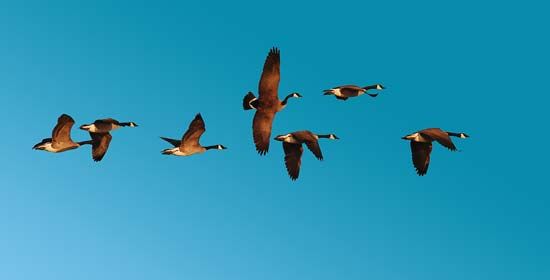
Charadriiform birds, a group that includes sandpipers, plovers, gulls, and auks, are renowned for performing some of the most extensive migrations of any birds. These migrations are driven by complex internal rhythms, such as the accumulation of body fat controlled by the pituitary gland, and are often triggered by environmental cues like day length and food availability.789
Notable migration patterns include:
- Extreme Long-Distance Travel: The Arctic tern holds the record for the longest migration, traveling between its Arctic breeding grounds and the Antarctic, a journey of over 11,600 km (7,200 miles) each way. Similarly, the American golden plover performs a direct, non-stop flight from the Aleutian Islands to Hawaii, covering 3,300 km (2,050 miles).10111
- Shorebird Flyways: Many shorebirds nest in the Arctic tundra and winter along seacoasts ranging from western Europe to South Africa.12
- Navigation: These birds utilize celestial navigation, relying on the Sun during the day and stars at night, alongside a presumed sensitivity to the Earth’s magnetic field to maintain their course.13
How have Charadriiform birds adapted to their various environments?
Charadriiform birds have evolved a wide array of specialized adaptations that allow them to thrive in diverse environments, ranging from Arctic regions to coastal waterways and open oceans.1
Feeding Adaptations
The most significant variations occur in the bill, which is highly specialized for specific foraging methods:1415
- Probing: Species like sandpipers and snipe possess long, flexible bills with tactile sense organs at the tip to detect prey underground.14
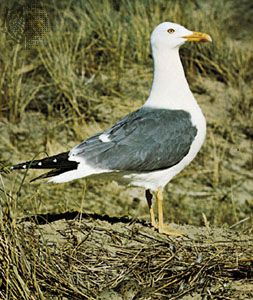
- Grasping and Tearing: Gulls and jaegers have hooked tips to facilitate tearing food, while oystercatchers feature laterally flattened, blade-like bills for handling shellfish.14
- Specialized Capture: Skimmers have a unique, knife-like lower mandible that protrudes beyond the upper, allowing them to skim the water surface for food.14
- Salt Management: Many species that consume marine prey possess supraorbital salt glands located above the eyes, which allow them to excrete excess salt ingested from seawater.14
Flight and Locomotion
Adaptations for movement vary by suborder:
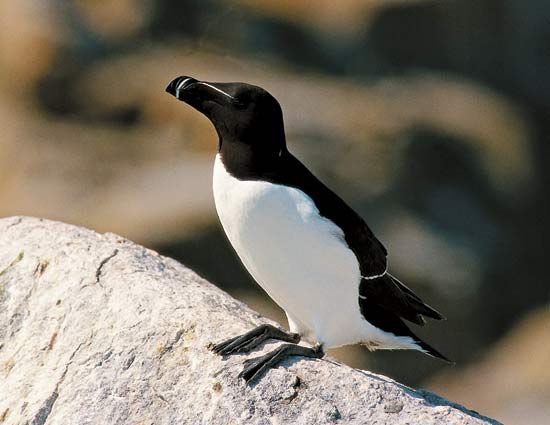
- Aerial Flight: Gulls and terns have long, narrow wings suited for efficient flight, whereas alcids (such as puffins) have shorter, flattened wing bones that serve as paddles for “underwater flight” while swimming.16
- Ground Nesting: Many shorebirds rely on cryptic coloration to blend into their surroundings, protecting them and their eggs from predators while nesting on open ground.17
What role do Charadriiform birds play in human culture and folklore?
Charadriiform birds have long held a significant place in human culture, serving as sources of food, economic resources, and even symbols of historical events.
Economic and Cultural Utility
- Food Source: For centuries, humans have harvested the eggs of murres, puffins, gulls, and lapwings. In regions like the Faeroe Islands and Iceland, this practice has been managed carefully to sustain local populations.1
- Agricultural Allies: The California gull holds a special place in American folklore and history; it is credited with saving the crops of early Mormon settlers in Utah from a plague of crickets, leading to its designation as the state bird of Utah.119
- Navigational Guides: In Hawaii, fishermen have traditionally used the behavior and flight patterns of noddy terns to locate schools of tuna.1
Historical Impact and Conservation
The relationship between humans and these birds has not always been positive. In the 19th century, the millinery trade decimated populations of gulls and terns for hat decorations, and the great auk was driven to extinction by overexploitation. These tragedies spurred the rise of early Audubon societies, which helped establish the modern conservation movement.1
Etymological Roots
The name Charadrius traces back to ancient texts, including the Vulgate, where it was used to translate references to birds of uncertain identity. Ancient scholars like Aristotle associated these birds with ravines and rocky clefts, reflecting a long-standing human fascination with their habitats.2
Sources
- Charadriiform — Encyclopædia Britannica
- Charadriiform - Importance to humans — Encyclopædia Britannica
- Charadriiform - General features — Encyclopædia Britannica
- Charadriiform - Reproduction — Encyclopædia Britannica
- Charadriiform - Locomotion and feeding behaviour — Encyclopædia Britannica
- Charadriiform - Critical appraisal — Encyclopædia Britannica
- Migration - Modes of migration — Encyclopædia Britannica
- Migration - In Europe — Encyclopædia Britannica
- Migration - In coastal and pelagic regions — Encyclopædia Britannica
- Migration - Physiological stimulus of migration — Encyclopædia Britannica
- How do birds know when to fly south? — Encyclopædia Britannica
- Migration - Birds — Encyclopædia Britannica
- Bird - Flight — Encyclopædia Britannica
- Charadriiform - Adaptations for feeding — Encyclopædia Britannica
- Charadriiform - Shorebirds (suborder Charadrii) — Encyclopædia Britannica
- Charadriiform - Form and function — Encyclopædia Britannica
- Charadriiform - Adaptations for flight — Encyclopædia Britannica
- penguin - Form and function — Encyclopædia Britannica
- Charadriiformes — Merriam-Webster
- Charadrius — Merriam-Webster
- Gull — Encyclopædia Britannica
Published on · 4 min read