Groundnut
The term groundnut does not refer to a single species but is a common name for several distinct plants that produce edible fruits, tubers, or nutlike parts.
What is Groundnut?
The term groundnut does not refer to a single species but is a common name for several distinct plants that produce edible fruits, tubers, or nutlike parts.1
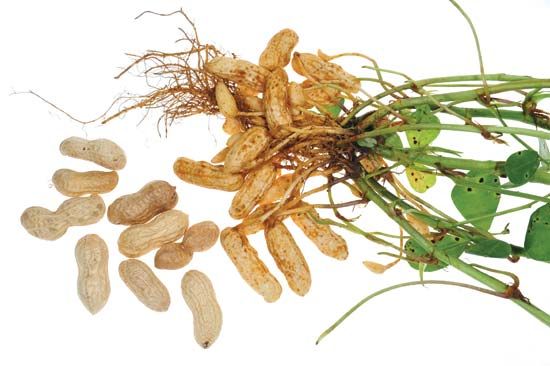
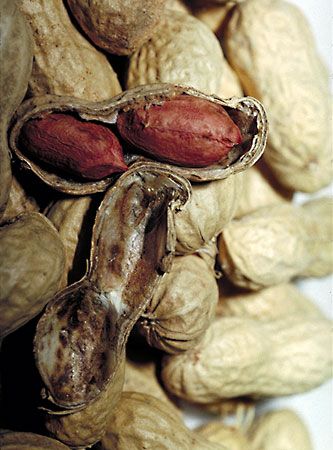
The most prominent usage is for the peanut (Arachis hypogaea), a member of the Fabaceae family. Despite its name, the peanut is a legume rather than a true nut. In many regions, particularly in British English, “groundnut” is used interchangeably with “peanut”.12
Other plants commonly called groundnuts include:
- Apios americana: A North American leguminous vine known for its edible tubers, also called the potato bean or wild bean.12
- Lathyrus tuberosa: Also known as the earth-nut pea.1
- Cyperus esculentus: A relative of the papyrus plant (family Cyperaceae) that produces edible tubers, often referred to as chufa or earth almond.1
How does a peanut plant develop its pods underground?
The peanut plant exhibits a unique reproductive process known as geocarpy, which allows its pods to ripen underground.3
After the plant is pollinated and the flower withers, a stalklike structure called a “peg” emerges from the base of the flower. This peg grows downward toward the soil, carrying the fertilized ovules within its sturdy tip. Once the peg tip penetrates the soil—sometimes reaching depths of 10 cm (4 inches) or more—it begins to develop into the characteristic peanut pod.3
Interestingly, these developing fruits can function similarly to roots by absorbing mineral nutrients directly from the surrounding soil. For the pods to develop properly, the soil must contain sufficient calcium, as the plant requires this specific nutrient in the immediate environment of the pod, regardless of the nutrients available to the plant’s primary root system.3
What are the nutritional benefits of eating groundnuts?
Groundnuts, commonly known as peanuts, are a nutritionally dense food source. As a legume, they are highly valued for their significant content of protein and fat.43
Beyond their macronutrient profile, groundnuts are recognized for their role in human nutrition as a source of essential nutrients common to the legume family, which typically includes various B vitamins and iron. While much of the global crop is processed to extract edible oil, the seeds themselves are consumed in various forms, such as boiled or roasted, or ground into peanut butter roasted, or ground into peanut butter.34
In addition to their direct nutritional benefits for human consumption, the plant is also utilized as livestock feed, with the plant tops often used as hay.4
What is the difference between a legume and a true nut?
In botany, the distinction between a legume and a true nut is based on their structural development and characteristics at maturity.56
True Nuts
A true nut is a dry, hard fruit that does not split open at maturity to release its single seed. Key characteristics include:5
- Development: They develop from more than one carpel (female reproductive structure).5
- Structure: They possess a tough, woody wall (pericarp).5
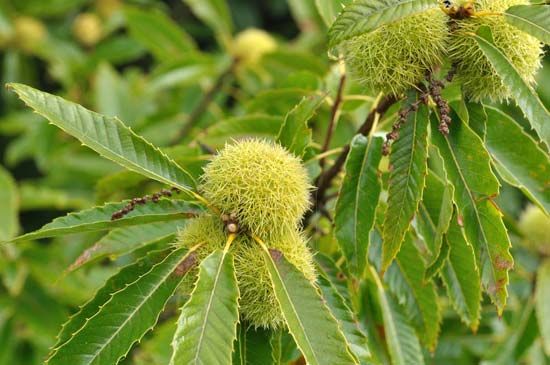
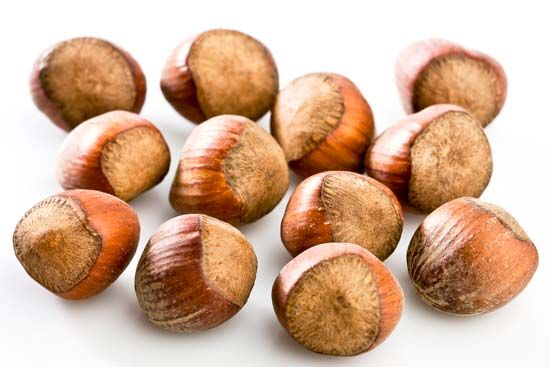
- Examples: Chestnuts, hazelnuts, and acorns.5
Legumes
A legume is the fruit of plants in the pea family (Fabaceae). Key characteristics include:7
- Development: They typically develop from a single carpel.6
- Structure: Most are dehiscent, meaning they split open along two seams (dorsal and ventral sutures) to release their seeds.67
- Exceptions: Some legumes, such as the peanut, are indehiscent, meaning they do not naturally open at maturity.73
While many oily seeds are colloquially called “nuts,” they often belong to other botanical categories, such as drupes (e.g., walnuts, almonds) or capsules (e.g., Brazil nuts).56
Sources
- Groundnut — Encyclopædia Britannica
- groundnut — Merriam-Webster
- Peanut — Encyclopædia Britannica
- human nutrition - Legumes — Encyclopædia Britannica
- Nut — Encyclopædia Britannica
- Fruit - Types of fruits — Encyclopædia Britannica
- Legume — Encyclopædia Britannica
Published on · 3 min read