Hazelnut
A hazelnut refers to the edible nut produced by shrubs and trees in the genus Corylus, which belongs to the birch family (Betulaceae). These deciduous plants…
What is Hazelnut?
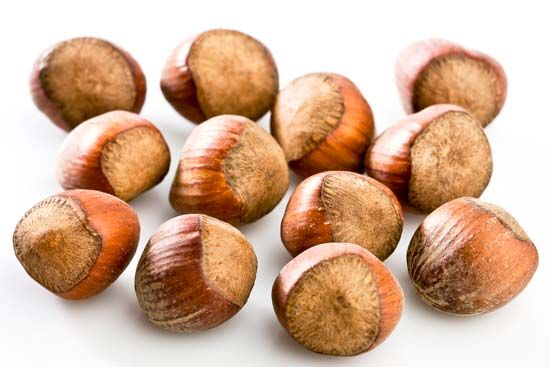
A hazelnut refers to the edible nut produced by shrubs and trees in the genus Corylus, which belongs to the birch family (Betulaceae). These deciduous plants are native to the north temperate zone and are valued both for their nuts and as ornamental foliage.1
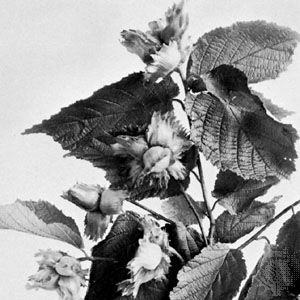
The nuts themselves are typically round or oblong, ranging from 1 to 4 cm in length, and are partially or fully enclosed in a husk. Commercially important species include the European filbert (Corylus avellana) and the giant hazel (C. maxima). Beyond their use as a food source, hazelnut oil is utilized in perfumes and soaps, and the wood is often used for small items like tool handles. While historically categorized by various names like filbert or cobnut based on husk length, these distinctions are considered misleading.1
What are the main differences between a filbert and a cobnut?
It is a common misconception that “filbert” and “cobnut” represent distinct botanical categories based on specific physical traits. In reality, these terms are often used interchangeably to describe hazelnuts.
Historically, these names were applied based on the relative length of the nut compared to its protective husk. However, this method of classification has been found to be misleading and is not a reliable way to distinguish between the varieties. Both terms generally refer to the edible nuts produced by species within the genus Corylus, such as the European filbert (Corylus avellana) and the giant hazel (C. maxima).14
While you may encounter these names in different regions or markets, they do not denote separate species or distinct biological differences.1
How do hazelnut trees reproduce in the wild?
Hazelnut trees reproduce in the wild through a combination of wind-driven pollination and animal-assisted seed dispersal.
Pollination
Hazelnut trees (genus Corylus) are wind-pollinated, a process known as anemophily. In late winter, before the leaves emerge, the trees produce yellow male catkins and smaller, red-centered female flower clusters on the same plant. To minimize self-pollination, these separate male and female flowers are positioned to facilitate cross-pollination by the wind. Because wind pollination is less precise than insect pollination, these flowers are inconspicuous and lack the nectar or fragrance used to attract pollinators.15
Seed Dispersal
Once the trees produce their nuts, they rely on animals for dispersal. Nut-eating birds, such as nutcrackers and jays, play a critical role by caching or hiding hazelnuts to consume later. These birds often neglect to recover all of their hidden food, or they may drop the nuts while in transit, allowing the seeds to germinate in new locations. Additionally, rodents may further assist in this process by stealing and re-burying the nuts cached by birds.6
What are some common culinary uses for hazelnut oil?
Sorry, the Britannica knowledge base does not contain this information.
Sources
- Hazelnut — Encyclopædia Britannica
- hazelnut — Merriam-Webster
- list of culinary nuts — Encyclopædia Britannica
- filbert — Merriam-Webster
- Seed - Dispersal by birds — Encyclopædia Britannica
- orchid - Bee pollination — Encyclopædia Britannica
- Pollination - Wind — Encyclopædia Britannica
- vegetable oil — Encyclopædia Britannica
Published on · 2 min read