Grouse
Grouse are ground-dwelling game birds belonging to the family Tetraonidae. While the provided information does not specify an exact total number of species…
How many species of grouse are there, and where are they primarily found?
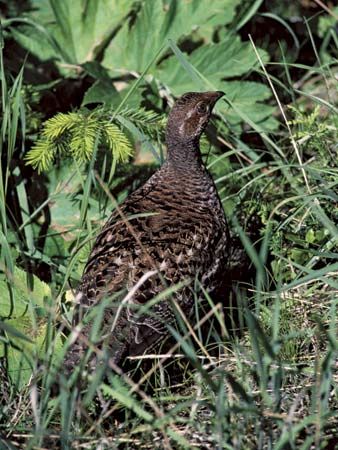
Grouse are ground-dwelling game birds belonging to the family Tetraonidae. While the provided information does not specify an exact total number of species, it identifies several prominent members of the family, including the capercaillie, black grouse, ruffed grouse, spruce grouse, sage grouse, sharp-tailed grouse, and prairie chickens.12
These birds are primarily found in the Northern Hemisphere. Old World species, such as the black grouse and capercaillie, inhabit regions across Europe, Scotland, and the Caucasus. North American species are widely distributed across the continent, ranging from the conifer forests of the north to the sagebrush flats and Great Plains of the United States and Canada.1
What are the different subfamilies within the grouse family?
The grouse family, known as Tetraonidae, does not contain subfamilies. Instead, it is classified as a single family within the order Galliformes.
The family Tetraonidae is defined by specific physical characteristics, most notably that its members have nostrils and lower legs (tarsi) that are at least partially feathered. The group consists of 9 extant genera and 17 species, which are distributed across North America and northern Eurasia.13
It is important not to confuse the bird family Tetraonidae with the fish family Tetraodontidae, which comprises puffer fishes and related species.4
How do male grouse attract females during mating season?
Male grouse employ a variety of visual and auditory displays to attract females during the mating season, often utilizing a combination of physical posturing, specialized vocalizations, and nonvocal sounds.78
Communal Lek Displays
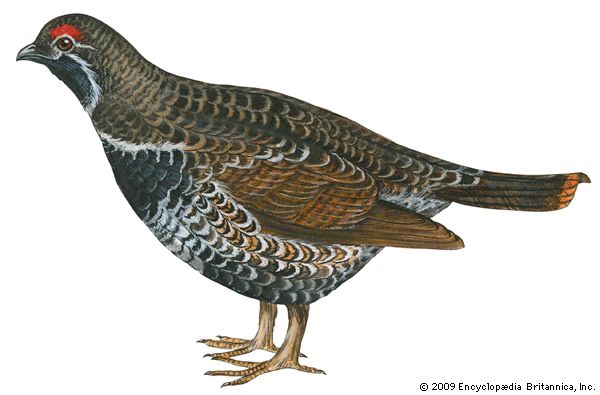
Many grouse species, such as the black grouse, sage grouse, and prairie chickens, engage in communal displays at a specific assembly area known as a lek or dancing ground. Within this arena, males occupy individual territories where they:79
- Strut and posture: Males inflate colorful, fleshy combs over their eyes, spread their tails, and perform elaborate dances.79
- Vocalize: They produce unique calls, sometimes amplified by specialized esophageal air sacs.7
- Compete for status: Dominant males typically secure central positions in the lek, which increases their likelihood of mating with visiting females.7
Solitary Displays
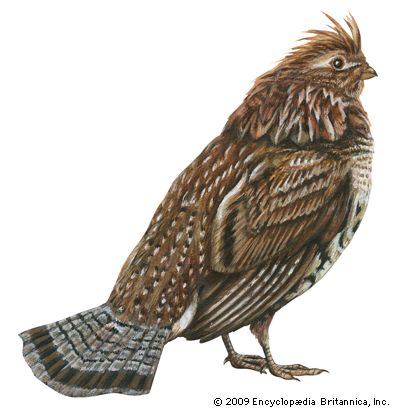
Not all grouse are communal. For example, the North American ruffed grouse lives in isolation and displays to receptive females individually. A key feature of their courtship is “drumming,” where the male beats his wings rapidly against the air to proclaim his territory. This display is often accompanied by hissing and strutting with a cocked tail.79
Across these behaviors, grouse may also incorporate foot-stamping and additional wing-generated noises to communicate with potential mates.8
What are grouse?
Grouse are game birds belonging to the family Tetraonidae within the order Galliformes. They are primarily found across North America and northern Eurasia, inhabiting diverse environments ranging from dense forests to open grasslands and tundra.1114
The family is physically distinguished by having nostrils and lower legs (tarsi) that are at least partially feathered. Grouse are medium-to-large birds, typically ranging from 30 to 90 cm in length. While they are primarily vegetarian, feeding on berries, fruits, seeds, and buds, they also consume insects and other invertebrates.4111
The group includes several well-known species, such as the ruffed grouse, sage grouse, black grouse, ptarmigan, and the capercaillie, which is the largest member of the family. Many species are noted for their elaborate courtship displays, often performed in communal areas known as a lek.1
Sources
- Grouse — Encyclopædia Britannica
- grouse — Merriam-Webster
- tetraodontiform - Annotated classification — Encyclopædia Britannica
- Galliform - Annotated classification — Encyclopædia Britannica
- Tetraonidae — Merriam-Webster
- Tetraodontidae — Merriam-Webster
- Galliform - Courtship and mating — Encyclopædia Britannica
- Reproductive behaviour - Birds — Encyclopædia Britannica
- Galliform - Form and function — Encyclopædia Britannica
- Bird - Sound — Encyclopædia Britannica
- Galliform - Habitat selection and food habits — Encyclopædia Britannica
Published on · 3 min read