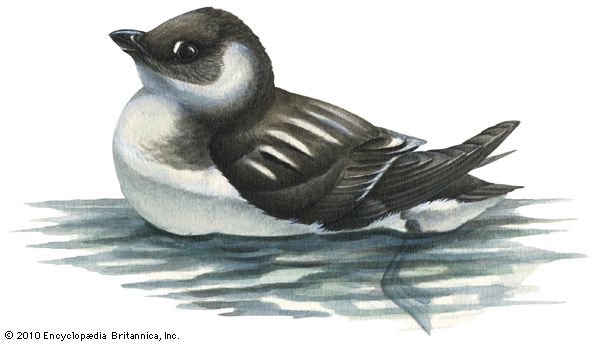
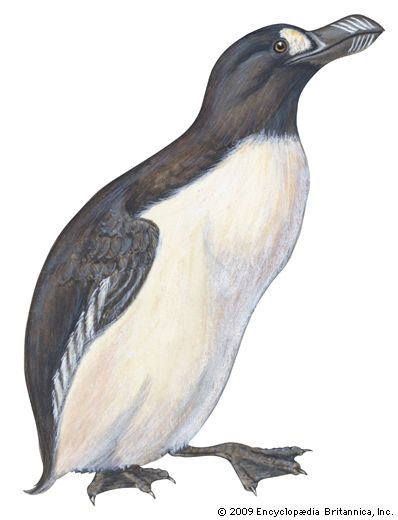
Guillemot
Sorry, the Britannica knowledge base does not contain specific information regarding the main conservation concerns for guillemot species in the Cepphus…
What are the main conservation concerns for guillemot species in the Cepphus genus?
Sorry, the Britannica knowledge base does not contain specific information regarding the main conservation concerns for guillemot species in the Cepphus genus. While the provided search results describe the general biology of the black guillemot, pigeon guillemot, and spectacled guillemot, they do not detail the specific threats or conservation status of these birds.
How many species are included in the Cepphus genus, and what are their names?
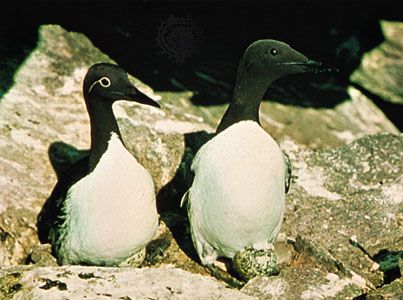
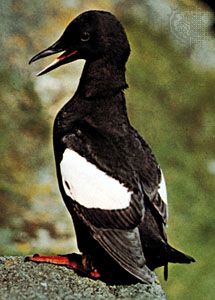
The genus Cepphus includes three species of black and white seabirds belonging to the auk family. These birds are characterized by their pointed black bills and red legs.1
The three species are:
- Black guillemot (Cepphus grylle), also known as the tystie.1
- Pigeon guillemot (Cepphus columba).1
- Spectacled guillemot (Cepphus carbo).1
These birds are known as deep divers that typically feed on the ocean floor and nest in crevices.1
What are the distinguishing physical characteristics of guillemots in the Cepphus genus?
Guillemots within the Cepphus genus are distinguished by several consistent physical traits, as well as seasonal variations in plumage.
General Physical Characteristics
All three species in the Cepphus genus share the following features:
- Body Structure: They are black and white seabirds belonging to the auk family.1
- Bill: They possess a pointed, black bill.1
- Legs: A defining feature of the genus is their red legs.1
Seasonal Plumage (Black Guillemot)
The black guillemot (C. grylle), which serves as the best-known example of the genus, exhibits distinct seasonal changes:
- Breeding Season: The bird is primarily black with white wing patches.1
- Winter: The plumage shifts to white on the underparts and a speckled brown and white appearance on the upper parts.1
These birds are generally about 35 cm (14 inches) in length and are adapted as deep divers that forage on the ocean floor.1
How do guillemots in the Cepphus genus differ from other auk species?
While guillemots in the Cepphus genus share the general characteristics of the auk family—such as being black and white diving birds—they exhibit several distinct behaviors and physical traits that set them apart from other alcids:
- Physical Appearance: Unlike many other auks, Cepphus species are characterized by their pointed black bills and distinctive red legs.1
- Mobility on Land: A notable difference is that guillemots in this genus walk quite well on land, whereas many other alcids are less agile when not in the water.3
- Nesting Habits: While many alcids nest in immense, dense colonies, Cepphus species typically nest in crevices, holes in cliffs, or burrows, and they are known for remaining within sight of land rather than forming large, wide-ranging flocks.13
- Winter Behavior: Many other alcids spend the stormy winter months far out at sea in pelagic zones, but Cepphus guillemots generally remain closer to coastal areas.143
- Clutch Size: They typically lay two eggs, whereas some other alcid species may have different reproductive strategies.13
Sources
- Guillemot — Encyclopædia Britannica
- Deepwater Horizon oil spill - Environmental costs — Encyclopædia Britannica
- Auk — Encyclopædia Britannica
- Charadriiform - Auks (suborder Alcae) — Encyclopædia Britannica
Published on · 2 min read