Dovekie
The dovekie (Alle alle) is a small, black-and-white seabird native to the North Atlantic. Measuring approximately 20 centimeters (8 inches) in length, this…
What is Dovekie?
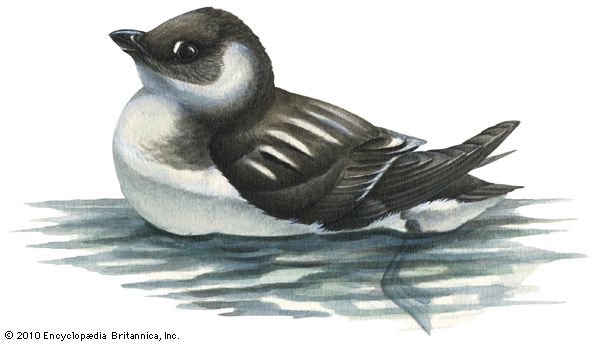
The dovekie (Alle alle) is a small, black-and-white seabird native to the North Atlantic. Measuring approximately 20 centimeters (8 inches) in length, this bird is characterized by its short bill, short wings, and webbed feet, which make it a highly proficient diver capable of feeding on fish, mollusks, and crustaceans.12
These birds breed in large colonies along the rocky coasts and islands of the Arctic Ocean, ranging from Greenland to Novaya Zemlya, Russia. During the breeding season, each pair typically lays a single egg within a rock crevice or a burrow in peaty ground. The name “dovekie” is of Scots origin, derived from a double diminutive suffix, and is said to reflect the dove-like bond observed between nesting pairs.12
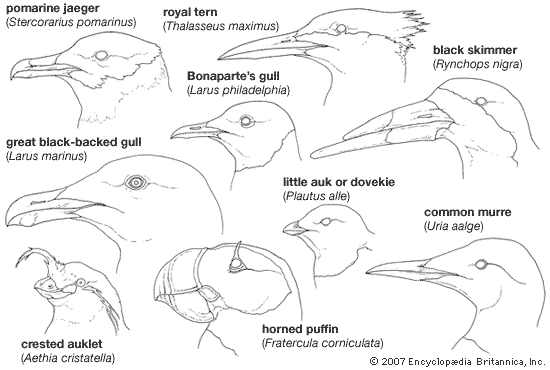
What other birds belong to the auk family?
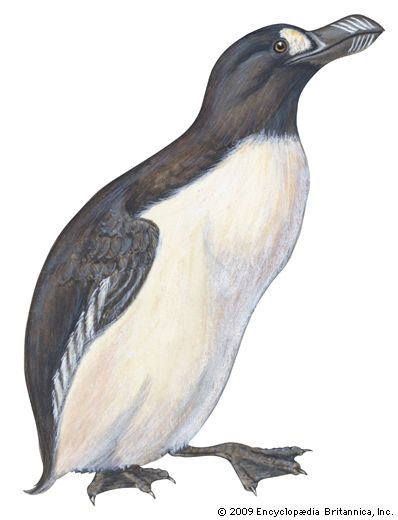
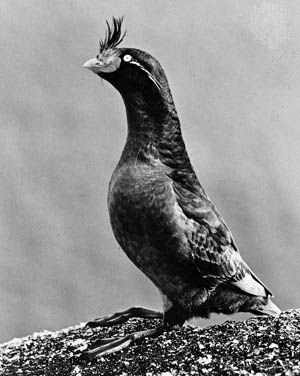
The family Alcidae—often referred to as alcids—comprises 22 species of diving seabirds, including the auk, dovekie, and the extinct great auk.345
In addition to these, the family includes several other distinct groups of birds:34
- Puffins: Known for their colorful, heavy bills and compact bodies.64
- Guillemots: Often found nesting on rocky cliffs.34
- Murres: Large, colonial-nesting birds that are highly adapted for life at sea.34
- Auklets: A group of smaller birds related to the larger auks.34
- Murrelets: Smaller, often elusive members of the alcid family.34
- Razorbill: Also known as the razor-billed auk, this is one of the primary species within the family.3
These birds are all characterized by their compact, streamlined bodies, short wings, and webbed feet, which make them excellent swimmers in the cold waters of the Northern Hemisphere.365
How do dovekies survive in the cold Arctic climate?
Dovekies (Alle alle) survive the harsh Arctic climate through a combination of specialized behavioral and ecological strategies rather than relying on unique physiological adaptations like nonshivering thermogenesis, which is absent in birds.1
Their survival is supported by the following factors:
- Marine Food Web Dependency: Dovekies are part of a specialized marine ecosystem that relies on algae (diatoms) growing within sea ice. This ice-based food web supports crustaceans and fish, providing the necessary energy for these birds to thrive in cold environments.9
- Access to Open Water: In the High Arctic, dovekies utilize polynyas—areas of open water within the pack ice maintained by upwelling currents. These areas allow the birds to feed even at high latitudes where the surrounding sea might otherwise be frozen.10
- Colonial Nesting: By nesting in large colonies on rocky hillsides or in burrows, dovekies utilize the protection of the terrain. These sites are typically located near nutrient-rich upwelling currents, ensuring a reliable food supply for breeding pairs and their offspring.1110
- Metabolic Regulation: Like many cold-tolerant birds, dovekies are homeothermic and can adjust their basal metabolic rates to maintain their body temperature and avoid hypothermia in extreme conditions.1
What are the main predators of the dovekie?
Sources
- Dovekie — Encyclopædia Britannica
- dovekie — Merriam-Webster
- Auk — Encyclopædia Britannica
- Alcidae — Merriam-Webster
- Alcidae — Encyclopædia Britannica
- Charadriiform - General features — Encyclopædia Britannica
- auk — Merriam-Webster
- 12 Bird Names that Sound Like Compliments | Dovekie — Merriam-Webster
- Polar ecosystem - Biota of the Arctic — Encyclopædia Britannica
- Arctic - Marine fauna — Encyclopædia Britannica
- Inuit: Top Questions — Encyclopædia Britannica
- Thermoreception - Birds — Encyclopædia Britannica
Published on · 2 min read