Guinea Fowl
Guinea fowl (family Numididae) are medium-to-large birds, typically ranging from 43 to 75 cm (17 to 30 inches) in length, characterized by several distinct…
What are the distinctive physical characteristics of guinea fowl?
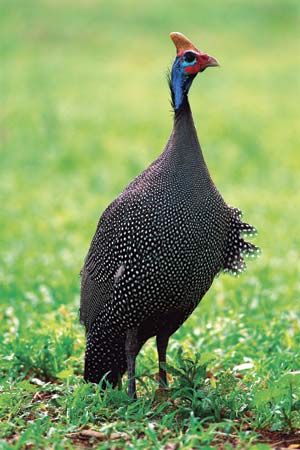
Guinea fowl (family Numididae) are medium-to-large birds, typically ranging from 43 to 75 cm (17 to 30 inches) in length, characterized by several distinct physical features.12
Key physical characteristics include:
- Plumage: Most species are recognized by their dark bluish or slate-coloured feathers covered in small, white, speckled spots.23
- Head and Neck: These areas are generally bare or only slightly feathered and are often brightly coloured. Some species, such as the helmet guinea fowl, possess a large, bony crest on the head.231
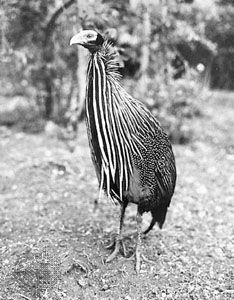
- Facial Features: Many forms have bare faces, with red and blue wattles located near the bill. The vulturine guinea fowl is particularly notable for its vulture-like bare blue head, red eyes, and a hackle of long, lance-shaped feathers striped in black, white, and blue.1
- Body Structure: They typically exhibit a hunched posture and possess large, strong legs and feet. While they are primarily ground-dwelling birds, they have short, rounded wings used for limited flight when necessary.12
What role do guinea fowl play in pest control and as ‘watch dogs’ on farms?
On farms, guinea fowl are valued for their utility as both natural pest controllers and effective “watchdogs.”
- Watchdog Behavior: The helmet guinea fowl is widely domesticated for its role as a farm guardian. These birds are naturally noisy and possess a keen sense of awareness; they will gabble loudly at the slightest alarm, effectively alerting farmers to the presence of intruders or unusual activity.1
- Pest Control: While guinea fowl are primarily vegetarian, feeding on seeds and tubers, they also consume significant quantities of insects, worms, and other invertebrates. By foraging on the ground and using their feet to uncover food in leaf litter, they help manage insect populations around the farmstead.14
Where do guinea fowl originate from, and in what habitats do they typically live?
Guinea fowl are native to the African continent. While they are now found in various parts of the world due to human introduction, their natural distribution is rooted in diverse African landscapes.13
Their habitat preferences vary by species:
- Savannas and Scrublands: The helmet guinea fowl is widespread across these open, semi-arid environments.1
- Tropical Forests: Certain genera, specifically Guttera and Agelastes, are adapted to life within dense tropical forests.4
- General Behavior: Regardless of the specific environment, these birds are primarily ground-dwelling, spending their daylight hours foraging in flocks. While they are comfortable on the ground, they typically seek out elevated perches, such as trees, to roost at night.14
What are the different species of guinea fowl, and how do they differ?
The family Numididae (guinea fowl) consists of 7 recognized species native to Africa south of the Sahara and Madagascar. While they share a general body plan adapted for terrestrial life, they exhibit distinct physical characteristics and habitat preferences.156
Key Differences Among Species
- Helmet Guinea Fowl (Numida meleagris): This is the most widely recognized species, known for the large bony crest (helmet) on its head. It features black plumage with white spots, a bare face, and red and blue wattles. It is the primary species domesticated for farm use.1
- Vulturine Guinea Fowl (Acryllium vulturinum): Distinguished as the largest and most colorful species, it possesses a long neck and a vulture-like bare blue head. Its plumage is striking, featuring lance-shaped feathers on the neck and breast striped with black, white, and blue, along with a bluish abdomen.12
- Other Genera: The family includes 5 genera in total. While Numida and Acryllium are well-known, species within the genera Guttera and Agelastes are specifically adapted to dense tropical forest environments, differing from the savanna-dwelling helmet guinea fowl.56
Generally, guinea fowl are distinguished by their dark, white-spotted plumage and bare or lightly feathered, often brightly colored, heads.5
Sources
- Guinea fowl — Encyclopædia Britannica
- Galliform - Annotated classification — Encyclopædia Britannica
- guinea fowl — Merriam-Webster
- Galliform - Habitat selection and food habits — Encyclopædia Britannica
- vulturine guinea fowl — Merriam-Webster
- Galliform - Form and function — Encyclopædia Britannica
Published on · 3 min read