Fossa
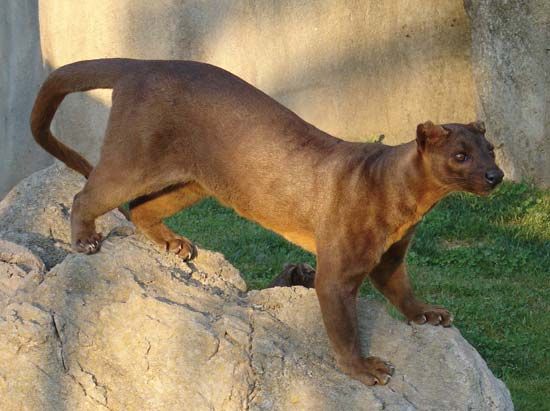
The term "fossa" refers to the fossa (Cryptoprocta ferox), which is the largest carnivore native to Madagascar.
What is fossa?
The term “fossa” refers to the fossa (Cryptoprocta ferox), which is the largest carnivore native to Madagascar.1
While historically associated with the civet family (Viverridae), it is now classified within the family Eupleridae. This catlike, forest-dwelling mammal grows to about 1.5 meters in length, including its tail, and features short, dense fur that ranges from grayish to reddish-brown. It is both terrestrial and arboreal, possessing sharp, retractile claws that aid in its role as an apex predator on the island, where it primarily hunts lemurs and birds.12
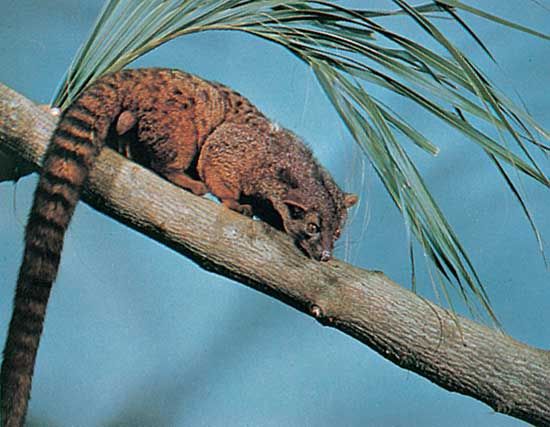
It is important to note that the fossa is distinct from the Malagasy civet, or fanaloka (Fossa fossa), with which it is sometimes confused due to its common name.1
What makes Madagascar’s ecosystem unique?
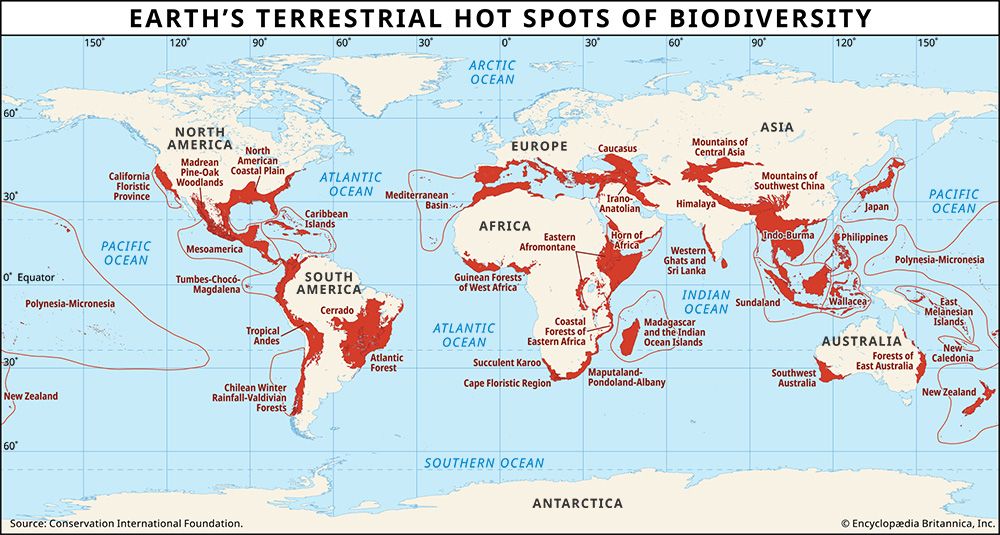
Madagascar’s ecosystem is defined by its profound biological isolation, which has allowed for the evolution of a highly distinct and endemic flora and fauna. Because the island has long functioned as a separate entity from the African mainland, it is classified as a unique biogeographic region.3456
Unique Biodiversity
- Endemism: A significant portion of the island’s life is found nowhere else on Earth. In the eastern regions, more than three-fourths of plant species are endemic. The island is recognized as a global biodiversity hot spot, hosting thousands of unique species.37
- Fauna: Madagascar is famous for its lemurs, with about 40 indigenous species. It also hosts unique tenrecs, diverse chameleons, and the coelacanth, a “living fossil” found in its offshore waters. Notably, many familiar African animals, such as monkeys and big cats, are absent.46
- Flora: The landscape ranges from eastern rainforests with endemic dwarf palms to arid southern thickets filled with xerophytes, such as giant cacti and dwarf baobabs.34
How do lemurs defend themselves against predators?
Lemurs have evolved various strategies to survive in their environment, though they do not possess specialized physical defenses like armor, spines, or chemical deterrents found in some other animals. Instead, their primary methods of avoiding predation include:
- Gregarious Behavior: Many lemur species are social and live in groups of 10 or more. Living in a troop provides increased vigilance, as multiple individuals can watch for predators and alert others to danger.9
- Nocturnal Adaptations: Many lemurs are active at night, which helps them avoid diurnal predators. Their eyes are specially adapted for low-light conditions, featuring a reflective layer called the tapetum lucidum behind the retina, which enhances their sensitivity to light.9
- Arboreal Lifestyle: By spending most of their time in trees, lemurs utilize their agility to escape terrestrial predators. They are well-adapted for climbing and leaping, which allows them to navigate complex forest environments effectively.9
- Cryptic Behavior: While not explicitly detailed as a primary defense in the provided text, their varied fur patterns—ranging from gray and brown to black and white—can help them blend into the forest canopy and shadows, providing a degree of camouflage against potential threats.9
What are some other animals native to Madagascar?
Madagascar is home to a wide array of unique wildlife, many of which are endemic due to the island’s long-standing geographic isolation. Beyond the well-known lemurs, other notable animals native to the island include:
- Carnivores: The fossa is the largest native carnivore on the island. A member of the viverrid family, it is a catlike, agile hunter that is both terrestrial and arboreal.4
- Insectivores: The island hosts various tenrecs, which are shrewlike or hedgehoglike mammals. Some species, such as the lesser and greater hedgehog tenrecs, possess specialized spines and can curl into a protective ball.112
- Reptiles: Madagascar is famous for its diverse chameleons, ranging from the tiny nano-chameleon to the large Parson’s chameleon. The island also hosts various harmless snakes, such as the do, and crocodiles, which are the only large or dangerous animals found in its rivers.1112
- Birds: The island’s avian life is rich and includes guinea fowl, herons, flamingos, and various birds of prey. Historically, the island was also home to the elephant bird, a giant, flightless species that went extinct roughly 1,300 to 1,560 years ago.1113
- Aquatic Life: Inland waters contain species like rainbow trout and black bass, while the offshore waters are inhabited by the coelacanth, a rare “living fossil”.11
Sources
- fossa — Encyclopædia Britannica
- fossa — Merriam-Webster
- Africa - Madagascar — Encyclopædia Britannica
- Madagascar - Plant and animal life — Encyclopædia Britannica
- hot spot — Encyclopædia Britannica
- biogeographic region - Madagascan region — Encyclopædia Britannica
- Madagascar — Encyclopædia Britannica
- Comoros - Plant and animal life — Encyclopædia Britannica
- lemur — Encyclopædia Britannica
- Avoidance behaviour - Protection reflexes, armour, and spines — Encyclopædia Britannica
- tenrec — Encyclopædia Britannica
- chameleon — Encyclopædia Britannica
- elephant bird — Encyclopædia Britannica
Published on · 3 min read