Guinea Pig
Domesticated guinea pigs typically live between three and five years, though they can live up to eight years in captivity.
How long do guinea pigs typically live, and what factors affect their lifespan?
Domesticated guinea pigs typically live between three and five years, though they can live up to eight years in captivity.12
While the provided information does not detail specific environmental or biological factors that influence individual longevity, it notes that these animals are a domesticated species with no natural population existing in the wild. Their care, including proper nutrition and access to water—which is essential when they are fed dry commercial food—is fundamental to their well-being.12
What are some popular breeds of guinea pigs and how do they differ?
While there are several breeds of domesticated guinea pigs, they are not categorized by specific breed names in the provided information. Instead, they are typically grouped based on the texture and length of their fur.
These variations include:
- Smooth: Coats that are short and soft.
- Coarse: Coats that have a rougher, stiffer texture.
- Long and Silky: Coats that feature extended hair length with a smooth feel.
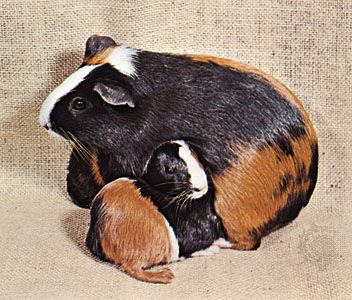
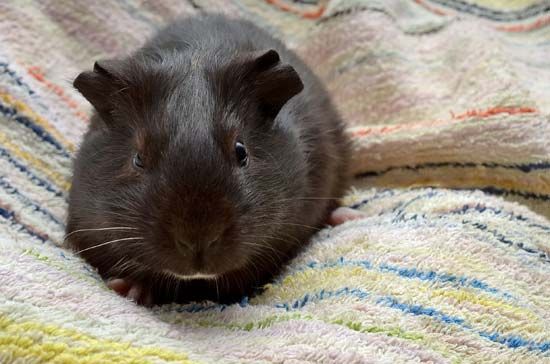
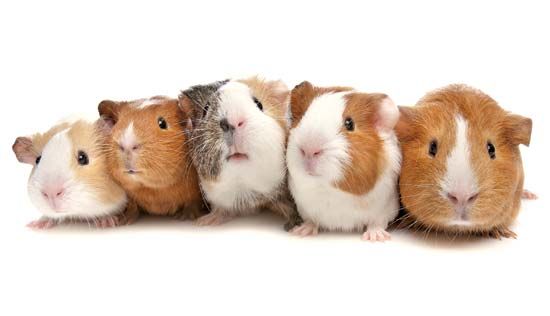
Regardless of these physical differences, all domestic guinea pigs share a robust body structure with short limbs, a large head, and no visible tail. Their coloration is highly variable, ranging from solid colors like white, tan, or black to various combined patterns.
How have guinea pigs been used in scientific research and what contributions have they made?
Guinea pigs (Cavia porcellus) have served as significant subjects in scientific and medical research for decades. Their use in laboratories is internationally recognized, contributing to advancements in several key fields of study, including anatomy, nutrition, genetics, toxicology, and pathology.1
Specific contributions include:
- Infectious Diseases: Guinea pigs have been instrumental in the study of various infectious diseases, most notably tuberculosis.3
- Allergy Research: They are frequently utilized as models for investigating allergies and immune responses.3
- Serum Development: They have played a role in the development of serum and other biological research programs.1
While these animals have historically aided medical progress, the use of animals in research is a subject of significant ethical debate. Fundamental moral principles dictate that sentient beings deserve protection from unnecessary harm, and modern research is increasingly guided by the “three Rs” principle: replacement (using non-animal alternatives), reduction (using fewer animals), and refinement (minimizing pain and distress). Today, all research involving guinea pigs is subject to strict oversight and institutional regulations to ensure humane treatment and justify their use.3
What are the physical characteristics and appearance of guinea pigs?
Guinea pigs (Cavia porcellus) are robust rodents characterized by a large head, large eyes, and short ears. They possess short limbs and feet with hairless soles and short, sharp claws. Anatomically, they have four toes on their forefeet and three on their hind feet, and they lack an externally visible tail.21
In terms of size, they are relatively large for rodents, typically weighing between 500 and 1,500 grams (1 to 3 pounds) and measuring 20 to 40 cm (8 to 16 inches) in length.1
Their fur varies significantly in length and texture, ranging from smooth to coarse, and may be short or long and silky. A crest of longer hair is often present at the neck. Their coloration is highly diverse, appearing in solid shades—such as white, cream, tan, reddish-brown, chocolate brown, or black—or in various combined patterns.1
Sources
- guinea pig — Encyclopædia Britannica
- guinea pig: Top Questions — Encyclopædia Britannica
- Animal testing — Encyclopædia Britannica
- guinea pig — Merriam-Webster
Published on · 3 min read