Paca
A paca (genus Cuniculus) is a South American rodent characterized by a stout, piglike body, a large head, and swollen cheeks. There are two species: the…
What is paca?
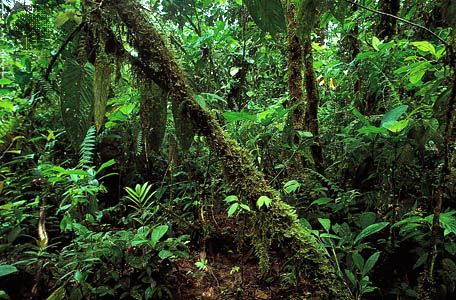
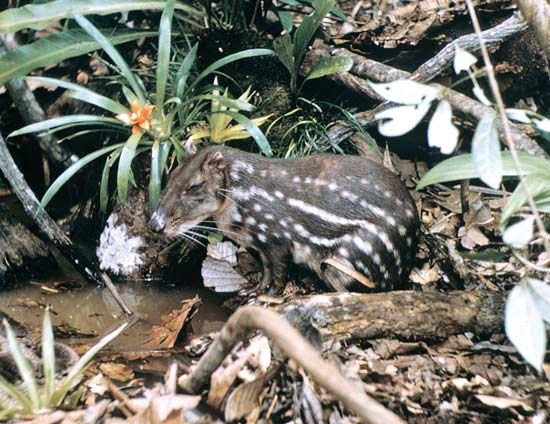
A paca (genus Cuniculus) is a South American rodent characterized by a stout, piglike body, a large head, and swollen cheeks. There are two species: the common paca, found in tropical forests from Mexico to Argentina, and the mountain paca, which inhabits the Andes Mountains.1
These terrestrial, nocturnal animals are known for their coarse, dark brown coats marked with white spots. They are solitary foragers that reside in burrows or caves during the day and are adept swimmers. While they are closely related to agoutis, acouchys, guinea pigs, and chinchillas, they are the sole members of the family Cuniculidae.1
Please note that the paca should not be confused with the pacu, which is a type of fish related to the piranha.2
How do pacas differ from their relatives, the agoutis?
While pacas and agoutis are closely related rodents within the suborder Hystricognatha, they belong to distinct families—Cuniculidae for the paca and Dasyproctidae for the agouti—and exhibit several key differences in anatomy and behavior:
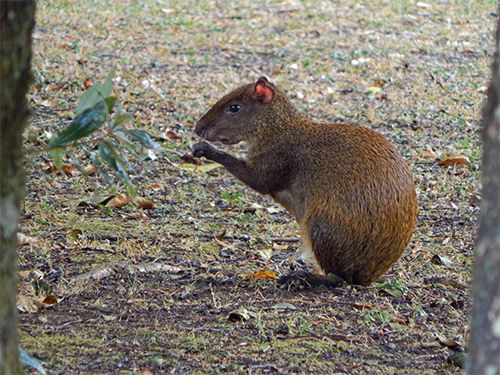
- Physical Build: Pacas have a stout, piglike body with short limbs and swollen cheeks. In contrast, agoutis have an elongated body with slender, delicate legs that allow them to move swiftly and leap up to 2 meters.13
- Feet: The paca’s front feet have four toes, while its hindfeet have five (three weight-bearing toes and two tiny side toes). Agoutis have only three toes on their hindfeet, which feature hooflike claws.13
- Coat Pattern: Pacas are typically dark brown or chestnut with distinct lines of white spots along their sides. Agoutis display an agouti pattern, where individual hairs have alternating black and buff bands, resulting in a glossy, uniform appearance.13
- Activity and Diet: Pacas are nocturnal and forage for fallen fruit and tubers. Agoutis are generally diurnal and play a critical role as seed dispersers by burying nuts and seeds for later consumption.13
What adaptations help pacas survive in tropical rainforests?
Pacas possess several specialized adaptations that allow them to thrive in tropical forests:
- Aquatic Proficiency: Pacas are skilled swimmers. When threatened by predators, they frequently head toward water to escape, utilizing their swimming ability as a primary defense mechanism.1
- Burrowing Behavior: To survive and rest safely, they construct burrows in dry banks near water sources. These burrows are strategically designed with a main entrance and hidden, leaf-plugged exits to provide security. In rocky environments like the limestone terrain of the Yucatan, they adapt by denning in caves or sinkholes.1
- Sensory and Physical Traits: Their large eyes and long whiskers are well-suited for their nocturnal lifestyle, helping them navigate dense forest environments at night. Their coarse, bristlelike coat provides protection, while their stout, muscular build and thick claws on their feet assist them in moving through their terrestrial habitat.1
- Foraging Strategy: They are adept at navigating the forest floor, often following prominent paths to locate fallen fruit and tubers, which are essential components of their diet.1
Why are pacas considered important to the ecosystems where they live?
Pacas are important to their ecosystems primarily as foragers that interact with the forest floor’s plant life. As ground-dwelling rodents, they are among the various animals that seek out and consume fruits that fall to the forest floor, such as those of the almendro tree.14
While their close relatives, the agoutis, are specifically noted for their critical role in burying seeds to facilitate germination, pacas also participate in the complex cycle of seed consumption and movement within tropical forests. By feeding on fallen fruit and plant parts, they contribute to the movement of organic material and the broader ecological processes that support forest regeneration. Because many tree species depend on such animal interactions to disperse their seeds away from parent trees, the presence of healthy populations of ground-dwelling mammals like the paca is essential for maintaining the biodiversity and health of these habitats.14
Sources
- paca — Encyclopædia Britannica
- pacu: Top Questions — Encyclopædia Britannica
- agouti — Encyclopædia Britannica
- Hitching a ride — Encyclopædia Britannica
Published on · 3 min read