Cavy
Wild cavies (family Caviidae) are South American rodents distributed from Venezuela to southern Patagonia, though they are notably absent from western Chile…
What is the natural habitat and geographical distribution of wild cavies?
Wild cavies (family Caviidae) are South American rodents distributed from Venezuela to southern Patagonia, though they are notably absent from western Chile and most of the Amazon River basin.1
Their habitats vary significantly by species:
- Guinea pigs: Occupy diverse environments, including open grasslands, forest margins, swamps, and rocky areas.1
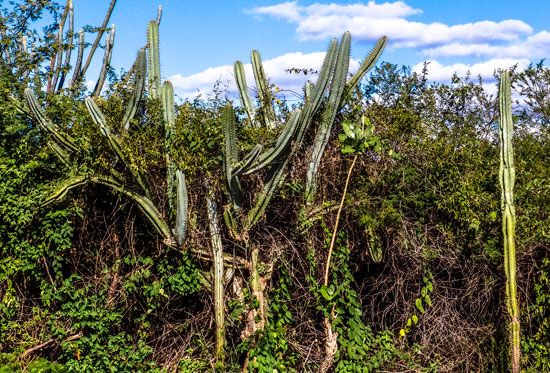
- Rock cavies: Dwell among boulders in the dry regions of eastern Brazil.1
- Yellow-toothed and mountain cavies: Inhabit grassy, rocky, and brushy areas within the Andes Mountains, ranging from Peru to Argentina at elevations reaching 4,000 meters.1
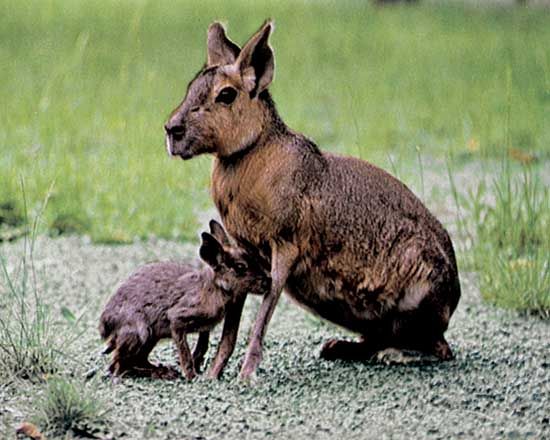
- Maras: Prefer open landscapes such as semiarid grasslands, thorn scrub, and temperate steppes from Bolivia through Argentina and southern Paraguay.1
Generally, these terrestrial animals seek shelter in burrows, rock crevices, or dense vegetation.1
How have cavies been domesticated and used by humans throughout history?
The domestication of the guinea pig (Cavia porcellus), a member of the cavy family, began more than 3,000 years ago in Peru. This process coincided with the transition of indigenous peoples from nomadic lifestyles to settled agricultural societies in the Andes Mountains.2
Throughout history, these animals have served several key roles:
- Food Source: Historically kept by the Incas and other Andean peoples, they remain a sustainable food source in countries like Ecuador, Peru, and Bolivia, where they are often kept in homes or allowed to scavenge freely.2
- Pets: Following their introduction to Europe in the 16th century, guinea pigs became widely popular as household pets by the 1800s.2
- Scientific Research: They are used internationally as laboratory animals in various research programs, contributing to studies in anatomy, nutrition, genetics, toxicology, and pathology.2
What are the main characteristics that define cavies as rodents?
Cavies (family Caviidae) are classified as rodents because they share the defining anatomical features of the order Rodentia. The primary characteristic that identifies all rodents, including cavies, is the presence of a single pair of ever-growing, rootless incisor teeth in both the upper and lower jaws.5
Within the order Rodentia, cavies belong to the suborder Hystricognatha, a group often referred to as porcupine-like rodents. This classification is based on specific evolutionary and biological traits, including:
- Jaw Structure: Their classification is determined by the configuration of the lower jaw and associated musculature.1
- Genetic and Anatomical Analysis: Modern taxonomy confirms their placement through comparative studies of their head and postcranial skeletons, embryonic development, and DNA analysis.1
- Evolutionary History: Fossil records indicate that the family Caviidae has been a distinct lineage within the rodent order since the Middle Miocene Epoch.6
How do cavies reproduce and what is their typical lifespan?
Cavies exhibit diverse reproductive strategies across their 14 species, with breeding seasons that vary depending on the specific animal. The gestation period for these rodents ranges from 50 to 93 days.1
Regarding litter size, most species typically bear between 1 and 4 young. However, there is significant variation within the family: wild guinea pigs may produce up to 5 offspring, while the domestic guinea pig is capable of bearing between 1 and 13 young per litter.1
The provided information does not specify the typical lifespan of cavies.
Sources
- cavy — Encyclopædia Britannica
- guinea pig — Encyclopædia Britannica
- Indigenous peoples of the Americas - Early cultural development — Encyclopædia Britannica
- guinea pig — Merriam-Webster
- rodent — Encyclopædia Britannica
- rodent - Evolution and classification — Encyclopædia Britannica
Published on · 2 min read