Rat
The genus Rattus comprises 56 species of medium-sized, thin-tailed rodents native to Asia and the Australia–New Guinea region. While body size varies…
What are the defining characteristics of rats in the genus Rattus?
The genus Rattus comprises 56 species of medium-sized, thin-tailed rodents native to Asia and the Australia–New Guinea region. While body size varies significantly across the genus, these animals share several defining physical and behavioral characteristics:1
Physical Features
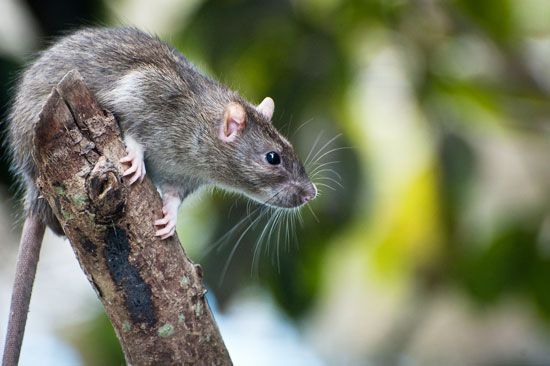
- Body Structure: Rats are generally slender with pointed heads, large eyes, and prominent, thinly furred ears. They possess moderately long legs and sharp claws.1
- Feet: Their narrow hind feet have bald soles with fleshy pads, the size of which varies by species.1
- Tails: Tail length ranges from shorter than the body to significantly longer. Although they appear smooth and bald, tails are covered in fine, short hairs.1
- Coat: Most species have a soft, dense coat, though some exhibit thicker, woolly, or coarse fur. Coloration typically features brownish-yellow or gray upperparts with lighter underparts, though this varies widely.1
Behavior and Ecology
- Activity: Most species are nocturnal and terrestrial, though many are also adept climbers. The brown rat is a notable exception, being active both day and night.12
- Diet: While often considered omnivorous, diets are highly specialized; some species consume only fruit and seeds, while others primarily eat invertebrates or, in the case of the brown rat, prefer a carnivorous diet.12
- Habitat: They occupy diverse environments, including tropical rainforests, scrublands, and agricultural fields. Some species have adapted to live in close association with humans, exploiting urban and rural food resources.12
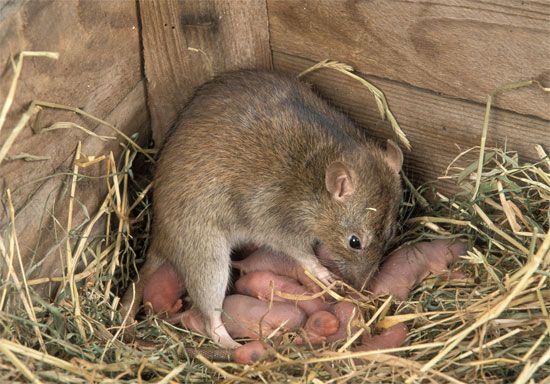
What are the main species of rats within the genus Rattus, and how do they differ?
The genus Rattus contains 56 species, which are categorized by researchers into five distinct groups based on their evolutionary relationships and geographic origins. While they share a basic body plan, they differ significantly in size, habitat, and behavior.
Major Species Groups
- The norvegicus group: Consists solely of the brown rat (Rattus norvegicus). It is a large, robust, and highly adaptable species that dominates temperate urban environments worldwide.
- The rattus group: Includes approximately 20 species, most notably the house rat (R. rattus). These are primarily native to tropical and subtropical Asia and are highly agile climbers.
- The Australia–New Guinea group: Comprises 19 species native to the region between Australia and Southeast Asia, adapted to diverse habitats ranging from savannas to rainforests.
- The xanthurus group: Contains five species endemic to Sulawesi and nearby islands, characterized by their arboreal nature and specialized physical traits.
- Unresolved species: A group of 11 species with endemic ranges from India to the Philippines, many of which are forest-dwelling.
Key Differences
Species within Rattus are often distinguished by their physical adaptations to specific environments:
Feature
Ground-Dwelling Species
Arboreal (Climbing) Species
Tail
Shorter than body length
Longer than body length
Feet
Inconspicuous footpads
Wide feet with prominent, fleshy pads
Fur
Short guard hairs
Extremely long, slender guard hairs
Agility
Generally poor climbers
Highly agile; capable of navigating wires/branches
While the brown rat and house rat are the most familiar due to their global association with humans, many other species remain specialized to specific tropical forest ecosystems, where they may feed exclusively on fruit, seeds, or invertebrates.
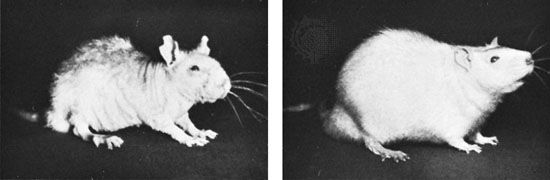
How have rats adapted to living in close proximity to humans?
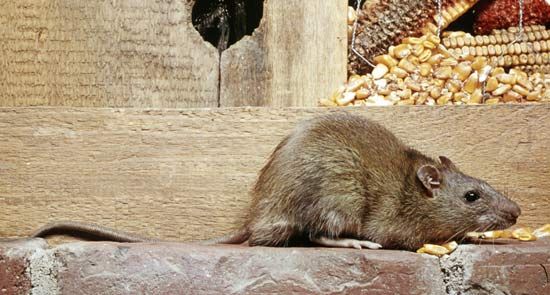
Rats, particularly the brown rat and house rat, have successfully adapted to human environments by exploiting the resources created by sedentary agricultural and urban societies. Their ability to thrive in close proximity to humans is driven by several key factors:213
- Dietary Flexibility: These rats are opportunistic generalists. They readily consume human food waste, stored grains, and animal feed, allowing them to maintain stable populations in human-dominated landscapes.213
- Behavioral Adaptability: Unlike many other species, brown rats are active during both day and night, enabling them to navigate urban and rural environments effectively. They are also highly social, living in colonies that occupy specific territories, which helps them establish and defend their presence in human structures.21
- Reproductive Success: These species are highly prolific. The brown rat, for example, can produce multiple large litters annually, allowing populations to recover quickly and expand rapidly in favorable conditions.214
- Aggressive Expansion: Their global spread was facilitated by human travel, particularly on ships. Once established, they often exhibit aggressive behavior toward newcomers, which helps maintain their dominance in existing territories.21
What role do rats play in scientific research and why are they commonly used as laboratory animals?
Rats, particularly the brown rat, are integral to scientific research and are widely considered the first mammal domesticated specifically for laboratory use. They are favored as research subjects for several key reasons:2
- Biological Similarity: As mammals, rats share the same fundamental organ systems as humans, which function in essentially the same way. This makes them effective models for studying human conditions such as cancer, diabetes, and heart disease.1
- Genetic and Physiological Traits: Their genetic makeup and physiological processes allow researchers to gain significant insights into mammalian biology, gene function, and hereditary diseases.67
- Practical Advantages: Rats have relatively short life cycles, which enables scientists to study the effects of treatments, genetic manipulations, or aging across an entire lifespan or multiple generations in a timeframe that would be impossible with human subjects.16
- Ease of Handling: Laboratory rats have been selectively bred for docility, making them easier to manage and study in controlled environments than their wild counterparts.2
While their use is essential for medical and scientific progress, it remains a subject of ethical debate regarding animal welfare and the necessity of animal models.6
Sources
- rat — Encyclopædia Britannica
- brown rat — Encyclopædia Britannica
- rodent - Importance to humans — Encyclopædia Britannica
- evolutionary psychology - Modern evolutionary psychology — Encyclopædia Britannica
- rodent - Natural history — Encyclopædia Britannica
- Animal testing: Top Questions — Encyclopædia Britannica
- Animal testing - Pro 2: Animals are appropriate research subjects because they are similar to human beings. — Encyclopædia Britannica
- Animal testing — Encyclopædia Britannica
Published on · 5 min read