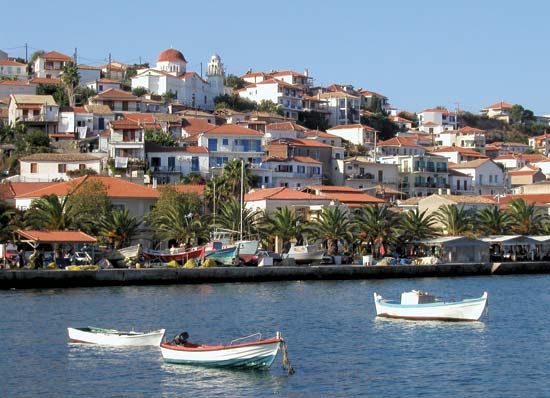
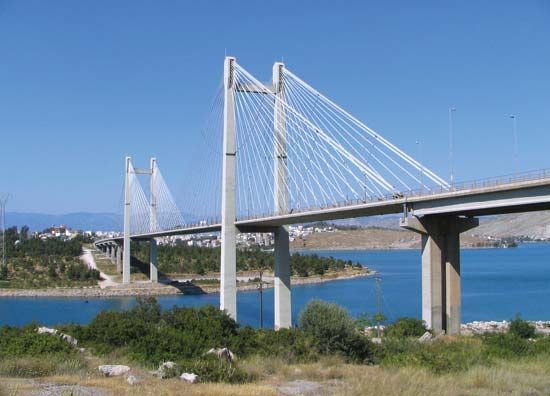
Gulf of Kiparissía
The Gulf of Kiparissia serves as a significant geographical feature along the western Peloponnese in Greece. While the region is noted for its agricultural…
How does the Gulf of Kiparissía impact the local economy and tourism?
The Gulf of Kiparissia serves as a significant geographical feature along the western Peloponnese in Greece. While the region is noted for its agricultural activity, the provided information does not contain specific details regarding the gulf’s direct impact on the local economy or tourism industry.1
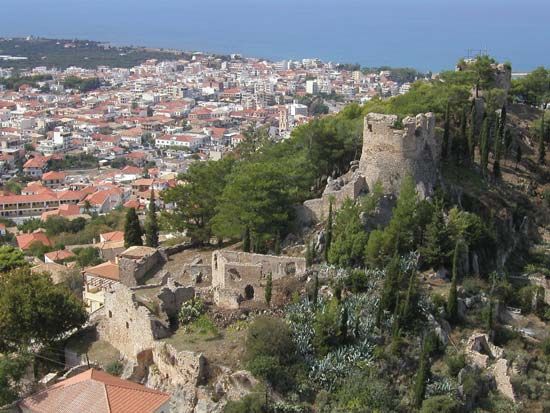
The town of Kiparissia functions as an agricultural center and utilizes its harbor, Paralia, for regional connectivity. The area is linked to major hubs like Kalamáta and Pátrai via a railway that follows the coastline.1
What are the main towns and cities located along the coast of the Gulf of Kiparissía?
The Gulf of Kiparissía is a broad inlet of the Ionian Sea located along the western coast of the Peloponnese in Greece.
The primary town associated with the gulf is Kiparissía, which is situated just inland from its harbor, Paralía. While the region is characterized by a series of large lagoons extending southward along the shore, the coastline is divided between the departments of Ilía to the north and Messenia to the south.1
It is important to note that while cities like Kalamáta are major regional hubs connected to the area via a railway that follows the coastline, they are located on the Gulf of Messenia, a distinct body of water to the south, rather than directly on the Gulf of Kiparissía.12
How does the Gulf of Kiparissía compare to other gulfs in Greece in terms of size and importance?
The Gulf of Kiparissía is a broad inlet of the Ionian Sea measuring approximately 35 miles (55 km) in width. While it serves as a significant geographical feature of the western Peloponnese, it differs in function and prominence from other major Greek gulfs.1
Unlike the Gulf of Corinth or the Gulf of Thessalonica, which penetrate deep into the interior and have historically served as vital conduits for communication and trade, the Gulf of Kiparissía is characterized by a more open, coastal profile featuring shallow estuaries and large lagoons. While the gulf has historical ties to the ancient city of Messene, it does not share the same level of strategic, deep-water maritime importance as the gulfs that define the major trade routes of the Aegean.14
Data regarding the specific comparative size of all Greek gulfs is not fully detailed in the provided sources, though the Gulf of Euboea, for instance, is noted for its distinct northern and southern segments separated by the Strait of Euripus.5
What is the significance of the Gulf of Kiparissía in Greek mythology?
The provided search results do not contain information regarding the specific significance of the Gulf of Kiparissía in Greek mythology. While the region surrounding the gulf, particularly the department of Messenia, is rich in archaeological sites—such as the Mycenaean palace of Nestor near Pylos—the available records do not link the gulf itself to mythological narratives.
The gulf is primarily noted for its geography, including its shallow estuaries and lagoons, and its historical role as a port for the ancient city of Messene following its revival by the Theban leader Epaminondas in the 4th century BCE.
Sources
- Gulf of Kiparissía — Encyclopædia Britannica
- Messenia — Encyclopædia Britannica
- Gulf of Messenia — Encyclopædia Britannica
- Greece - History — Encyclopædia Britannica
- Gulf of Euboea — Encyclopædia Britannica
- Pylos — Encyclopædia Britannica
- Ionian — Encyclopædia Britannica
- Ionia — Encyclopædia Britannica
- Greek mythology - Other types — Encyclopædia Britannica
- Messene — Encyclopædia Britannica
Published on · 2 min read